Part of our Travel Tips guide.
Explore historic voyages and explorers through 10 TouristSecrets guides, practical answers, comparisons, and trip-planning ideas gathered in one collection.
Which Route Did The Explorer John Cabot Take During His First Voyage To The New World?
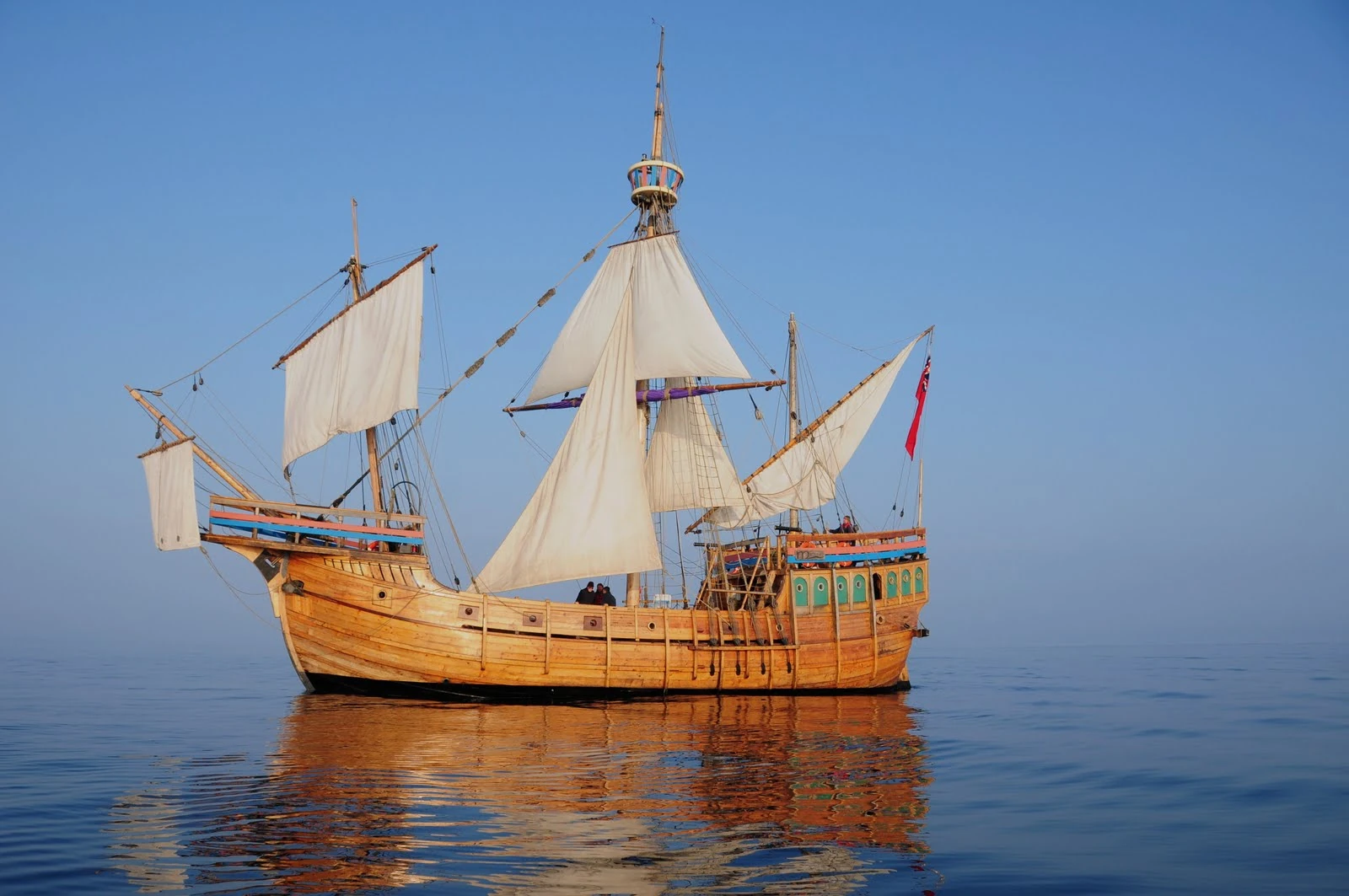
John Cabot’s first voyage, departing from Bristol in 1497, took a westward route across the North Atlantic, landing somewhere on the coast of North America—likely Newfoundland or Cape Breton Island. His expedition, sanctioned by King Henry VII of England, aimed to find a new trade route to Asia by sailing westward. Cabot’s crossing followed the great-circle route and he made landfall on June 24, 1497. The exact landing site remains debated, but the voyage established England’s later claims to parts of North America. Cabot returned to Bristol by late summer, reporting abundant fish and a promising coastline. He made a second voyage in 1498, from which he never returned, leaving his first route as his most documented achievement.
What Three Kinds Of Variations Among Organisms Did Darwin Observe During His Voyage?
During his voyage on the HMS Beagle (1831–1836), Darwin observed three broad kinds of variation among organisms: variations within a single species across different geographical regions, variations between species living on different islands in the same archipelago (most famously the Galápagos finches and mockingbirds), and variations between fossil forms and living relatives in the same area, such as the glyptodont fossils resembling modern armadillos. He also noted that similar environments in different parts of the world often hosted distinct species, and that island species tended to resemble species on the nearest mainland more than species from similar climates elsewhere. These observations, gathered over five years and thousands of miles of coastline, directly informed his later theory of natural selection. Darwin documented his findings in field notebooks and specimens, which he shipped back to England throughout the voyage.
When Did Charles Darwin Go On His Voyage
Charles Darwin sailed on the HMS Beagle from December 27, 1831, to October 2, 1836. The ship, under Captain Robert FitzRoy, departed from Plymouth, England, and Darwin was aboard as a naturalist and companion to the captain. The voyage took him to the Cape Verde Islands, South America, the Galápagos Islands, Tahiti, New Zealand, Australia, and South Africa, among other stops. Darwin spent most of his time on land—about three of the five years—while the Beagle surveyed coastlines and charted waters. His return to Falmouth, England, marked the end of the expedition, after which he began organizing his specimens and notes. The voyage’s timing is well documented in his diary and letters, including his first sight of the Galápagos in September 1835.
Why Did Hernando De Soto Go On His Voyage?
Hernando de Soto’s voyages, beginning in the 1520s, were driven by a quest for gold, glory, and the expansion of the Spanish Empire, as well as a desire to convert indigenous peoples to Christianity. He had gained wealth and experience in Panama and Nicaragua before joining Francisco Pizarro’s conquest of Peru in the 1530s, where he accumulated a fortune. De Soto returned to Spain and sought royal permission to conquer and settle Florida, which he believed held riches comparable to Peru. His expedition of 1539–1542, which landed in present-day Florida and traversed the southeastern United States, was motivated by reports of gold and a rumored city of Cibola. He died in 1542 along the Mississippi River, having found no gold but having become the first European to cross that river. His voyage also aimed to establish a permanent Spanish presence in North America, though that goal failed.
Which Voyage Had The Biggest Impact On The World
Among the voyages that reshaped global history, Christopher Columbus’s 1492 crossing stands out for initiating sustained contact between the Old and New Worlds, but Ferdinand Magellan’s expedition (1519–1522) holds the distinction of being the first to circumnavigate the globe. Magellan, a Portuguese navigator sailing for Spain, departed with five ships and about 270 men; only one ship, the Victoria, completed the journey, returning under Juan Sebastián Elcano in September 1522. That voyage proved the Earth’s circumference and demonstrated the vastness of the Pacific Ocean, which Magellan named. The expedition also opened the Pacific to European navigation, leading to Spanish colonization of the Philippines and the trans-Pacific trade. While Columbus’s voyages had a more immediate demographic impact, Magellan’s circumnavigation established a global maritime route that connected Europe, Asia, and the Americas. The trip also recorded the first documented crossing of the Pacific from east to west, and the crew’s logbook provided precise data on winds and currents.
Which European Was The First To Lead A Voyage To The Region In 1502?
In 1502, the first European to lead a voyage to the region of present-day Brazil was Pedro Álvares Cabral, a Portuguese navigator. Cabral had already claimed Brazil for Portugal in 1500, but his 1502 voyage, part of the second Portuguese fleet to India, returned to the Brazilian coast to explore and chart it more thoroughly. He sailed along the eastern coast of South America, making contact with indigenous peoples and confirming the land as part of Portugal’s sphere under the Treaty of Tordesillas. Cabral’s 1502 expedition included a dozen ships and was tasked with establishing trade relations and securing the route to India. He did not linger, however, and continued to India, leaving the detailed mapping of Brazil to later navigators like Amerigo Vespucci, who sailed in 1501–1502 and recognized the coast as a new continent. Cabral’s 1502 voyage thus marked the first systematic European reconnaissance of the Brazilian coastline.
Where Did Alfred Russel Wallace Go On His First Voyage
Alfred Russel Wallace’s first voyage, from 1848 to 1852, took him to the Amazon River basin and the Rio Negro region of South America. Wallace, then a young naturalist, traveled with his friend Henry Walter Bates, collecting insects, birds, and other specimens. He spent four years exploring the Amazon, including the tributaries of the Rio Negro and the upper Orinoco, and he documented the region’s biodiversity in detail. Wallace’s journey ended in disaster when the ship carrying his collections back to England caught fire and sank in 1852, destroying nearly all his specimens and notes. He survived, but the loss shaped his later decision to travel to the Malay Archipelago. His Amazon voyage, despite the setback, gave him field experience and a deep knowledge of tropical ecosystems, which he later applied to his theory of natural selection. Wallace’s first voyage also produced a short book, “A Narrative of Travels on the Amazon and Rio Negro,” published in 1853.
What Was Henry Hudson's First Voyage?
Henry Hudson’s first recorded voyage, in 1607, was an attempt to find a northeast passage to China and India, sailing north of Russia. Hudson, an English explorer, commanded a single ship, the Hopewell, with a crew of about ten men. He sailed from London in May 1607, reaching the east coast of Greenland and then the island of Spitsbergen (now Svalbard) in June, where he encountered pack ice and walrus. Hudson pushed north to about 80°23′ N latitude, setting a record for the farthest north reached by that time, before ice forced him to turn back. He returned to England in September 1607 without finding a passage, but the voyage provided valuable data on Arctic ice conditions and whale stocks. Hudson’s second voyage in 1608, also in the Hopewell, again sought a northeast route, but he was blocked by ice near Novaya Zemlya. His third voyage, in 1609, working for the Dutch East India Company, turned west and explored the river that now bears his name, the Hudson River. His first voyage, though unsuccessful in its goal, established him as a skilled navigator and led to his later expeditions.
Who Sent John Cabot On His Voyage
John Cabot’s first voyage in 1497 was sponsored by King Henry VII of England, who granted Cabot letters patent in March 1496 to explore and claim lands for England. Henry VII provided no direct royal funding, but he licensed Cabot to sail under the English flag, with the understanding that Cabot would seek a western route to Asia and bring back trade goods. Cabot, an Italian from Genoa who had become a citizen of Venice, secured financial backing from Bristol merchants, who were already active in Atlantic fishing and trade. The king’s patent required Cabot to fly English colors and to return with any discoveries, and it gave him a monopoly on trade from any lands he found. Cabot’s successful 1497 voyage, which landed in North America, led Henry VII to grant him a new patent in 1498 for a larger expedition. That second voyage, however, ended with Cabot’s disappearance at sea. The sponsorship by Henry VII was part of England’s late entry into Atlantic exploration, following the Spanish and Portuguese.
More about Voyage His Did
When you need practical help for your own travels, our guides cover common tasks like how to locate my reservation on Expedia or how to stop the rocking feeling after a cruise. For booking changes, see our steps to modify reservation on Expedia, and for frequent flyer accounts, learn how to add my Delta Skymiles number to an existing reservation. If you travel with trusted traveler programs, you may need to add your known traveler number to an existing booking. For security lines, our guide explains how to scan a passport with your phone, and for Global Entry cards, we cover how to add known traveler number to Alaska Airlines and other carriers. If you want to give back while traveling, consider how to take a holiday and help change lives through voluntourism. For airport security, our article on how to add known traveler number to JetBlue Airways also includes tips on what is my known traveler number on Global Entry card. For passports with electronic chips, we explain identifying a passport with a chip and reading it at automated kiosks. Other practical guides cover how to find my reservation on Expedia, how to cancel an Expedia trip, and how to add an Expedia trip to Google Calendar. For cruises, see where to park for MSC cruise in Miami and what does a pineapple on a cruise ship door mean. If you’re planning a staycation, read how to plan the perfect staycation, and for budgeting, how to save for a holiday. For broader travel topics, our articles cover what is green tourism, what is heritage tourism, and what are the negative effects of tourism. For transport, compare Lyft vs Uber: which is cheaper and better, and learn how to map a trip on Apple Maps. For international travel, see what law says a non-citizen cannot cross the U.S. border at other than a port of entry, and for vacation prep, how do you prepare toilets for a long vacation. If you’re curious about tourism’s effects, read how does tourism contribute to the economy and how does tourism affect culture. For niche topics, see National Skinny Dipping Day: where to bare it all and voluntourism: more harm than good. For booking changes, also check how do I check my reservation on Vrbo, how do I cancel a reservation on Vrbo, and how to cancel DAS reservation. For airline accounts, see how do I add a traveler to JetBlue Airways and how to update the traveler name on United app. For known traveler numbers, also see how do you get a known traveler number and adding known traveler number to Turkish Airlines, plus how to add known traveler number to Turkish Airlines. For other topics, read how has the internet affected the travel and tourism industry and what does leisure and tourism mean.