A Reliable Source of High-Quality PNG Assets for Travel Posts
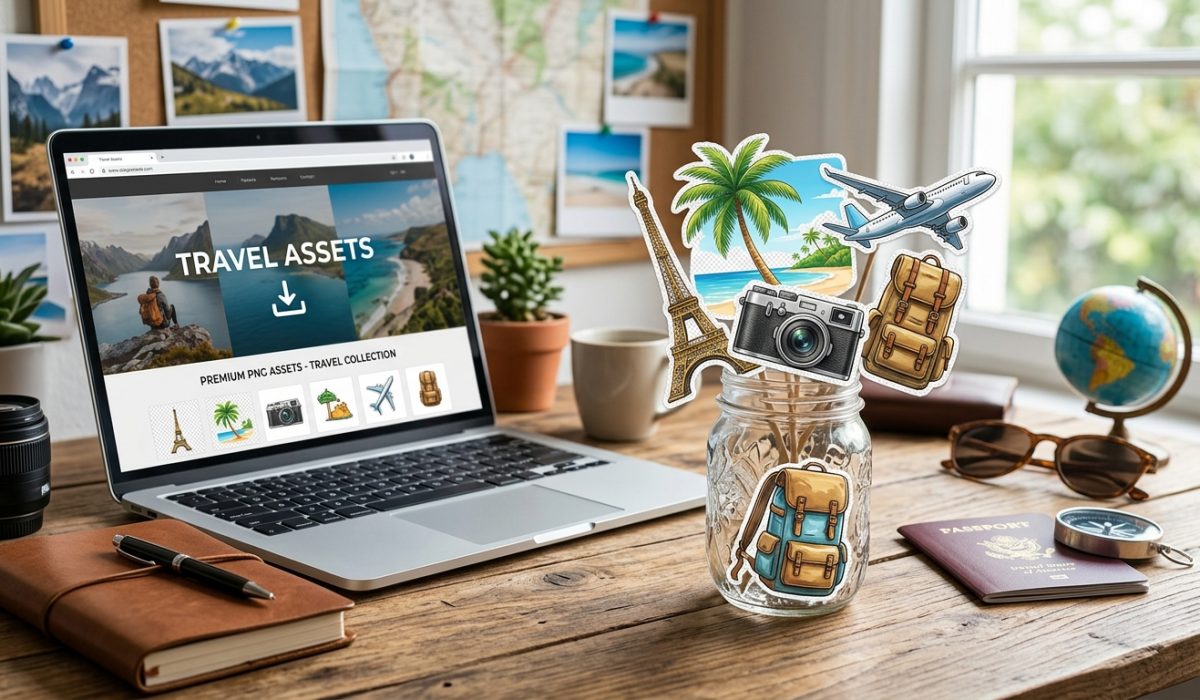
A Reliable Source of High-Quality PNG Assets for Travel Posts
Travel content creation is relentlessly visual. Whether you are building a YouTube thumbnail for a Santorini vlog, designing a blog post header for a Patagonia hiking guide, or assembling a social media graphic for your latest road trip reel, the assets you use make or break the first impression. The problem is that most premium stock libraries cost money that tight-budget creators simply do not have, especially when you are still growing your audience. The good news is that high-quality, transparent PNG files are out there, and knowing where to find them changes everything about how fast and how cheaply you can produce polished visual content.
Key Takeaway:
1. Free PNG libraries with browsable indexes let travel creators skip paid subscriptions and build professional-looking graphics in less time.
2. Transparent backgrounds are non-negotiable for layering travel imagery, and PNG format delivers exactly that without quality loss.
3. Adventure and active travel niches have specific icon and silhouette needs that dedicated sport and activity PNG collections solve instantly.
Why Travel Creators Need PNGs Specifically
Not every image format works the same way inside a design tool. JPEGs carry a white or colored background baked into the file. That is fine for photographs, but the moment you try to place a compass icon, a luggage sticker, or a mountain silhouette over your own photography, a hard rectangle edge appears and the result looks amateur immediately. PNG files solve this with alpha channel transparency, meaning the background is completely invisible. You can drop a plane silhouette directly onto a sunset photo and it blends without any clipping or masking work.
According to the PNG format specification, the Portable Network Graphics standard was designed specifically to support lossless compression and full transparency, making it the format of choice for graphics that need to layer cleanly over other images. That heritage matters for creators because it means a well-made PNG asset will hold its crisp edges even when you resize it for different platforms, from a 1280×720 YouTube thumbnail down to a 1080×1080 Instagram square.
The Real Cost of Paid Stock Libraries
Subscription-based stock image sites are not inherently bad, but for a solo travel creator or a small niche blog, the monthly fee adds up fast. Platforms that charge per asset or require monthly plans can easily cost hundreds of dollars per year, and that assumes you know exactly which assets you need before you search. In practice, content creation is messier. You often do not know you need a specific graphic until you are already mid-design at 11 PM the night before a post goes live. That is when a browsable, free, well-organized PNG library becomes genuinely valuable.
Finding Assets Without the Scroll-and-Pray Method
The biggest time sink for creators is not designing. It is sourcing. You open a search engine, type something vague like “transparent travel bag PNG,” scroll through ten pages of mixed results, deal with watermarks, hit paywalls, and eventually settle for something that almost works. This is not a sustainable workflow.
A smarter approach is using a library that organizes its assets by category, so you can browse alphabetically or by theme without needing to nail the exact search term. The browsable PNG images catalog works this way, letting creators scan through popular categories and find what they need faster than keyword guessing in a generic search engine. For travel creators, this matters because travel content spans so many sub-themes: food, architecture, transport, nature, culture, wildlife, and more. A library that lets you browse rather than search gives you a wider view of what is actually available, and you often stumble across assets you did not know you needed.
Building YouTube Thumbnails on a Zero Budget
YouTube thumbnails are arguably the most important single graphic a travel creator produces. The research on click-through rates shows that thumbnails directly influence whether someone watches your video, and a polished, layered thumbnail consistently outperforms a flat screenshot. The typical formula involves a photograph of the location or the creator, bold text, and one or two graphic elements that reinforce the topic.
Here is a simple numbered workflow for building a travel thumbnail using free PNGs:
- Start with your strongest photograph of the destination, cropped to 1280×720 pixels.
- Add a subtle gradient or color overlay to create contrast for text.
- Drop in a relevant transparent PNG, such as a map pin, a passport, or a luggage icon, positioned in an empty area of the frame.
- Add your title text in a bold, high-contrast font.
- Export at high resolution and test how it looks at thumbnail size on a mobile screen before publishing.
This workflow costs nothing beyond your time, and the graphic assets are the only variable. That is exactly where a well-stocked free PNG library pays for itself, because you can cycle through options in seconds rather than minutes.
Blog Headers and Social Graphics Need Different Thinking
Blog post headers have more visual real estate than thumbnails, which means you can use more detailed PNG assets without them getting lost. A travel blog post about beach destinations, for example, might use a layered header with a wide coastal photograph, a transparent wave or shell graphic in the foreground, and the post title centered in clean typography. The PNG asset here is subtle but it adds depth that a flat photograph alone does not have.
Social media graphics are a different constraint again. Instagram, Pinterest, and Facebook all have different aspect ratios, and the graphic needs to communicate its message even without the caption. For travel creators, this often means using bold destination icons, country flags in PNG format, or illustrated landmarks that are immediately recognizable.
The key principle across all three formats is that the PNG asset should support the photograph, not compete with it. Transparent graphics work best when they are used to add context, create visual hierarchy, or fill dead space in a composition.
The Adventure and Active Travel Niche
Adventure travel creators operate in a specific visual space. Hikers, cyclists, surfers, rock climbers, and trail runners all produce content where the landscape is the star, and the human or activity element needs to be communicated clearly and fast. This is where silhouette graphics and activity icons become essential tools.
A silhouette of a cyclist layered over a mountain road photograph communicates the video topic instantly, before the viewer reads a single word. A surfboard icon in the corner of a beach thumbnail signals the content category at a glance. These kinds of assets are specific enough that general PNG searches often return poor results, which is why a dedicated collection matters. The sport PNGs collection covers exactly this kind of asset, with activity silhouettes and icons that sit cleanly over outdoor photography without looking out of place or overly illustrated.
Adventure creators also tend to work fast. You are editing footage the same day you shoot it, and your graphic assets need to be findable in under a minute. Having a bookmarked library page dedicated to the category you use most often makes that possible.
How to Organize Your Asset Library Once You Find Good Sources
Good sourcing habits are worth building early. When you find a PNG you like, do not just use it once and forget where it came from. Save it in a local folder organized by category: transport, nature, food, people, activities, icons. Over a few months, you build your own personal asset library that gets faster to use as it grows. You stop re-sourcing the same types of graphics and start spending that time on better composition and design decisions instead.
Many creators also keep a second folder for assets they have already used, to avoid accidentally repeating the same graphic in multiple posts. Audience members who follow you closely will notice, and varying your graphic elements keeps your content looking fresh even when the underlying template stays the same.
What Makes a PNG Asset Worth Keeping
Not every free PNG is worth downloading. Some are low resolution and fall apart when scaled up for a large header. Others have inconsistent style, so a flat minimalist icon looks wrong next to a detailed illustrated graphic. The best assets for travel content share a few traits: clean edges with no fringing or halo effects, resolution high enough for a 1920-pixel-wide export, a consistent illustration style that matches your brand aesthetic, and a subject that has repeat use value across multiple posts.
When you are browsing a new library, it is worth downloading a few test assets and placing them in your design tool before committing to that source. A PNG that looks fine as a small preview can show edge artifacts or low resolution at full size.
Free Does Not Mean Compromise
The idea that free assets are low quality is a holdover from the early days of stock imagery, when free libraries were thin and poorly curated. That is no longer the reality. Travel content creators who know where to look can source assets that are genuinely competitive with paid alternatives, and the browsable, organized libraries that exist now make the process fast enough to fit into a real production workflow.
The goal is never to make your graphics look cheap. It is to make smart sourcing decisions that let you reinvest your budget into better cameras, better travel, or better editing tools, while still producing visuals that hold up against creators with larger resources.
The Asset Strategy That Actually Scales
Building a content creation business on travel means volume. You are producing thumbnails, headers, and social graphics week after week, and the sourcing friction compounds quickly if your workflow is inefficient. A free, well-organized PNG library used consistently, paired with a local asset folder that grows over time, is the lowest-cost and most scalable visual content strategy available to independent travel creators. It works at zero budget, it works at any experience level, and it produces results that your audience will see and respond to before they ever read a single word you write.