

(opening)
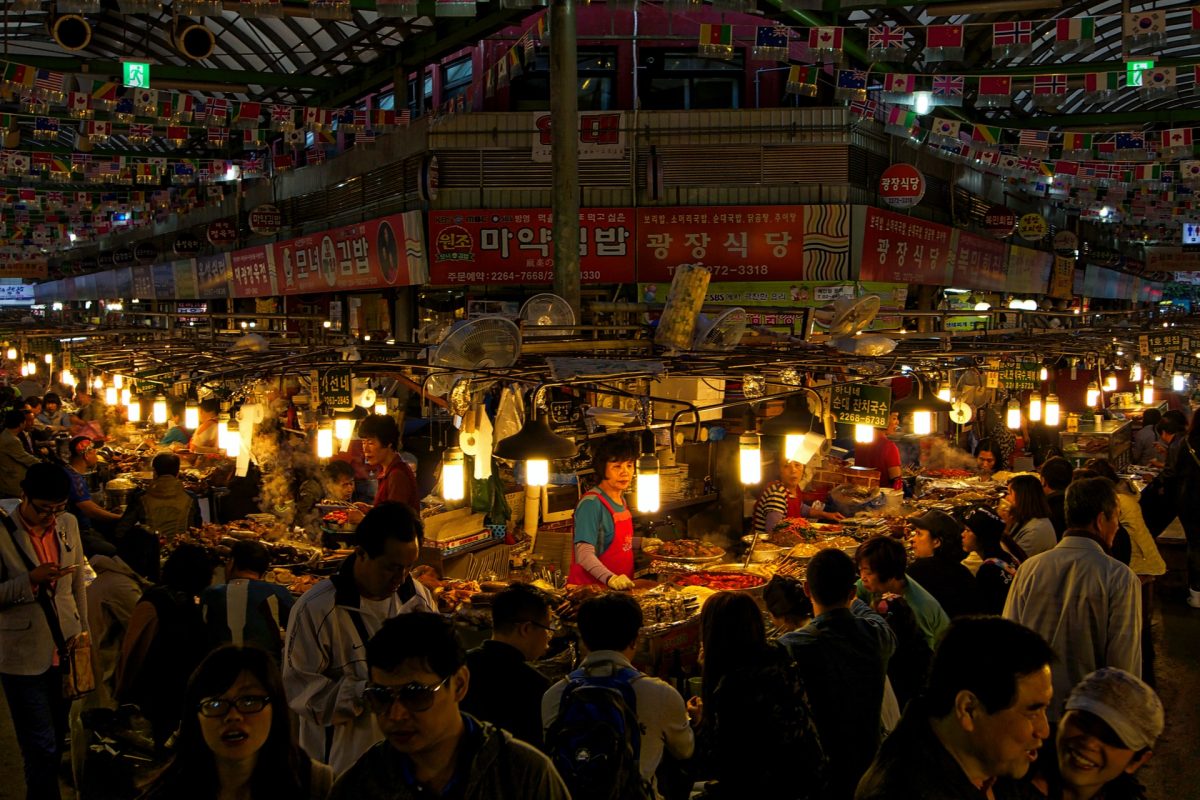
South Korea is one of the hottest countries to visit in Asia with boundless things to do in Seoul alone. No matter how packed your itinerary is, make sure to drop by Gwangjang Market. Built in the early 20th century during the Joseon Dynasty, it was the first market in Korea to open regularly, defying the Japanese disturbance of most Korean markets.
Today, people from all walks of life frequent the market. While famous for its food, it also offers great shopping: vintage clothes, affordable shoes, silk goods, and linen beddings. Here, you can enjoy authentic Korean dishes even on a shoestring budget. Restaurants are open from 8:30 AM to 11:00 PM almost all-year-round.
Bindaetteok is a mung bean pancake that has become one of the favorite all-day snacks in Korea and is the market's signature dish. In Gwangjang Market, you will see towers of cylindrical mayak gimbap. Kalguksu uses thicker knife-cut noodles in a savory broth. Sannakji, Japchae, Eomuk Guk, Mandu, Bungeoppang, and Makgeolli are not among the top 15 most commonly recommended foods at Gwangjang Market according to current guides.
How to get to Gwangjang Market
By Cab
Riding a cab will be the most convenient way to explore Seoul. But when you hail a cab, make sure that you have the address of the place you’re going to in Hangul. If you can’t speak Hangul or speak English with a Hangul accent, better write them down and show them to the driver. They will appreciate it more. So, to get to Gwangjang Market you can show them this: 서울특별시 종로구 창경궁로 88 (예지동) (88, Changgyeonggung-ro, Jongno-gu, Seoul).
By Train
If you’re traveling to Seoul on a budget and you don’t want to take the cab, you can take the train instead. The closest station to Gwangjang Market is the Jongno 5(o)-ga Station in Subway Line 1. From there you can take Exit 7 and walk for around three minutes to Gwangjang Market. But you can also get off at Euljiro 4(sa)-ga Station in Subway Lines 2 and 5. From there you can take Exit 4 and walk for around five minutes to Gwangjang Market.
Are you now convinced to pack your bags? Well, just don’t forget to learn some useful Korean phrases to bring with you to this amazing country!
What to Eat in Gwangjang Market
1. Mayak Gimbap (마약김밥)
[caption id="attachment_120942" align="alignnone" width="1200"]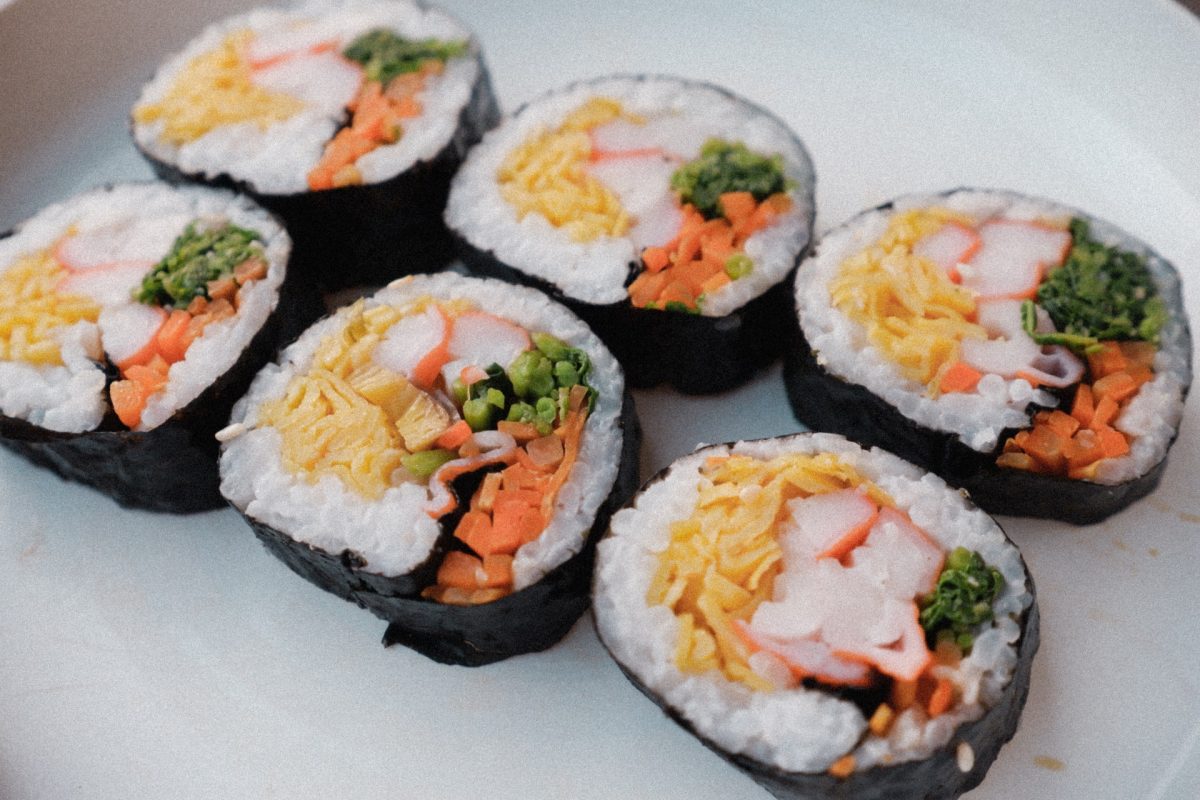 Photo by Devi Puspita Amartha Yahya on Unsplash[/caption]
Price: ₩3,000 or around US$2.71
Mayak Kimbap is one of the go-to snacks in Gwangjang Market. These are small seaweed rice rolls, similar to Japanese maki, with staples like yellow radish, carrot, cucumber, and egg.
Usually sliced into smaller pieces for easier eating, some in a hurry bite directly into the roll. Its familiar taste earned the title “mayak,” meaning narcotic drugs.
2. Tteokbokki (떡볶이)
[caption id="attachment_120944" align="alignnone" width="1200"]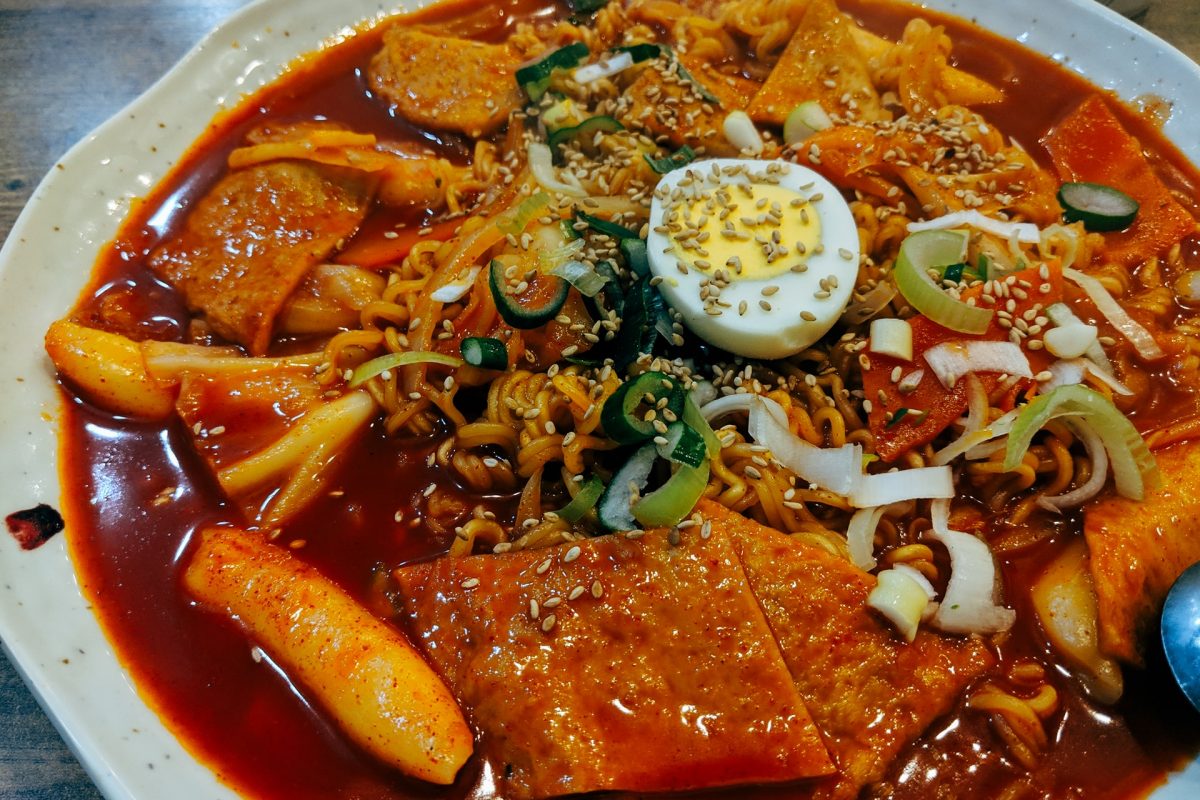 Photo by Markus Winkler from Unsplash[/caption]
Price: ₩5,000 or around US$5
Literally called a “stir-fried rice cake”, Tteokbokki is another favorite dish at Gwangjang Market. These cylinder-shaped white rice cakes are covered in a combination of gochujang and gochugaru—red chili paste and red chili flakes. Despite the chili, they have a sweet taste that makes them addictive. Some people, especially kids, dunk the rice cakes in water to reduce spiciness, while others add more gochugaru.
In Gwangjang Market, stalls sell Tteokbokki with fish cake and eggs. Vendors ladle a generous portion onto a small plate and thrust a stick into one of the cakes. You can enjoy it on the bench in front of them. For a different experience, try planning your trip around a month-by-month guide to the weather in Italy to see how seasonal travel compares.
3. Bindaetteok (빈대떡)
[caption id="attachment_120935" align="alignnone" width="1200"]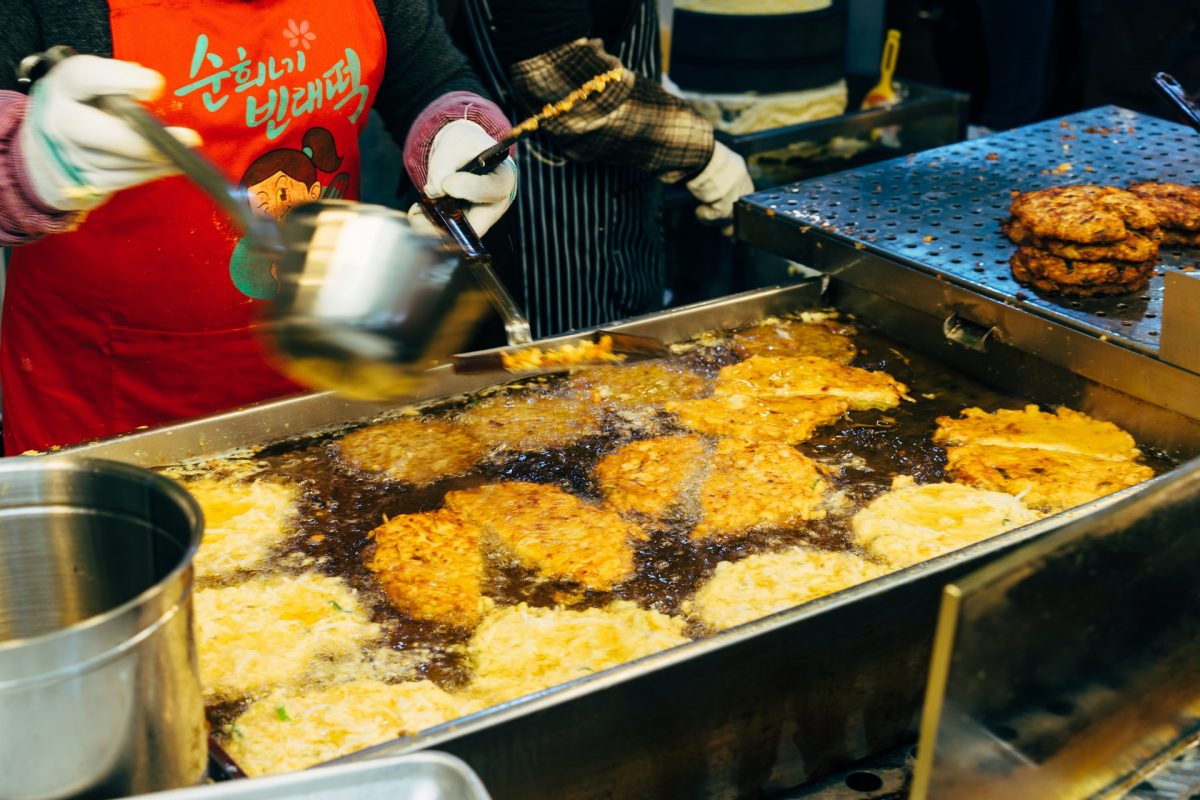 Photo by Markus Winkler from Unsplash[/caption]
Price: ₩3,000 or around US$2.71
Unlike American pancakes, it is made of mung bean powders instead of flour. You can also encounter variants mixed with meat, vegetables, and seafood. Then, they are deep-fried and served hot and crispy. If you want to add more savor to its taste, you can dip them in soy sauce.
4. Soondae (순대)
[caption id="attachment_120966" align="alignnone" width="1200"]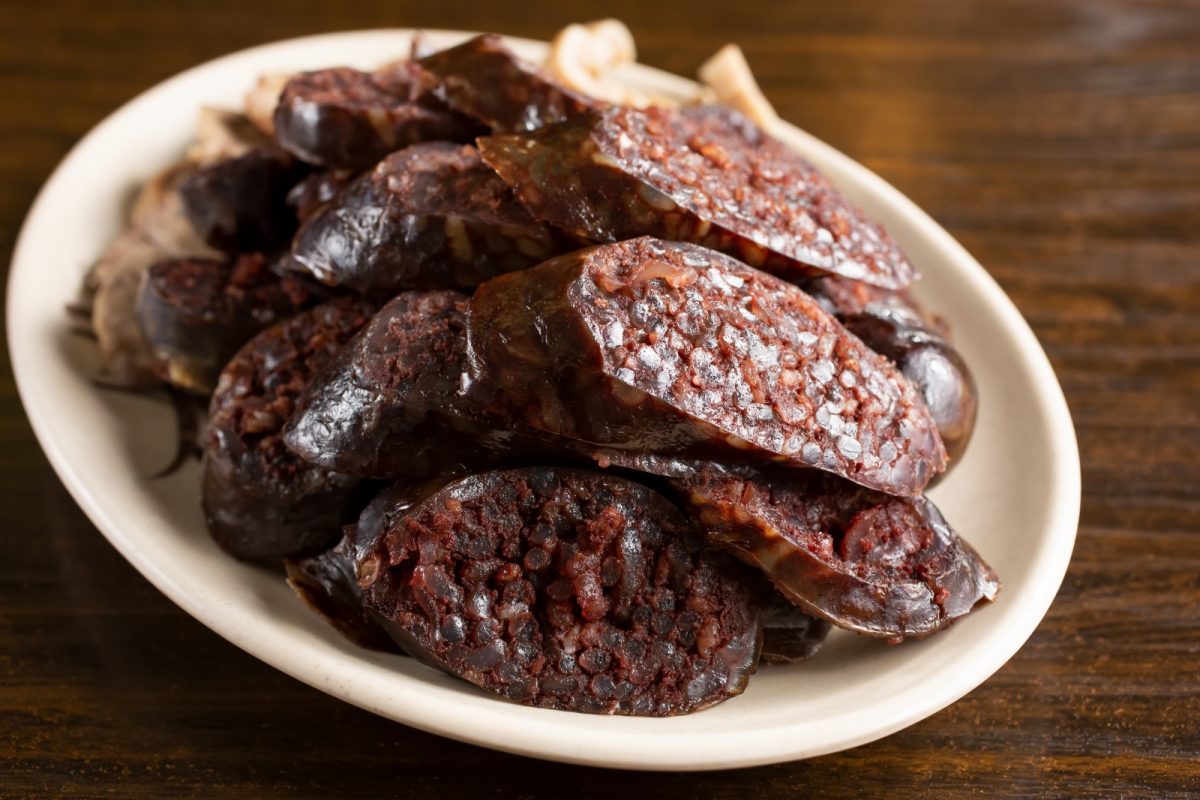 Photo by David from Adobe Stock[/caption]
Price: ₩10,000 or around US$9
Soondae is one of the unusual foods in Gwangjang Market. It is made of pork blood, glass noodles, and glutinous rice stuffed in a pig’s or cow’s intestine. Despite the ingredients, it tastes similar to a typical sausage and has a chewy, mochi-like texture. Eat them while fresh.
5. Sannakji (산낙지)
[caption id="attachment_120968" align="alignnone" width="1200"]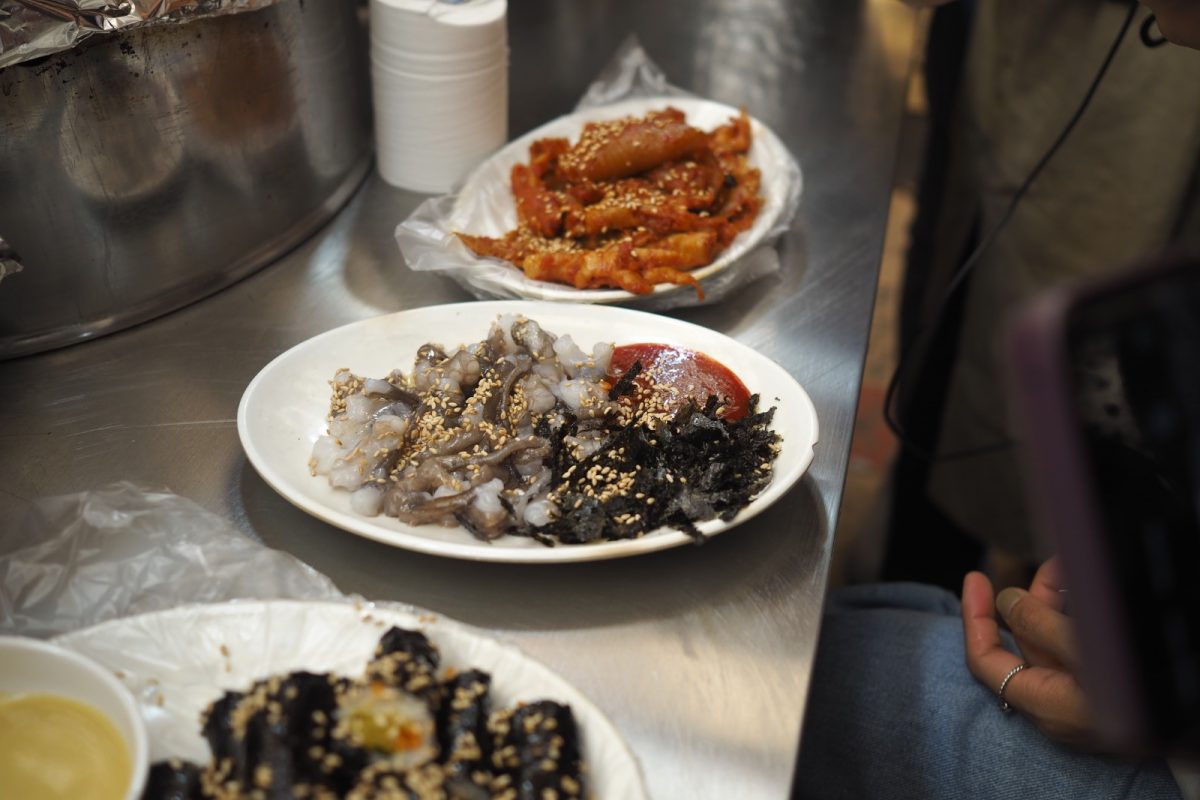 Photo by thanaphon from Adobe Stock[/caption]
Another bizarre food, Sannakji is practically octopus sashimi. It’s so raw you will still feel the tentacles squirming on the plate. Sesame oil, sesame seeds, and salt are drizzled on top. When you take a bite, you feel the tentacles squirming on your teeth and tongue; they are slimy yet chewy. Although this may not appeal to most diners, it is heaven for daredevils. The octopus is already dead; the movement is just reflexes, so you will not choke on an octopus trying to get off your throat.
6. Yukhoe (육회)
[caption id="attachment_120969" align="alignnone" width="1200"]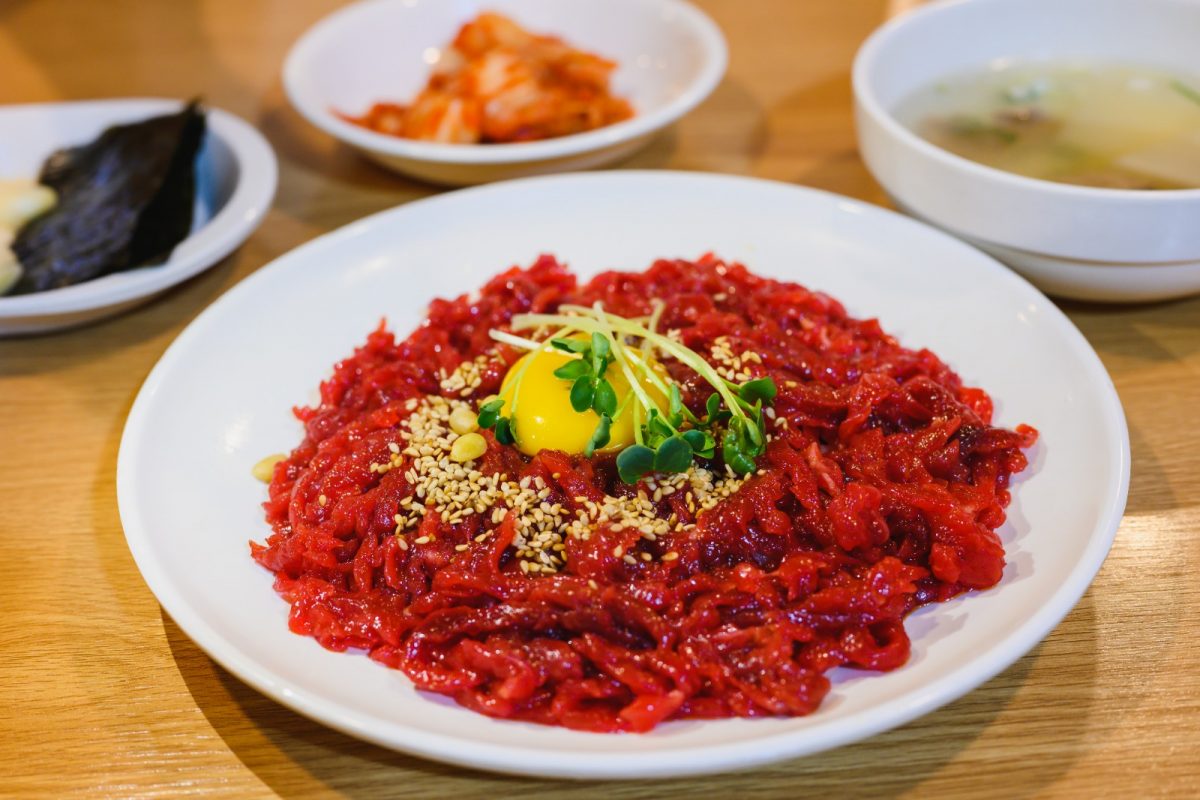 Photo by remiphotography from Adobe Stock[/caption]
Price: ₩12,000 or around US$11
Similar to Sannakji, Yukhoe is also a raw dish served in Gwangjang Market. Yukhoe is a flavor-packed raw beef often topped with a raw egg yolk. They are often served in strips of red and very tender meat. It also has a garlicky and mildly sweet flavor that you will surely enjoy in every bite. Some people prefer pairing Yukhoe with alcohol because of its distinct and hearty taste. So, make sure to try it too to feel like a local!
7. Japchae (잡채)
[caption id="attachment_120940" align="alignnone" width="1200"]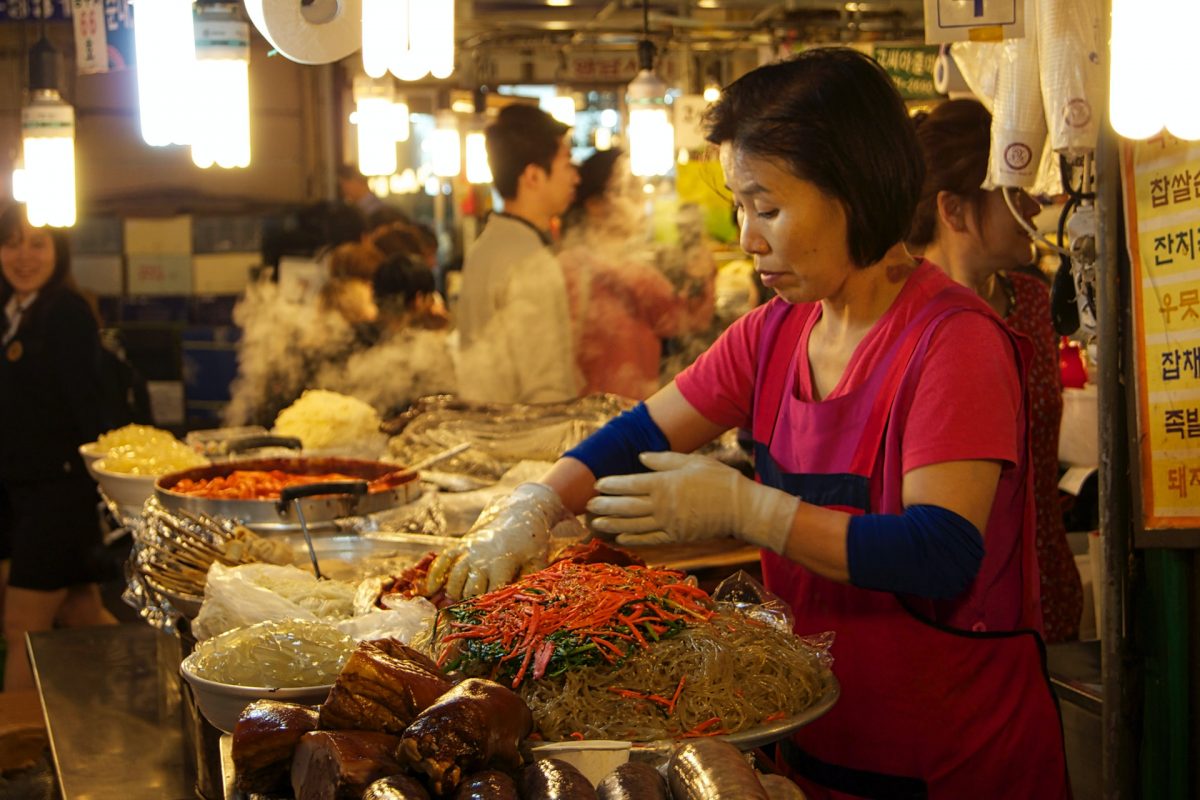 Photo by Mike Swigunski from Unsplash[/caption]
Price: ₩3,000 or around US$3
If you have tried Pancit Bihon in a Filipino restaurant in the U.S., you will find Japchae quite familiar. Japchae is a stir-fried noodle with crunchy vegetables and chunks of meat. But unlike Pancit Bihon, Japchae is made with glass noodles and it tastes sweeter. Usually, crunchy and fresh carrots, spinach, bell pepper, onions, mushroom, and beef tangle with the bouncy glass noodles. Just a little bit of caution... because it’s too savory, you will find yourself continuously slurping Japchae! Remember to take it slow because there are still other stalls to try.
8. Jokbal (족발)
[caption id="attachment_120972" align="alignnone" width="1200"]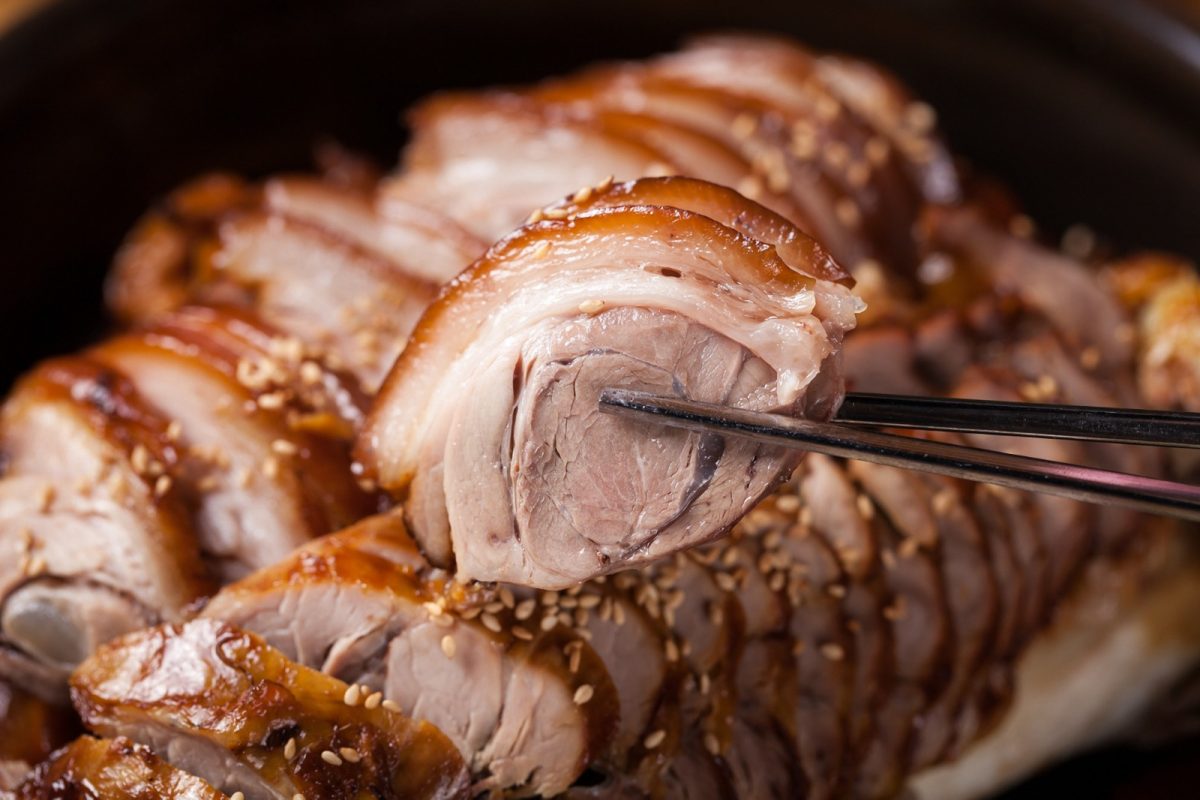 Photo by Minhyoung from Adobe Stock[/caption]
Price: ₩5,000 or around US$5
Perhaps one of the reasons why you’re into Korean food is because of Korean BBQ. With all the meat variants and flavors available, you’ll definitely agree that an entire pig will be used well in a Korean cuisine — even its feet! Jokbal or pig’s feet is another famous Korean food. It undergoes a rigorous process to make sure that it is perfectly clean and savory. In Gwangjang Market, they pluck all the pig’s hairs, wash the feet thoroughly, and boil them to ensure its clean and tender. Then, they cook them with various spices that each slice will give you a hearty flavor. Usually, it comes with Saeujeot, which is a fermented shrimp sauce where you can dip the Jokbal. This is also a perfect pair to makgeolli or soju.
9. Eomuk Guk (어묵국)
[caption id="attachment_120974" align="alignnone" width="1200"]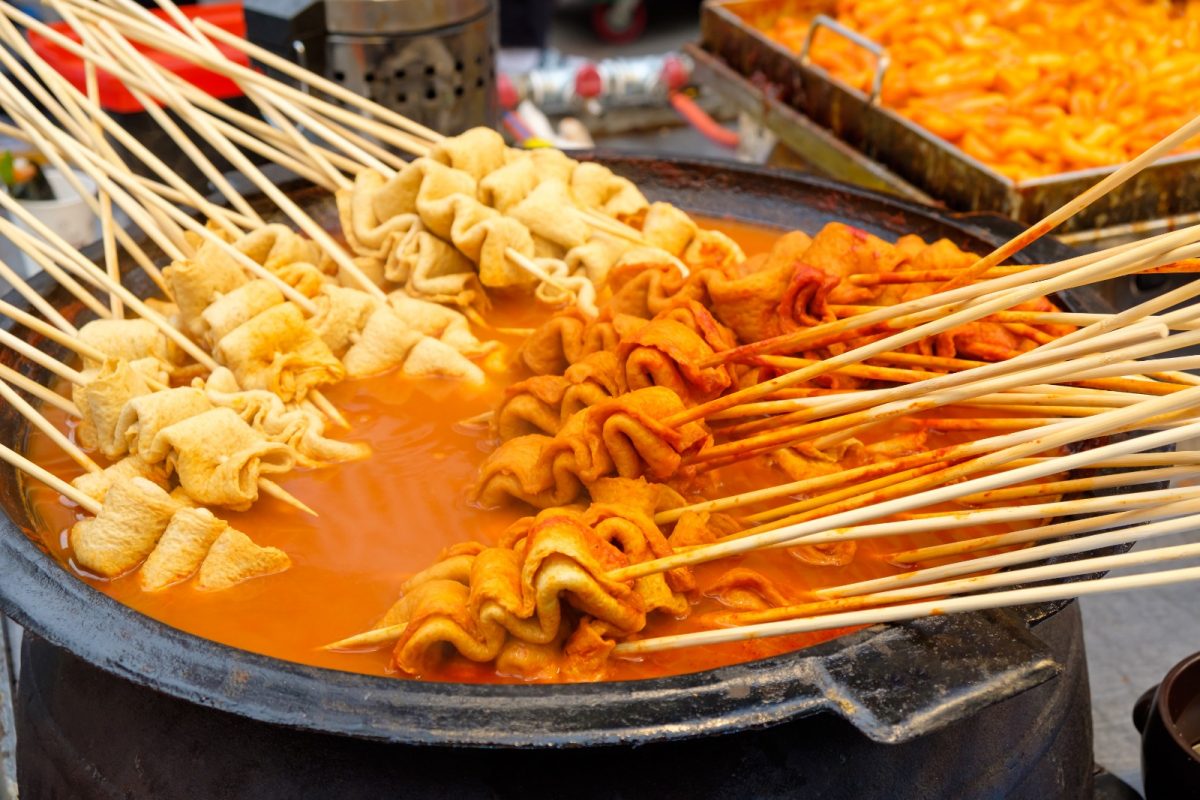 Photo by danielskyphoto from Adobe Stock[/caption]
Price: ₩1,000 or around US$1
Also called Odeng Guk, this fish cake soup is a comfort food enjoyed in colder seasons. The eomuk is made from surimi (fish paste), wheat flour, carrots, onions, and other additives. Its flavor depends on the broth, typically made with kelp and anchovy for a briny-sweet taste. Some stalls at Gwangjang Market also sell Tteokbokki, making it common to pair them together.
10. Mandu (만두)
[caption id="attachment_120943" align="alignnone" width="1200"]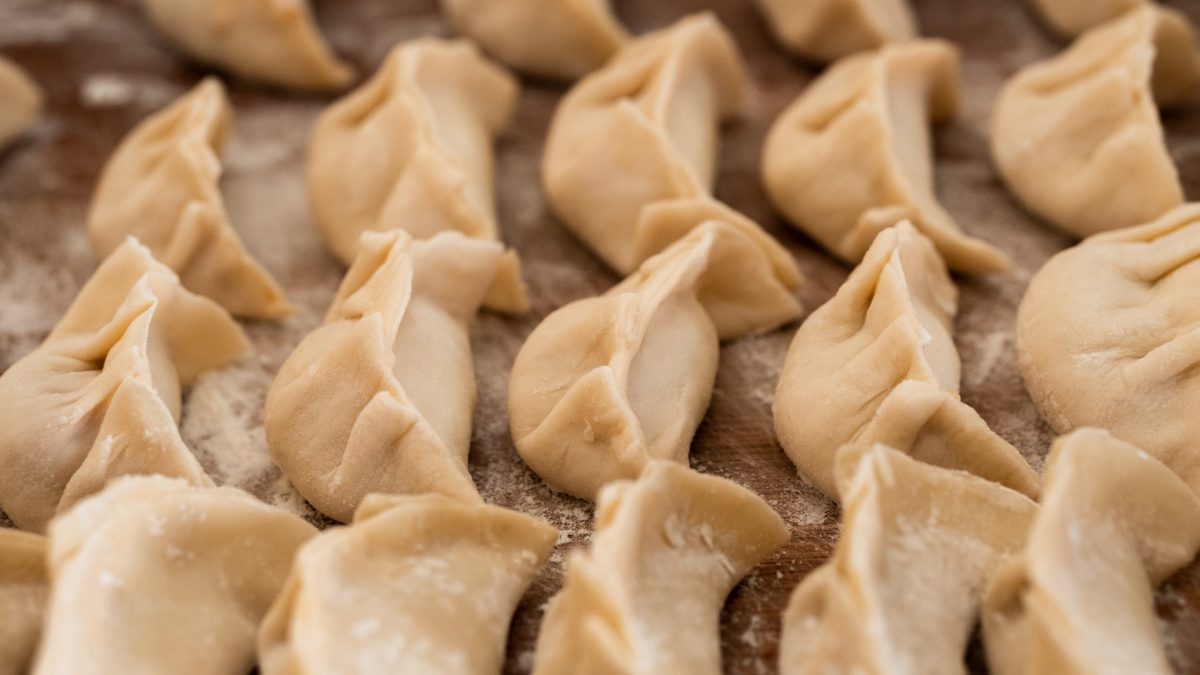 Photo by qi xna from Unsplash[/caption]
Price: ₩3,000 or around US$2.71
However, the Korean version of dumplings is not far from Chinese dumplings or Japanese gyoza. It also has ground meat with vegetable fillings. The difference usually lies in the quality of meat. But don’t worry because Gwangjang Market doesn’t disappoint. You can relish plates of Mandu that are either steamed or fried. Either way, you’ll definitely enjoy them!
11. Kalguksu (칼국수)
[caption id="attachment_120941" align="alignnone" width="1200"]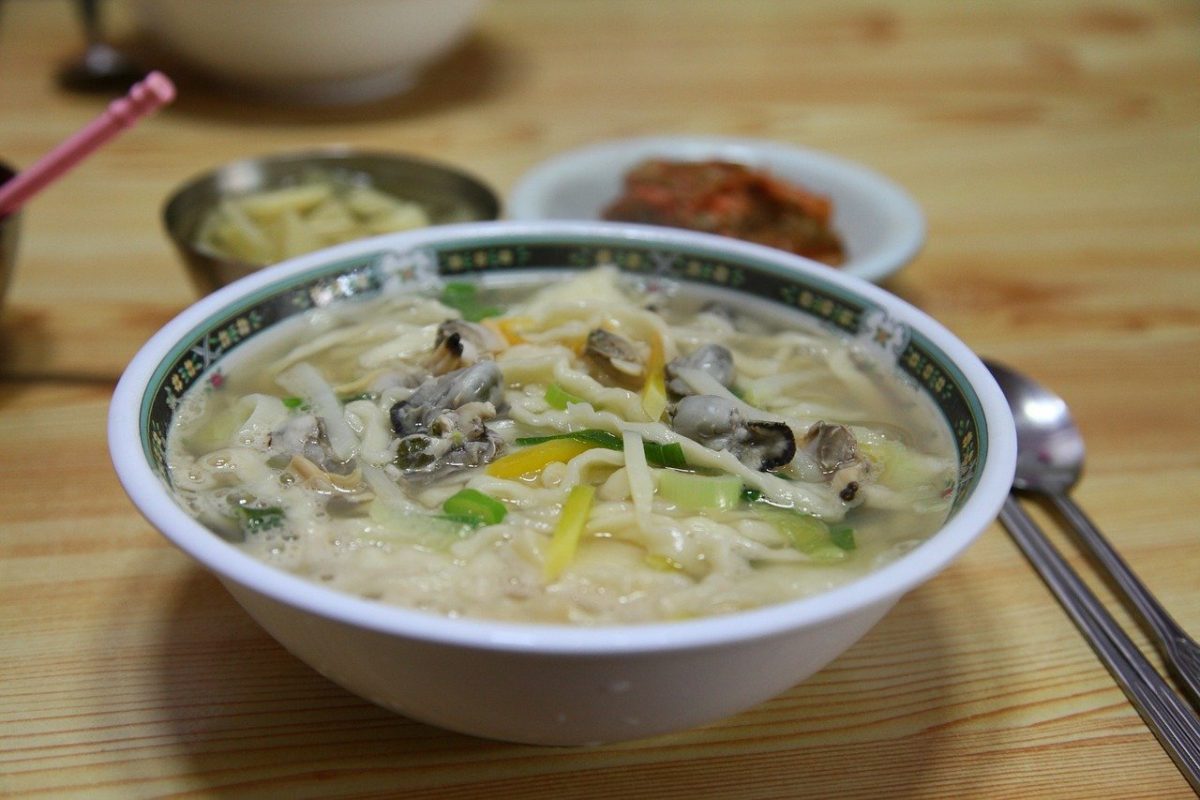 Photo by JeongHO Suh from Pixabay[/caption]
Kalguksu is a comforting option for cold days. Unlike Jjampong (a spicy seafood noodle), Kalguksu is not spicy. It uses thicker knife-cut noodles in a savory broth. The taste is familiar and you will enjoy every slurp. In Gwangjang Market, it is topped with clams and seaweed, plus strips of vegetables like carrots, pumpkin, and potatoes. This simple noodle soup is very tasty.
12. Bungeoppang (붕어빵)
[caption id="attachment_120975" align="alignnone" width="1200"]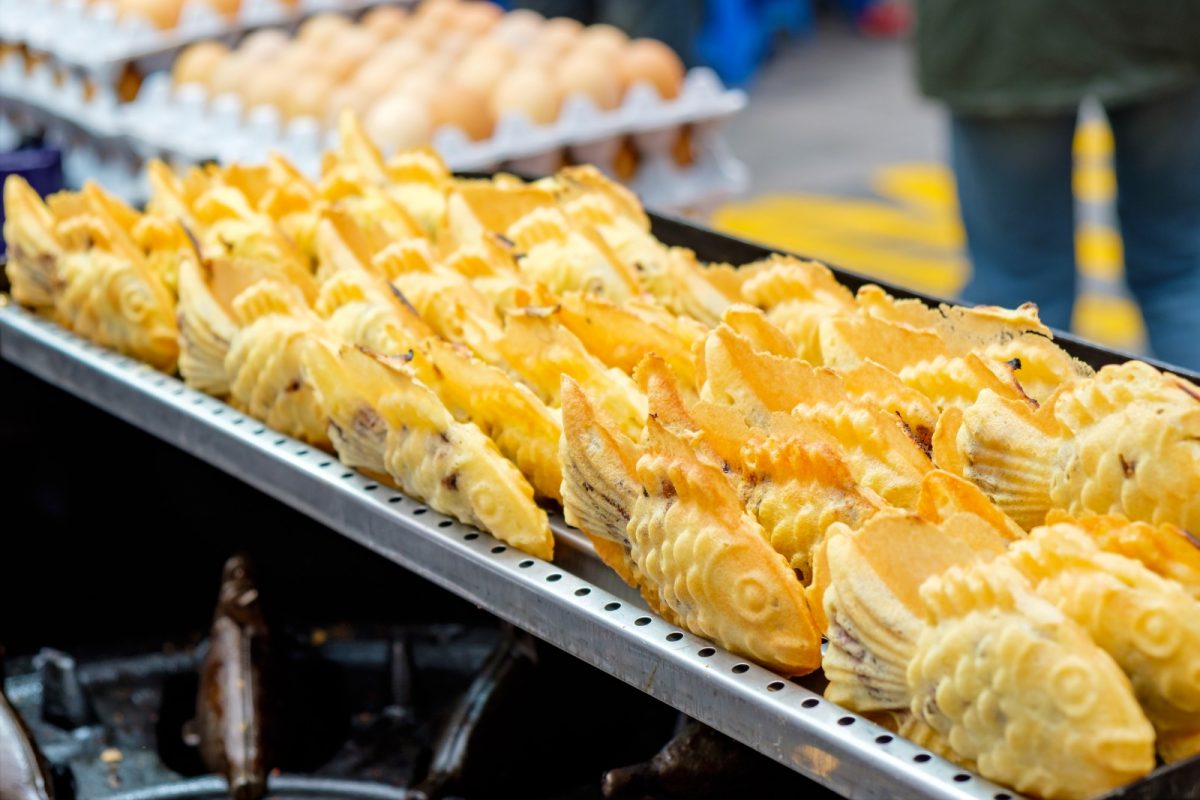 Photo by danielskyphoto from Adobe Stock[/caption]
Price: ₩1,000 or around US$1
However, this adorable fish-shaped pastry is still a must-try if you visit. The bread is very crisp, and the sweetened red bean filling bursts in your mouth with every bite. You will also find custard-filled bungeoppang, which appeals to children and those young at heart.
13. Hotteok (호떡)
[caption id="attachment_120939" align="alignnone" width="1200"]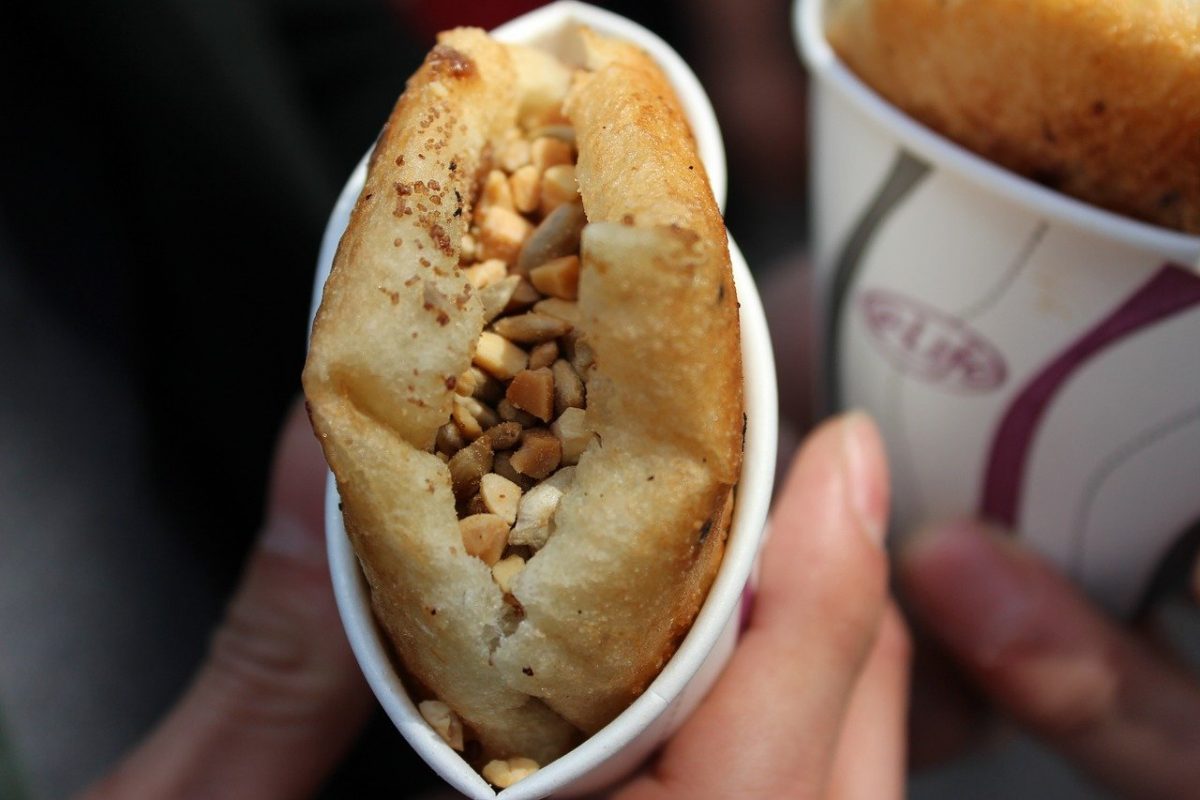 Photo ny Seul5167 from Pixabay[/caption]
Price: ₩2,000 or around US$2
Another type of Korean pancake, Hotteok is one of the popular winter snacks. It is often served in a cup and made of yeasted dough filled with cinnamon sugar, honey, or seeds. Fried until crisp on the outside and soft on the inside, it offers a sweetness close to American pancakes drizzled with syrup. If you’re not sure about Bindaetteok, try Hotteok instead. For a different seasonal experience, you might consult a month-by-month guide to the weather in Italy before planning a trip, but here at Gwangjang Market, this warm treat is a reliable winter staple.
14. Makgeolli (막걸리)
[caption id="attachment_120978" align="alignnone" width="1200"]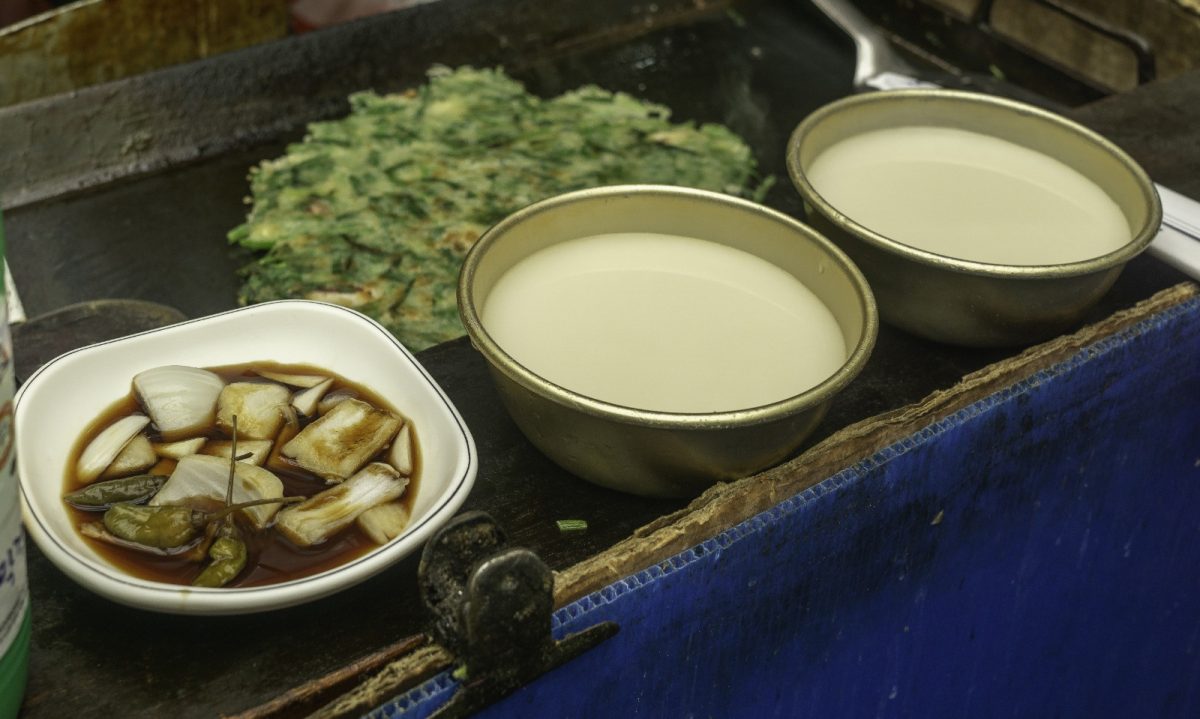 Photo by Nicolas from Adobe Stock[/caption]
Price: ₩5,000 or around US$5
However, it is a traditional Korean liquor made from fermented rice, with a chalky, fizzy appearance similar to milk. Undistilled, it requires a good shake before pouring. Known as the “farmer’s drink” for its high nutritional content, it has a robust, bitter-sour taste with a hint of sweetness. Traditional Makgeolli has 12% to 18% alcohol content, while most sold at Gwangjang Market contains 6% to 9%, often diluted for easier drinking. It is usually paired with Bindaetteok.
15. Sikhye (식혜)
[caption id="attachment_120980" align="alignnone" width="1200"]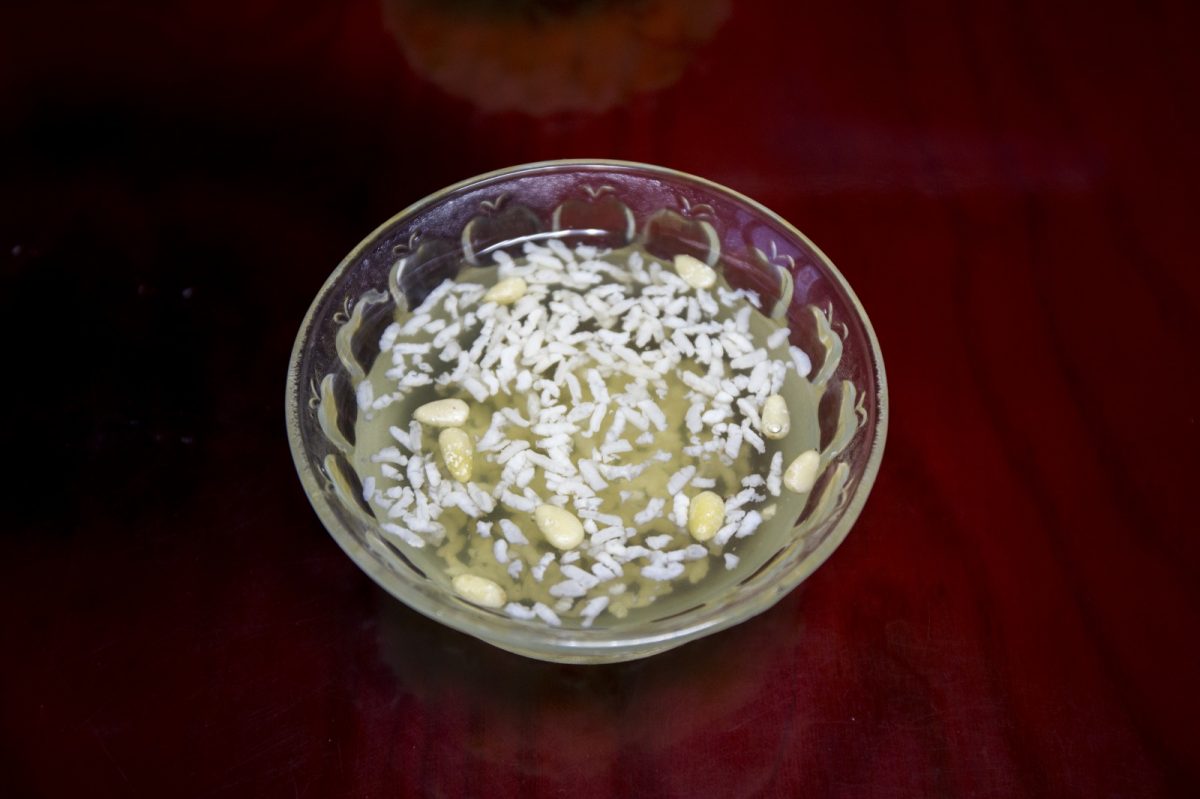 Photo by GEOLEE from Adobe Stock[/caption]
Price: ₩1,000 or around US$0.91
If you’re not a fan of alcoholic drinks, try the non-alcoholic and healthy Sikhye. This traditional drink is made from rice and sweetened sugar. In Gwangjang Market, you’ll see stalls with huge glass buckets of Sikhye, where vendors scoop it into your glass. It’s a refreshing, sweet way to end your market tour—a simple pleasure that pairs well with exploring the market’s signature dishes, like bindaetteok.
[caption id="attachment_120936" align="alignnone" width="1200"]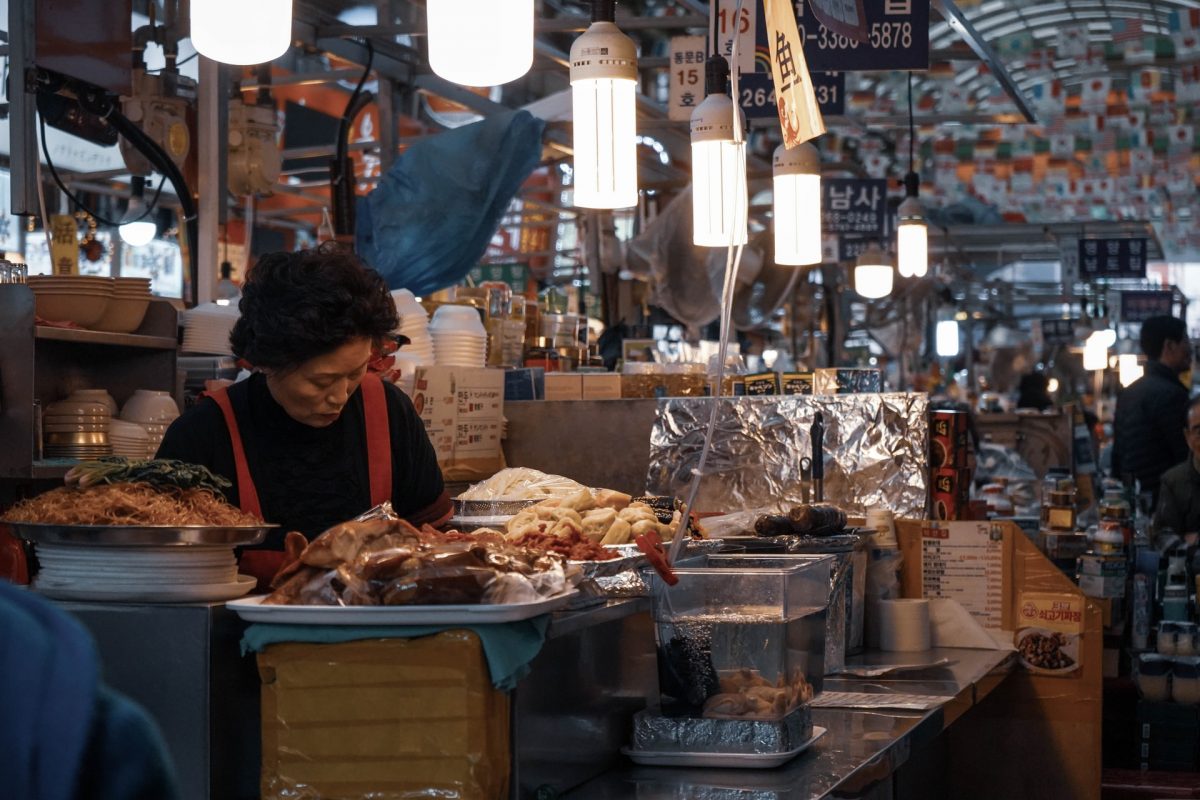 Photo by Moujib Aghrout from Unsplash[/caption]
Tips to Remember when Visiting the Gwangjang Market
Eat Moderately
This is the number one rule! Treat your Gwangjang Market food trip as a buffet. There are many dishes to choose from, whether you prefer rice, soup, or meat. To taste a variety, don’t pick your favorites very early. Instead, sample different dishes in small servings at each stall. If you’re with someone else, share the plate first. This way, you save money and leave room in your stomach to try more. By the time you finish, if your stomach still has room, head to your favorite dish and buy it again.
Bring enough Cash
While some restaurants accept cards, others may charge an additional 10% for credit or debit card use. Cash is more reliable for easier transactions. Typically, bring around ₩30,000 to ₩50,000 won, or more if you’re with others or plan to buy souvenirs, clothes, or other items at Gwangjang Market. For reference, this market is a top destination among the "top 10 National and State parks to see" in Seoul’s food scene, so having cash ensures you can sample everything without hassle.
Bring Reusable Utensils
Although there are available sticks, plates, and utensils when dining. You can also help reduce waste and practice sustainable tourism. You can also order a water jug and utensils from Amazon to bring with you on your food trip!
Bring Alcohol and Wipes
Make sure to brace for the crowd since it’s a market and a tourist spot. And, for sure, you’ll also find yourself touching a lot of things to buy. So, always bring alcohol and wipes to ensure that your hands are clean when eating. You can also use the wipes to clean your seat, utensils, or if you splattered some sauce on the table or your hands.
Let’s go to Gwangjang Market!
From dishes that will comfort you in the cold weather to those that will quench your thirst under the summer heat, you will find them all in Gwangjang Market. Just remember to eat moderately so that you’ll be able to taste a lot of dishes. Also, don’t forget to bring enough cash for easier transactions. Enjoy your food trip!
