

Part of our Peru guide.
Places and guides from our Peru coverage, gathered into one page. You'll find practical details on specific sites, treks, and cultural stops across the country, from the high Andes to the desert coast.
Related travel guides: Where To Eat In Peru, Where To Stay In Peru, Exploring The Ancient Inca City Of Cusco, Peru, Cusco Travel Guide, and Things To Do In Peru.
Rainbow Mountain, Peru: How To Do It Right
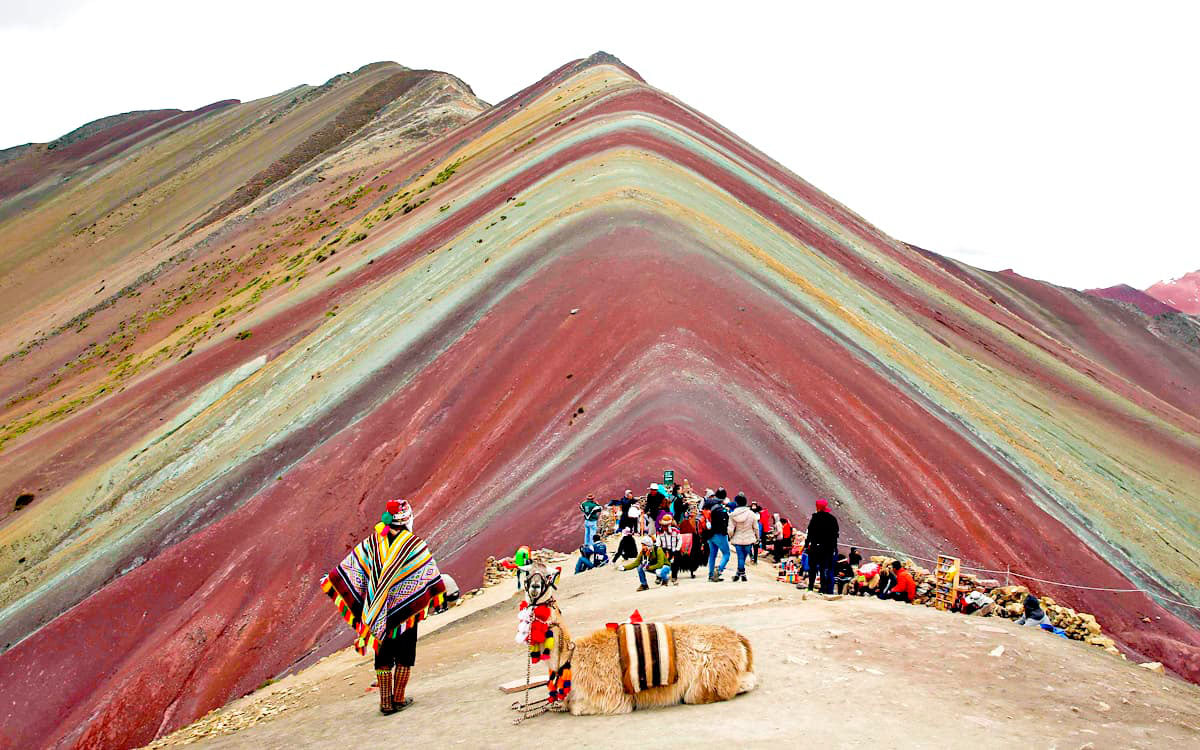
Rainbow Mountain sits in the Cusco region at over 5,000 meters (16,400 feet) above sea level, its striped layers colored by iron oxide and copper sulfide from years of weathering. The standard visit involves a moderate hike from the trailhead, with the option to rent a horse for the final ascent. Go early to avoid crowds and acclimatize in Cusco first. The full-day trip from Cusco takes about three hours each way by road, then a one-to-two-hour hike to the viewpoint. Bring water, sun protection, and layers; the altitude makes the walk harder than it looks.
Sacred Valley
In the Sacred Valley, family-run weaving cooperatives produce alpaca wool goods using techniques passed down through generations. You can watch artisans card, spin, and dye the wool using natural pigments from local plants and insects. Many cooperatives offer short demonstrations followed by a chance to buy directly, with prices often better than in Cusco's markets. The valley sits at a lower altitude than Cusco, making it a good place to acclimatize while exploring the markets of Pisac and the terraces of Ollantaytambo.
Peru
Llamas have been part of Peruvian life for centuries, carrying goods across mountain paths and providing wool for clothing. In the highlands, you'll see them grazing in fields near villages and trekking routes. Their wool is warmer and lighter than sheep's wool, which is why it's prized for Andean garments. While llamas are the most famous, alpacas are more common in the textile trade, and both are often kept together. If you're hiking the Huayhuash or Ausangate circuits, you'll pass herds regularly, but keep your distance—they spit when startled.
Inca Quipu Sites In Peru's Pachacamac Ruins
At the Pachacamac Ruins, you can see quipus—intricate knotted strings the Incas used for record-keeping and communication. These cords recorded numbers, tributes, and possibly narratives, with the knots and colors encoding information. The site's museum displays several examples, and the on-site signage explains how to read them. Pachacamac is about 40 minutes south of Lima by car, and the ruins include a temple, a pilgrimage site, and a cemetery. Allow two hours to walk the grounds and visit the museum.
Hidden Sunrise Spots At Machu Picchu's Terraces
For a quieter sunrise view than the main Sun Gate, head to the agricultural terraces on the eastern side of the site. From the upper terraces, you can watch the first light hit Huayna Picchu while most visitors cluster near the guardhouse. The terraces are accessible via the main circuit, and the walk from the entrance takes about 15 minutes. Arrive at the opening gate at 6 a.m. to secure a spot before the tour groups fill in. Remember that Machu Picchu requires timed entry tickets, and the terraces are part of the designated routes—you cannot wander off them.
Hidden Desert Lagoon
Huacachina is a desert oasis near the city of Ica, surrounded by sand dunes that rise hundreds of meters. The lagoon itself is small, but the main draw is the dune buggy rides and sandboarding on the adjacent slopes. You can rent a board from one of the shops in the village, and most hostels arrange tours at sunset when the light is best. The water is not for swimming—it's murky and shallow—but the setting is unique. From Lima, it's a four-hour bus ride, making it an easy weekend trip.
The Amazon Rainforest Canopy Walkway
A canopy walkway in the Amazon lets you walk among the treetops, where you can see toucans, macaws, and monkeys from a series of suspended platforms and bridges. Most walkways are in protected reserves near Iquitos or Puerto Maldonado, and access is typically by guided tour from a jungle lodge. The walkway itself is a series of connected platforms, sometimes with a tower at the end for a higher viewpoint. You'll hear the forest before you see it—howler monkeys and insects are constant background noise. Wear sturdy shoes and insect repellent, and book through a lodge that includes meals and transport.
Huacachina: Peru's Pisco Vineyard Tour
Huacachina also serves as a base for visiting Pisco vineyards in the Ica Valley. The region's wineries and distilleries offer tours that walk you through the grape-growing and distillation process, from harvest to bottle. You'll taste several varieties of Pisco, the grape brandy that's Peru's national drink, often served straight or in a Pisco sour. Tours typically last two to three hours and include transport from Huacachina. The dry desert climate and sandy soil create distinct flavor profiles, and many vineyards still use traditional methods. Book ahead in high season, as groups fill up.
Abandoned Mining Railways
Peru's abandoned mining railways wind through the Andes, with rusted tracks and derelict stations scattered along the routes. These lines once carried ore from highland mines to coastal ports, and today they offer a glimpse into industrial history. You can walk or cycle along some sections, especially near the town of Morococha or the trackbed that runs parallel to the Central Railway. The terrain is rough, so bring water and sturdy boots. Some operators run railbike tours on the disused lines, but check locally for current access and conditions.
The Peru Huayhuash Trek
The Huayhuash Trek is a multi-day circuit in the Cordillera Huayhuash, with passes above 4,500 meters and views of snow-capped peaks and turquoise lakes. The full circuit takes about 10–12 days, though shorter versions are possible. You'll need a guide and a mule train for supplies, as there are no villages along the route. Camping is the only option, and you must carry your own tent and food. The trek starts near the town of Huaraz, about eight hours by bus from Lima. Best done between May and September, when the dry season makes the passes passable.
The Ausangate Rainbow Mountain Trek
The Ausangate trek is a longer, more remote alternative to the day trip to Rainbow Mountain, taking you through the same striped landscapes but with far fewer people. The full circuit takes about5–6 days, crossing passes above5,000 meters and passing glacial lakes and hot springs. You'll see herds of alpacas and llamas, and the route passes through villages where you can stay in basic family-run lodgings. The trek starts in the village of Tin qui, about a three-hour drive from Cusco. Acclimatization in Cusco for at least two days is essential, as the highest pass reaches over5,500 meters.
Choquequirao Peru The Hidden Machu Picchu Trek
Choquequirao is an Incan site often compared to Machu Picchu but with a fraction of the visitors. The trek to reach it is challenging—a two-day,28-kilometer descent and ascent that drops from3,000 meters to the Apurimac River and back up. The ruins themselves are extensive, with terraces, plazas, and stone fountains spread across a ridge. Unlike Machu Picchu, there are no crowds, and you may have the site largely to yourself. The trailhead is near the town of Cachora, about a four-hour drive from Cusco. You can hire a guide in Cusco or go independently, but the route is not marked, so a guide is recommended.
