Part of our China guide.
China’s most rewarding stops range from the Terracotta Army in Shaanxi to the laid-back coastal streets of Xiamen. This page pulls together six of our guides, each covering a specific city or region with practical details on what to see and do.
What To Do During A Long Layover In Xiamen
Xiamen’s airport sits close to the city center, making even a short stopover worthwhile. Head straight to Gulangyu Island, a pedestrian-only islet reachable by a 10-minute ferry from the downtown pier. The island’s colonial-era villas and quiet alleys are its main draw; you can walk across in under an hour. Back on the main island, stroll along Zhongshan Road pedestrian street for local snacks like peanut soup and oyster omelets. If time allows, climb to Xiamen University’s campus viewpoint—it’s free, but you’ll need to book a time slot online in advance. Adjacent to the university, Nanputuo Temple offers a peaceful break with hillside paths and sea views.
What To Do On A 9 Hour Layover In Wuhan
With nine hours, you can see Wuhan’s two signature sights without rushing. Start at the Yellow Crane Tower, a rebuilt Tang-dynasty structure on Snake Hill—climb to the top for a panoramic view of the Yangtze River and the city’s skyline. From there, take a short taxi ride to the Hubei Provincial Museum, where you can see the bronze chime bells of Marquis Yi of Zeng, a set of 65 bells that still play music. The museum is free, but bring your passport to get a timed entry ticket. If you’re hungry, stop at Hubu Alley, a narrow food street near the tower, for hot dry noodles (re gan mian), Wuhan’s signature breakfast dish. Leave about 90 minutes to get back through airport security—the metro takes roughly an hour from the city center to Tianhe International Airport.
Best Things To Do In Tianjin, China
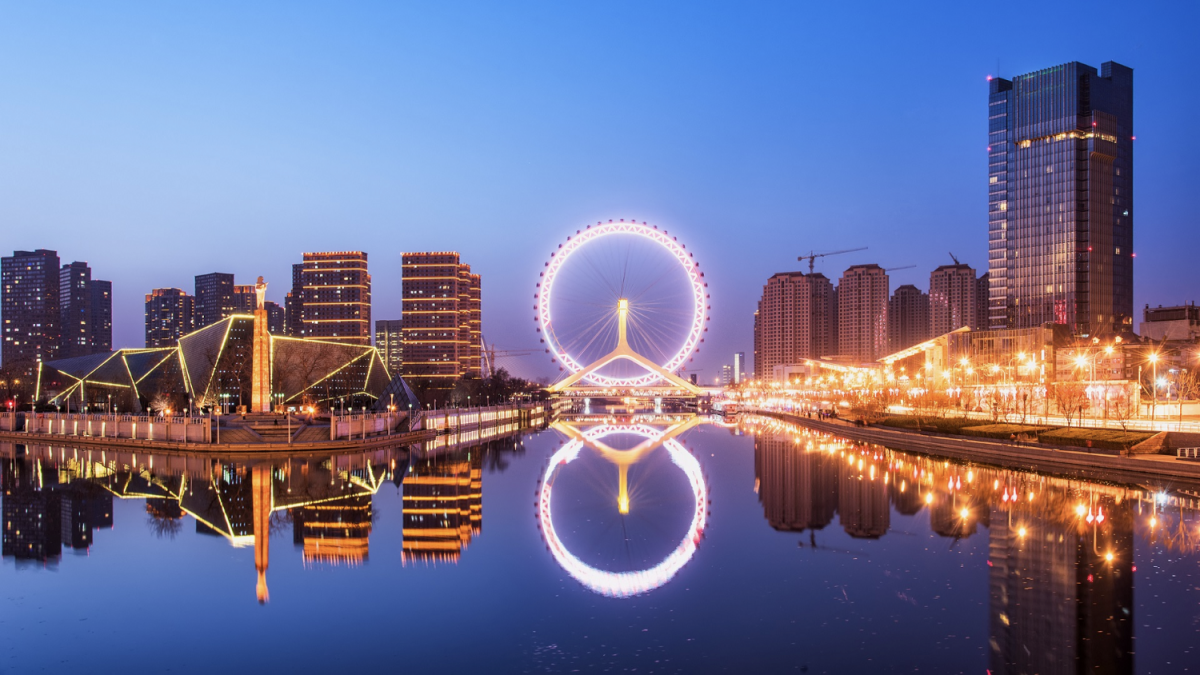
Tianjin is a laid-back alternative to nearby Beijing, just a 30-minute high-speed train ride away. Start at the Tianjin Eye, a Ferris wheel built on the Yongle Bridge—at 120 meters tall, it offers a full-circle view of the city in about 30 minutes. Then walk along the Hai River promenade, where you’ll pass European-style buildings from the city’s 19th-century foreign concessions. For a meal, try the local specialty, goubuli baozi (stuffed buns), at one of the branches near Ancient Culture Street. If you’re interested in architecture, the Five Great Avenues area has over 200 neoclassical and art-deco villas, many of which you can view from the street for free.
What Are Some Tourist Attractions In China
China’s tourist attractions span more than 4,000 years of history and a landscape that ranges from the Himalayas to the Pacific coast. The Great Wall, stretching over 13,000 miles in total, is the most famous—the most visited section is at Badaling, about 43 miles from Beijing. The Forbidden City in central Beijing, a UNESCO World Heritage site, was the imperial palace for 24 emperors and now houses a vast collection of artifacts; you’ll need to book tickets online at least a day ahead. For natural scenery, the karst peaks around Guilin and Yangshuo in Guangxi province are best seen on a Li River cruise. If you prefer modern landmarks, the Shanghai skyline along the Bund offers a contrast of colonial-era buildings and the futuristic Oriental Pearl Tower.
Top Things To Do In Shaanxi, China
Shaanxi’s headline attraction is the Terracotta Army, discovered in 1974 by farmers digging a well near Xi’an. The site holds over 8,000 life-sized clay soldiers, along with horses and chariots, all buried to accompany the first emperor, Qin Shi Huang, in the afterlife. Each soldier has a unique face, and the figures were originally painted—though the colors faded quickly after exposure. The excavation pits are covered by hangar-like buildings, and you can walk along the walkways to view the warriors from above. To reach the site, take a public bus from Xi’an’s railway station (line 306, about an hour) or join a tour. In the city itself, the ancient city wall—a 13.7-kilometer circuit—can be rented by bicycle; allow two hours to complete the loop.
Best Things To Do In Guizhou, China
Guizhou, in southwestern China, is a province of rugged mountains and clear rivers, with a population of over 34 million. The most famous natural sight is Huangguoshu Waterfall, the largest in Asia at 77.8 meters high and 101 meters wide—you can walk behind the falling water through a natural cave. The nearby Maling River Canyon offers a 2-hour hike along cliffside paths with views of the river far below. For culture, visit the Dong villages around Zhaoxing, where wooden drum towers and wind-and-rain bridges are still in daily use. The village of Xijiang Miao is the largest Miao settlement in China, with over 1,000 households; stay overnight to see the terraced rice fields at sunrise. Many sights require a full day of travel between them, so pick one base rather than trying to see everything in a short trip.
More about China
- What to Do in Anhui, China
- Top 15 Attractions In Hainan Island, China
- Best Things To Do In Zhangjiajie, China
- Why Is The Great Wall Of China A Tourist Attraction
- Best Things To Do In Xiamen, China
- Best Things To Do In Changsha, China
- Best Things To Do In Chengdu, China
- 22 Must-See Attractions And Activities In Shenzhen You Can't Miss