

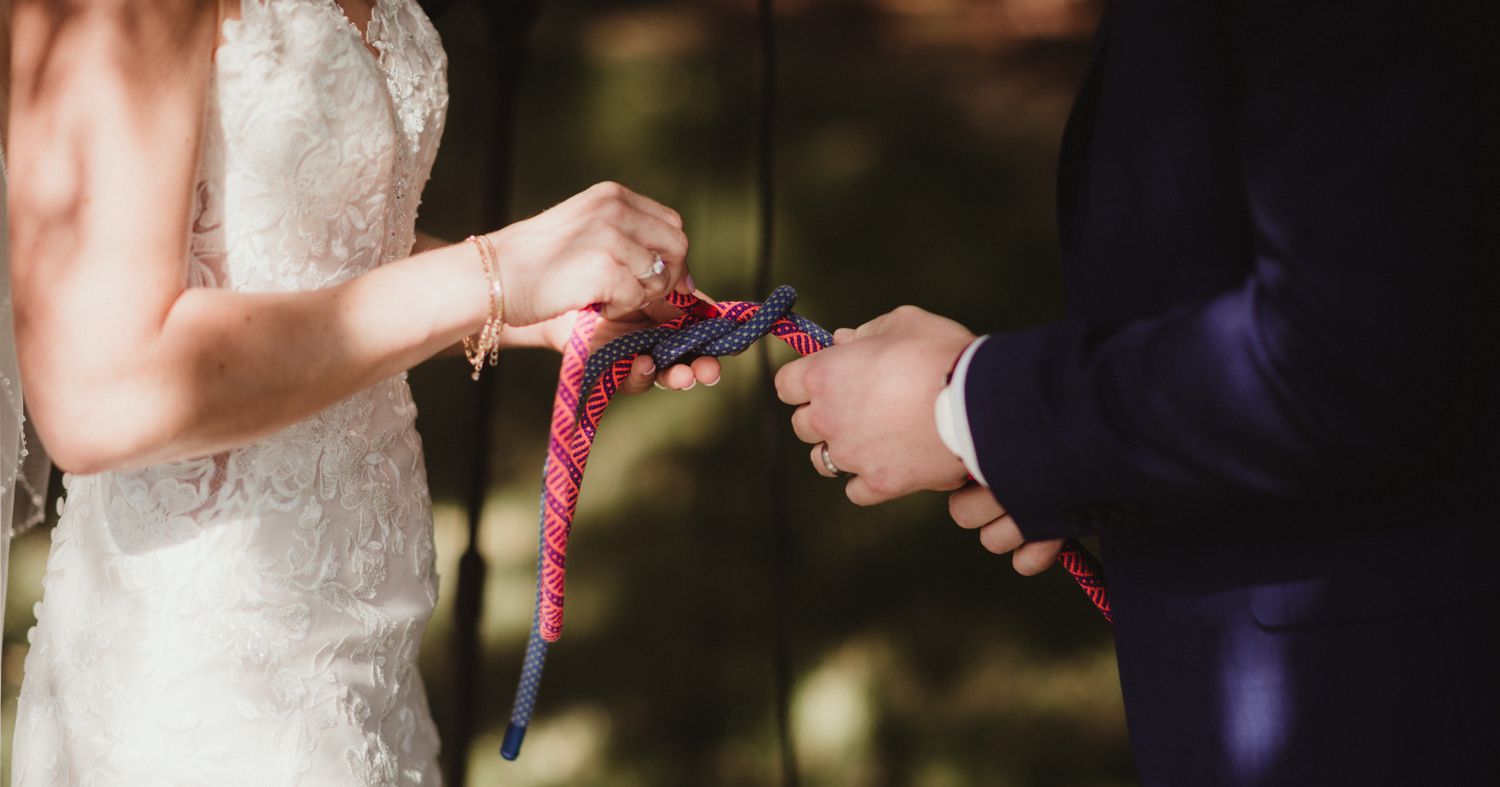
Ever wondered why people say "tie the knot" about marriage? The phrase originates from handfasting, an early 13th-century English metaphorical use of "knot" for marriage, and from later traditions where couples' hands were bound with a cord or ribbon during the ceremony.
The Ancient Celtic Tradition
The phrase "tie the knot" has roots in handfasting traditions involving literal knots symbolizing the bond between two people.
Related travel guides: 12 Celebrities With Surprising Lithuanian Roots, Hidden Micronations: Surprising Realities Within The US, and The Surprising Story Behind Soho's Name.
- Handfasting Ceremony: During this ritual, couples' hands were tied together with a cord or ribbon, representing their union.
- Symbolic Knots: Knots were believed to have magical properties, binding the couple's souls together. These were often tied during the ceremony and kept as a memento.
Roman Influence
The Romans also contributed to the origin of "tie the knot."
- Binding of the Hands: In some Roman wedding customs, symbolic acts represented the couple's commitment and unity.
- The Knot of Hercules: Roman brides wore a belt tied with a special knot called the "Knot of Hercules," symbolizing the strength and permanence of the marriage bond.
Hindu Wedding Rituals
In some cultures, tying knots has a literal and symbolic meaning in wedding rituals.
- Mangalsutra Ceremony: The groom ties a sacred thread, the mangalsutra, around the bride's neck, signifying their marital bond and his commitment to protect her.
- Saptapadi: During the Saptapadi, or "seven steps," the bride and groom take seven steps together, symbolizing their journey through life. A piece of cloth or a cord may be used in such rituals to represent their unity.
Chinese Wedding Customs
Some wedding traditions feature symbolic knots emphasizing unity and harmony.
- The Red Thread of Fate: According to some legends, an invisible thread connects those destined to be together. This thread may tangle or stretch but will never break, symbolizing an unbreakable bond.
- Double Happiness Knot: Some decorative knots used in weddings represent joy and unity. This intricate knot is a common decoration, symbolizing the couple's intertwined lives.
Medieval European Practices
Medieval Europe had its own customs that contributed to the phrase "tie the knot."
- Girdle Tying: Some later theories suggest that in medieval European weddings, the bride wore a girdle tied with a knot. According to some folk etymologies, the groom would untie this knot as a symbol of their union.
- Betrothal Knots: Couples exchanged betrothal knots as a sign of their engagement. These knots were often tied in a public ceremony, symbolizing their commitment.
Modern Interpretations
Today, "tie the knot" continues to be a popular phrase, with modern practices keeping the tradition alive.
- Unity Ceremonies: Many couples incorporate unity ceremonies into their weddings, such as tying a fisherman's knot or a lover's knot, symbolizing the strength and unity of their relationship.
- Wedding Rings: While not a literal knot, the exchange of wedding rings represents an unbroken circle of love and commitment, echoing the symbolism of tying the knot.
The Fascinating Journey of 'Tie the Knot'
'Tie the Knot' has a rich history stretching back to ancient rituals and traditions. Cultures worldwide have used knots to symbolize unity and commitment. From handfasting ceremonies to Hindu wedding rituals, knots have played a key role. This phrase has evolved but still holds the same essence of binding two lives together.
Understanding the origin of 'Tie the Knot' adds depth to its meaning. It shows how language and traditions are intertwined. Next time you hear someone say they are going to 'tie the knot,' you'll know there's more to it than just words. It's a nod to centuries-old practices that celebrate love and unity, a reminder of how traditions shape our language and lives.
