

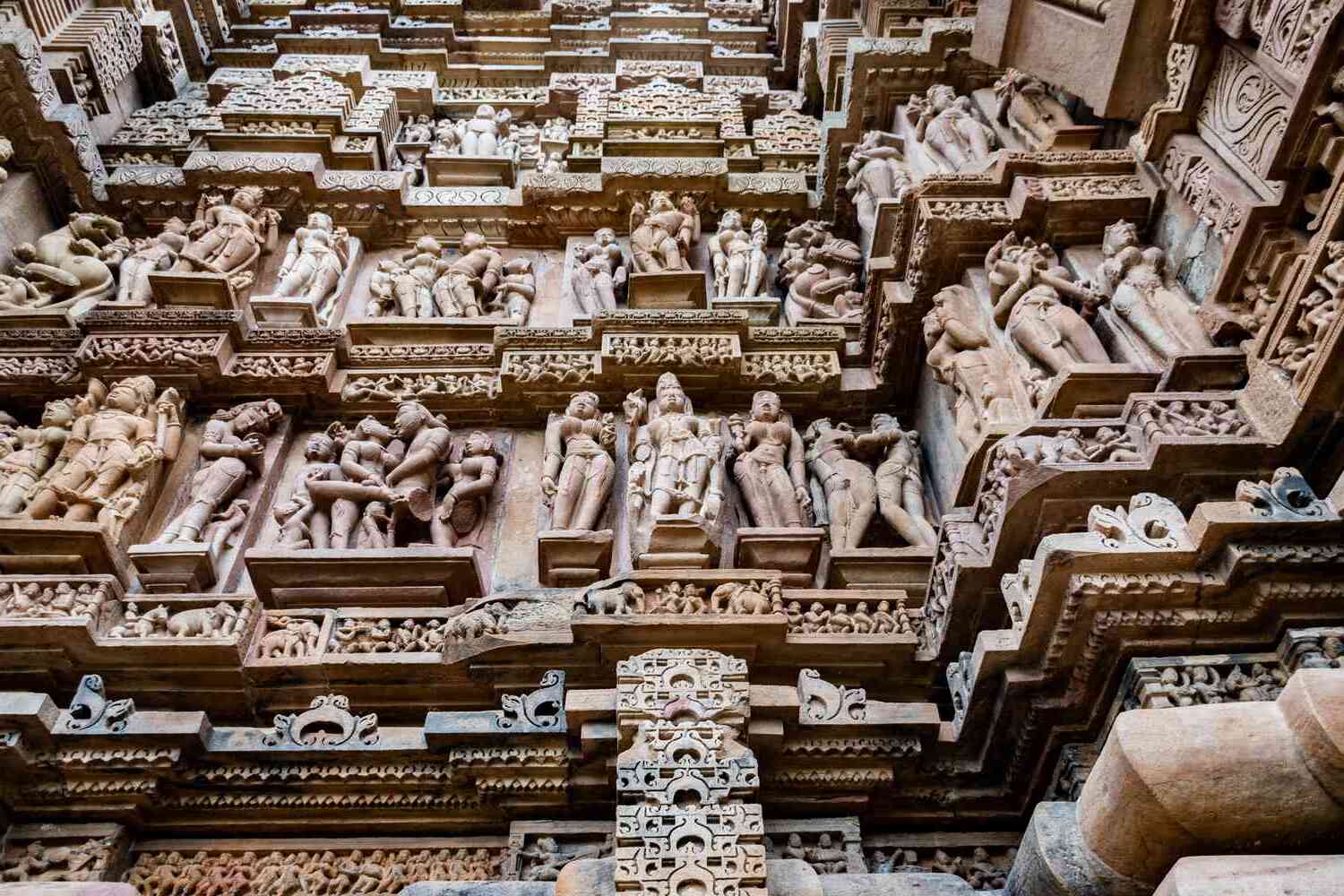
Khajuraho’s Chandela dynasty temples (950–1050 AD) and Konark’s Sun Temple (13th century) are India’s most famous sites for erotic sculpture, but the full list of commonly cited temples also includes Virupaksha, Lingaraja, and Modhera Sun Temple. These carvings appear on outer walls and sanctum brackets, blending tantric symbolism, daily life scenes, and royal court imagery.
Khajuraho Group of Monuments
The Khajuraho Group of Monuments in Madhya Pradesh is perhaps the most famous for its erotic sculptures. Built by the Chandela dynasty between 950 and 1050 AD, these temples are a UNESCO World Heritage site.
- Kandariya Mahadeva Temple: This temple is the largest and most ornate of the Khajuraho temples. Its walls are adorned with intricate carvings depicting various aspects of life, including sensual and erotic scenes.
- Lakshmana Temple: Another prominent temple in Khajuraho, the Lakshmana Temple, showcases a plethora of erotic sculptures. These carvings are believed to symbolize the integration of physical and spiritual love.
Sun Temple, Konark
The Sun Temple in Konark, Odisha, is another architectural marvel known for its erotic sculptures. Built in the 13th century by King Narasimhadeva I, this temple is designed in the shape of a colossal chariot.
- Erotic Panels: The outer walls of the Sun Temple feature numerous erotic sculptures. These carvings are thought to represent the celebration of life and the importance of procreation.
Virupaksha Temple, Hampi
Located in Karnataka, the Virupaksha Temple is part of the Hampi Group of Monuments, a UNESCO World Heritage site. This temple, dedicated to Lord Shiva, dates back to the 7th century.
- Erotic Carvings: The temple complex includes several erotic sculptures, reflecting the Vijayanagara Empire’s liberal views on sexuality and human relationships.
Lingaraja Temple, Bhubaneswar
The Lingaraja Temple in Bhubaneswar, Odisha, is one of the oldest and largest temples in the state. Dedicated to Lord Shiva, this temple was built in the 11th century.
- Erotic Imagery: The temple’s walls feature numerous erotic sculptures, reflecting the ancient Indian belief in the sanctity of physical love and its connection to spirituality.
Modhera Sun Temple, Gujarat
The Modhera Sun Temple in Gujarat, built in the 11th century by King Bhima I of the Solanki dynasty, is dedicated to the Sun God, Surya.
- Erotic Carvings: The temple’s walls are adorned with erotic sculptures, symbolizing the union of male and female energies and the celebration of life.
The Jagdish Temple, Udaipur
The Jagdish Temple in Udaipur, Rajasthan, is a stunning example of Indo-Aryan architecture. Built in 1651 by Maharana Jagat Singh, this temple is dedicated to Lord Vishnu. Its exterior walls do include some figurative carvings, but it is not part of the commonly cited list of seven temples with erotic sculptures; that list is limited to the sites above.
The Chennakesava Temple, Belur
The Chennakesava Temple in Belur, Karnataka, is a masterpiece of Hoysala architecture. Constructed in the 12th century, this temple is dedicated to Lord Vishnu. While its friezes depict scenes from the Ramayana and Mahabharata, it is not on the commonly cited list of seven temples with erotic sculptures; the list above reflects the documented sites.
What These Sculptures Mean
These carvings were not casual decoration. In Khajuraho, erotic panels sit alongside scenes of war, music, and daily work, often placed at the junction of the wall and the sanctum—a liminal space where the mortal meets the divine. At Konark, the figures are part of the temple’s overall solar symbolism: the chariot wheels, horses, and dancers all move toward the sun, and the erotic scenes depict the creative energy that sustains the cosmos. At Hampi, the carvings reflect the Vijayanagara Empire’s courtly culture, where sexuality was considered a natural part of a well-ordered society. At Lingaraja and Modhera, the same pattern holds: the erotic is not separate from the sacred but one of its expressions.
For travelers, the practical takeaway is simple. Khajuraho has the largest and best-preserved ensemble, with over 20 surviving temples. Konark’s Sun Temple is a dramatic single monument, and the erotic panels are concentrated on the lower tiers of the podium. Hampi’s Virupaksha Temple is still an active worship site, so dress modestly and expect crowds during festivals. Lingaraja Temple in Bhubaneswar is likewise a living temple, and non-Hindus cannot enter the inner sanctum, though the outer walls are visible from the viewing platform. Modhera is the least visited of the five, which makes it easier to study the carvings without rush.
These temples also sit within larger historical landscapes. Hampi is part of the Karnataka group of ruins, and the Madhya Pradesh circuit around Khajuraho includes the Panna National Park. Konark is a short drive from Puri, and Modhera is a day trip from Ahmedabad. If you are planning a route, the erotic sculpture temples are not all in one region; they span from Gujarat to Odisha, so choose based on your itinerary.
One more note: the article’s earlier mention of “Sun Temple” in the closing section refers to Konark, not Modhera. Both are dedicated to Surya, but they are separate structures built by different dynasties. Konark is the 13th-century chariot; Modhera is the 11th-century step-tank complex. Do not confuse the two when booking transport.
These temples with erotic sculptures offer a glimpse into ancient Indian culture and beliefs. They remind us that spirituality and sensuality were once seen as intertwined aspects of human existence. Visiting these temples provides a deeper understanding of India’s heritage and challenges modern perceptions of art and morality.
Related travel guides: The Fascinating Reason Behind Indian Head Shakes, Hidden Vaults Repurposed: Historic Bank Buildings Transformed, and Hidden Acoustic Anomalies In Capitol Buildings Across America.
