

Part of our Missouri guide.
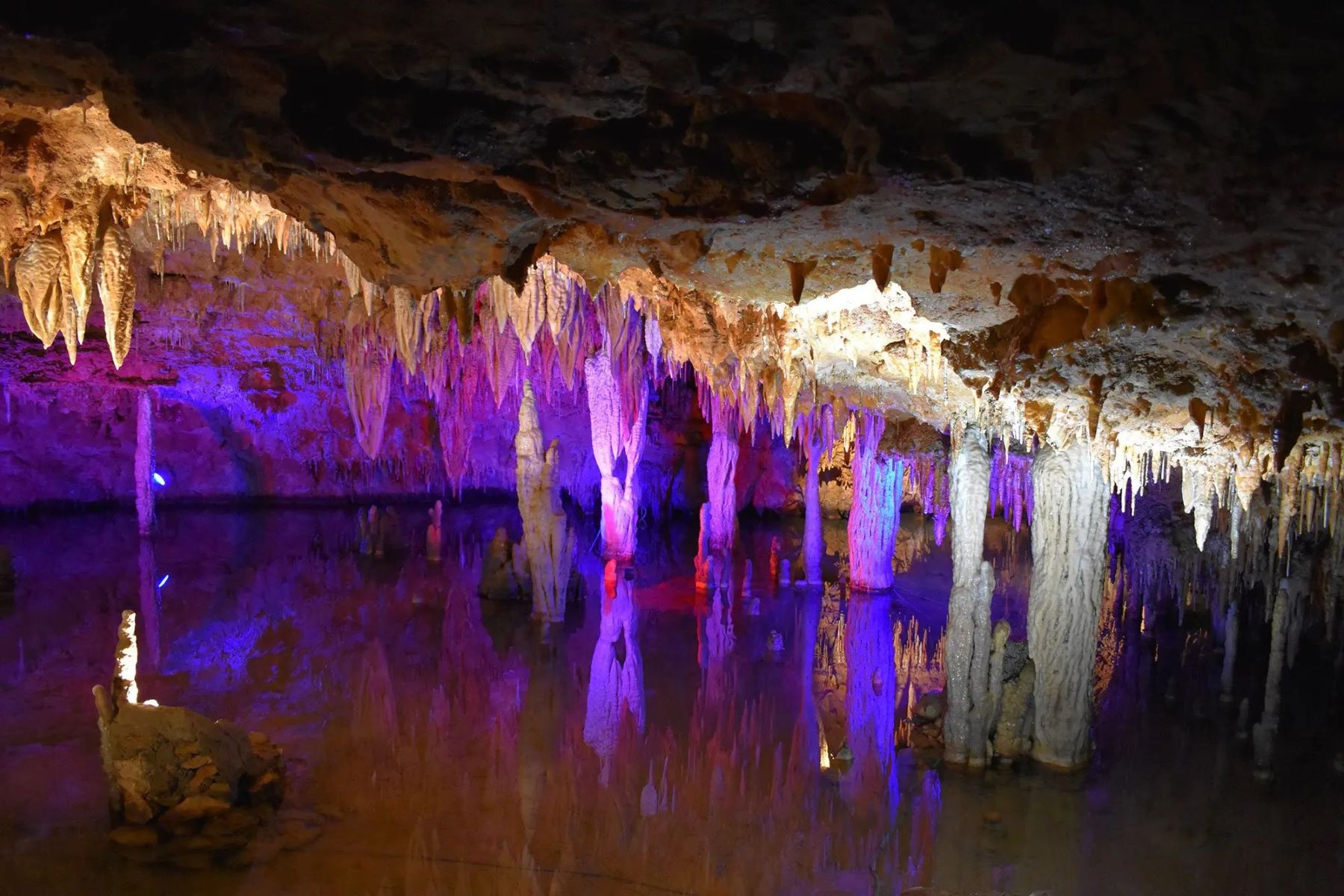
Missouri's mysterious caves and landmarks range from underground lakes to ancient volcanic formations, with more than 20 show caves open to the public across the state. This page gathers our coverage of these hidden natural wonders in Missouri, from the Ozarks to the St. Francois Mountains.
Devil's Pool
Located in the heart of the Ozarks, Devil's Pool is a natural swimming hole surrounded by lush forests and crystal-clear waters. Local legends add to its allure. Visitors can hike the surrounding trails or take in the atmosphere of this secluded spot, where the raw power of Missouri's karst landscape is on display.
Unravel The Mysteries Of Jesse James At Meramec Caverns
Meramec Caverns near Stanton, Missouri, is a limestone cave system formed over millions of years, featuring dramatic rock formations and underground rivers. Legend holds that outlaw Jesse James and his gang used the caves as a hideout, though historians note that documented evidence is thin. Guided tours wind through chambers filled with stalactites, stalagmites, and flowstones. Visitors can also see the "Wine Room," which boasts a natural color palette of red, yellow, and brown mineral deposits. Tours run daily from spring through fall, with winter hours reduced.
Mysteries Inside Missouri's Devil's Well
Devil's Well, located in the Ozark National Scenic Riverways, is a collapsed sinkhole that reveals an underground lake about 100 feet below the surface. The well is accessible via a short boardwalk and viewing platform, where visitors can peer into the dark abyss. The water below is part of a larger cave system that remains largely unexplored. Scientists have documented the lake's depth at over 100 feet in places, though the full extent of the system is still unknown. The site is open year-round, with no admission fee.
Devil's Backbone
Devil's Backbone is a rugged ridge in the Ozarks that offers hiking trails through dense forests and rocky terrain. The area is known for local ghost stories, with some claiming to see strange lights or hear whispers on the wind. The trail to the top is about 2 miles round trip, with moderate elevation gain. From the summit, hikers get sweeping views of the surrounding hills and valleys.
Boston Mountains Lightning Fields
The Boston Mountains Lightning Fields, located in the Ozarks, are known for frequent and dramatic lightning displays, particularly in late spring and summer. The open fields and high ridges make it a prime spot for storm chasers and photographers. The area also offers hiking trails and scenic overlooks. Visitors are advised to check weather forecasts and take safety precautions, as lightning strikes can occur without warning. The best time to visit is between May and August, when thunderstorms are most common.
Sunken Forest Sinkholes
Missouri's Sunken Forest Sinkholes are natural depressions formed over thousands of years when limestone bedrock dissolved, causing the ground above to collapse. These sinkholes create microclimates that support unique plant and animal species, including ferns, mosses, and rare insects. Some sinkholes contain small ponds or seasonal streams, while others have vertical walls that drop dozens of feet. The most accessible examples are found in the Ozark region, with several visible from public trails. Visitors should stay on marked paths, as the edges of sinkholes can be unstable.
Hughes Mountain Footprints
Hughes Mountain Natural Area in eastern Missouri is home to columnar jointing, a geological formation that looks like a giant's staircase. These hexagonal columns were formed by cooling lava millions of years ago, creating a pattern that some mistake for footprints. The site features a short, steep hike to the top, where the columns spread out across the summit. The rock formations are rare in the Midwest. The trail is about 1.5 miles round trip, with exposed rock surfaces that can be slippery when wet.
Hughes Mountain
Hughes Mountain, also in the eastern part of the state, is famous for its "Devil's Honeycomb," a field of hexagonal basalt columns that resemble a giant honeycomb. The columns are part of an ancient volcanic flow that cooled slowly, creating the distinctive shapes. The hike to the top is less than a mile but gains about 200 feet in elevation, offering views of the surrounding countryside. The summit is bare rock, so visitors should bring sun protection and water. The site is open year-round, with no facilities or admission fee.
The Ozark Caverns
The Ozark Caverns, hidden within the Ozark Mountains, offer a wild cave experience with narrow passages and undeveloped chambers. One of the key features is the "Angel Showers," a natural water display where water seeps through the cave ceiling, creating a continuous rain-like effect. The caverns are home to rare blind cave fish and salamanders that have adapted to the dark environment. Guided tours are available by reservation, and visitors should bring sturdy shoes and a jacket, as the cave temperature stays around 55°F year-round. The tour lasts about 90 minutes and covers roughly half a mile of uneven terrain.
More about Mysterious Caves And Landmarks
- Missouri's Hidden Underground Railroad Paths To Freedom
- Secrets Of Missouri's Lost Crystal Mines
- Secrets Of Missouri's Towering Limestone Bluffs
- Hidden River Cities Beneath Missouri's Table Rock Lake
- Hidden Gems: Missouri's 15 Most Beautiful Towns
- Hidden Pools Of Missouri's Ha Ha Tonka
- Exploring the Hidden River Towns of Missouri's Bootheel
- Secrets Of Missouri's Ozark Geode Valley
- Secrets Of Missouri's Current River Ferries
- Shadows Of The Smokestacks: Missouri's Secret Iron Furnaces
- Secrets Of Missouri's Current River Otter Habitats
- The Mystery Of Missouri's Taum Sauk Signal Hills
- Secrets Of Missouri's St. Francois Mountains
- Secrets Of Missouri's Devil's Icebox
- Secrets Of Missouri's Black River Bends
