

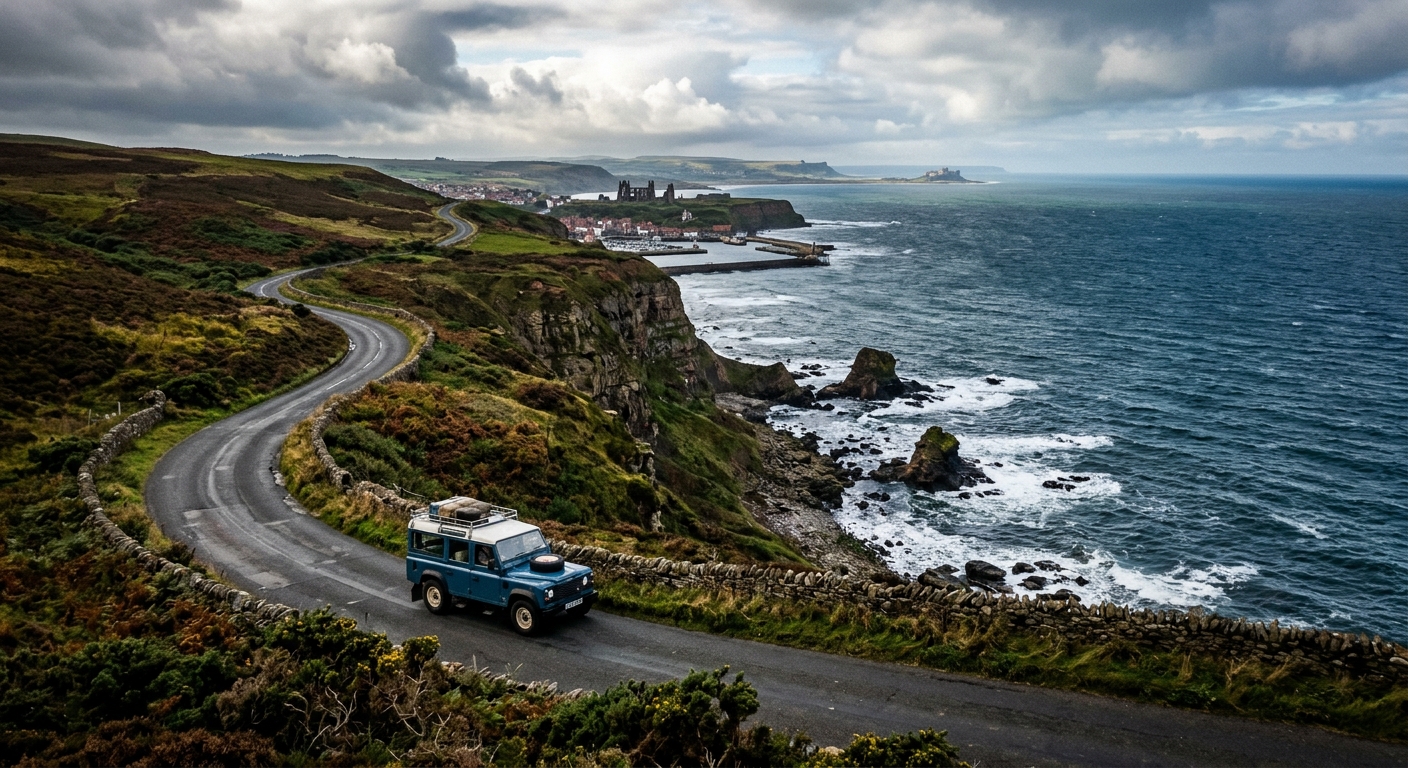
The best moments on this drive often happen after you leave the main road. A village green with nobody rushing across it. A fishing harbour reached on foot. A ruined castle that gives you a reason to linger beside the sea. York, Whitby, and Northumberland make a rewarding route, but the smaller places between them deserve proper time. Allow five days, keep your daily stops modest, and treat parking and walking time as part of the journey.
Your Route at a Glance
- Allow five days for village stops, coastal walks, and unhurried evenings.
- Use designated parking and expect steep walks in coastal villages.
- Choose overnight bases around access, parking, and your preferred evening atmosphere.
Build a Five-Day Route With Room to Wander
This itinerary runs from York through the North York Moors to Whitby, then continues north into coastal Northumberland. It suits travelers who enjoy short walks and historic places more than a packed schedule. You can finish around Bamburgh or add another night farther north.
The driving estimates below are planning allowances, not live navigation results. They exclude sightseeing, meals, parking searches, and charging stops. Summer weekends, roadworks, and slow traffic on rural roads can stretch them considerably. Check your navigation before each departure.
- Day One: Drive from York to Hutton-le-Hole, continue through the moors, and reach Whitby by late afternoon.
- Day Two: Visit either Robin Hood’s Bay or Runswick Bay, leaving time for Whitby itself.
- Day Three: Travel north to Warkworth, with an optional stop at the quieter end of the Durham coast.
- Day Four: Spend time in Warkworth and Alnmouth, then stay locally or continue toward Craster.
- Day Five: Walk from Craster toward Dunstanburgh Castle before continuing to Bamburgh.
Four days can work if you choose only one Yorkshire coastal village and skip the intermediate coastal stop. With three days, the northern leg becomes a substantial transfer. Give yourself another night if long lunches and lengthy walks are priorities.
Leave York for Hutton-le-Hole and the Open Moors
Allow roughly 60 to 75 minutes from York to Hutton-le-Hole in ordinary conditions. The village makes an appealing first pause, with a beck running through grassy open space and stone cottages close to the road. Arrive early enough to hear the water before the busiest visiting hours.
Use the signed visitor car park rather than treating the grass beside the beck as available space. Village greens are not overflow parking. An hour gives you time for a gentle wander and a drink. Allow longer if you plan to visit the village’s museum, after checking its opening arrangements.
From here, choose your route across the moors according to the weather. A route through the Hutton-le-Hole and Castleton area offers open views and smaller settlements, but it requires attentive driving. Expect bends, exposed stretches, and sheep near the carriageway. Allow around 60 to 90 minutes to reach Whitby, depending on the roads selected.
Keep this first day simple. Adding several villages may look easy on a map, yet every stop brings another parking search and another walk. One satisfying village visit and a relaxed arrival in Whitby usually make a better start.
Give Whitby an Evening and Its Neighbors a Morning
Whitby is the route’s busy anchor. Stay overnight if you can, then enjoy the harbour after the day crowds thin. Its smaller coastal neighbors work best as separate outings, rather than brief stops squeezed into your arrival afternoon.
Robin Hood’s Bay for Lanes and a Steep Descent
Robin Hood’s Bay is about 15 to 25 minutes from Whitby by car before parking. Leave the vehicle in designated parking at the upper village and walk down. The old lanes are narrow, steep, and poorly suited to casual sightseeing by car.
Budget at least two hours for the descent, a wander, and the climb back. Anyone with limited mobility should consider the gradient before committing. A short distance on the map can feel demanding on the return journey.
Keep a beach visit separate from any ambitious shoreline walk. Tide conditions can close routes beneath cliffs. Without current local information, choose the signed cliff path or remain near the village rather than assuming you can continue along the shore.
Runswick Bay for a Smaller Coastal Pause
Runswick Bay lies roughly 20 to 30 minutes northwest of Whitby. Its sheltered-looking curve of sand and tightly grouped cottages make it a lovely alternative when you want a slower morning.
Parking is limited, especially near the lower village. Follow current signs and expect to use upper parking when lower spaces fill. The walk involves a steep slope. Allow around 90 minutes to two hours for a modest visit, with extra time for lunch or the beach.
Choose between these two villages according to your energy and interests. Robin Hood’s Bay rewards wandering through lanes. Runswick Bay suits a shorter visit centered on the beach and village setting. Neither needs to become a race against your parking ticket.
Choose Overnight Bases Around Your Actual Evenings
Book accommodation with the end of each day in mind. A remote cottage may feel appealing until dinner requires another drive. A central room can make evenings easier, but nearby parking may be public, paid, or several streets away.
Assess transport access, read recent accommodation reviews, and check the precise parking arrangement. You can also consult UK crime rate information as one planning resource. Area statistics do not predict an individual traveler’s experience. Give practical details, including the walk from parking and the accommodation’s arrival instructions, proper attention.
How the Overnight Bases Fit This Route
| Base | Best Fit | Parking Question | Suggested Stay |
|---|---|---|---|
| Whitby | Harbour evenings and Yorkshire coastal outings | Is a space reserved, or is parking subject to availability? | Two nights |
| Warkworth | Village evenings, riverside walks, and a castle visit | Can you leave the car after checking out? | One or two nights |
| Alnmouth | Beach time and access to a nearby railway station | How far is the parking space from your room? | One or two nights |
| Bamburgh | A final beach walk and castle views | Does the booking include off-street parking? | One night |
Alnmouth’s railway station is outside the village, so check the transfer rather than assuming an effortless walk with luggage. In every base, recent reviews can help clarify road noise, steep stairs, and the reality of advertised parking.
Break the Journey North Without Overloading It
Whitby to Warkworth is the longest driving leg here. Allow approximately three to three and a half hours behind the wheel, with additional time for breaks or congestion. Leaving after breakfast gives you room for one worthwhile pause.
Seaham can provide that pause if you want a coastal walk before continuing north. Allow roughly 75 to 100 minutes from Whitby, depending on traffic and your chosen route. Use signed seafront parking, then decide whether the weather favors a promenade stroll or a beach visit. Access to the shore varies by location.
This is an optional stop, not an obligation. In heavy rain or tiring traffic, continue toward your accommodation and spend the saved energy on an evening walk.
- Pack lunch or identify a meal stop: A planned break keeps the long transfer comfortable.
- Check fuel or charging before departure: Rural detours can make an already long day feel longer.
- Keep arrival flexible: Leave enough daylight to find your accommodation and parking calmly.
Settle Into Warkworth and Alnmouth
Warkworth rewards an overnight stay because its appeal extends beyond the castle. Walk through the village, spend time beside the River Coquet, and leave a little space for sitting with a drink. The castle is a substantial visit in its own right, so check opening times before building your day around entry.
Use designated village or castle parking according to your plans, and read the restrictions where you leave the car. A parking space convenient for sightseeing may have conditions that make it unsuitable overnight.
Alnmouth is roughly 15 to 20 minutes away by car. Its colorful houses, estuary setting, and broad beach offer a change of pace. Follow signs to designated parking instead of circulating through the narrow residential streets in search of a closer space.
Allow two hours for a village wander and beach walk, or longer for lunch. Keep away from strong currents around the river mouth. A beach that looks gentle from the dunes can still have hazardous water conditions.
Walk From Craster Toward Dunstanburgh Castle
Craster provides one of the most satisfying walks on this route. From Alnmouth, allow around 25 to 35 minutes by car. Leave your vehicle in the signed visitor car park and continue through the village on foot, keeping access clear around the working harbour.
The coastal walk toward Dunstanburgh Castle is approximately 1.3 miles each way from the village. Allow around 90 minutes for the return walk at an easy pace, with more time for photographs, rests, or a castle visit. The approach crosses open ground and can feel exposed in wind.
You can enjoy the castle’s position from the coastal route without making admission the focus of your day. Check current opening arrangements if you want to enter. Wear shoes with grip, particularly after rain, and expect uneven surfaces.
- Carry a windproof layer: The open coast can feel colder than sheltered village streets.
- Bring water and a snack: Allow for time spent lingering along the route.
- Keep dogs under close control: Follow signs and use a lead around livestock.
- Turn back when needed: Strong wind, slippery ground, or tired legs are good reasons to shorten the walk.
Finish at Bamburgh With Time for the Beach
Allow roughly 30 to 40 minutes from Craster to Bamburgh. The castle is hardly hidden, but the space around it gives this itinerary a fitting final stop. After several days of lanes, harbours, and village greens, a broad beach feels generous.
Use designated village or beach parking and follow marked routes through the dunes. Give yourself at least an hour outside, even if you also plan to visit the castle. Trying to squeeze both into a brief stop leaves little room to enjoy either.
If you are tempted to add Holy Island, give it separate planning time. Its tidal causeway requires checking published safe crossing times for your travel date. It should never become an improvised detour because the road happens to look clear.
Let the Smaller Stops Shape the Journey
This road trip works best when each day has one main outing and enough space around it. Hutton-le-Hole can hold your attention for longer than expected. A steep coastal lane may slow your afternoon. Wind at Craster may persuade you to linger over lunch instead.
Keep those choices available. Reserve accommodation with clear parking arrangements, check conditions before coastal walks, and leave a margin around every drive. The quieter places between York, Whitby, and Northumberland are worth arriving at with time to spare.
