

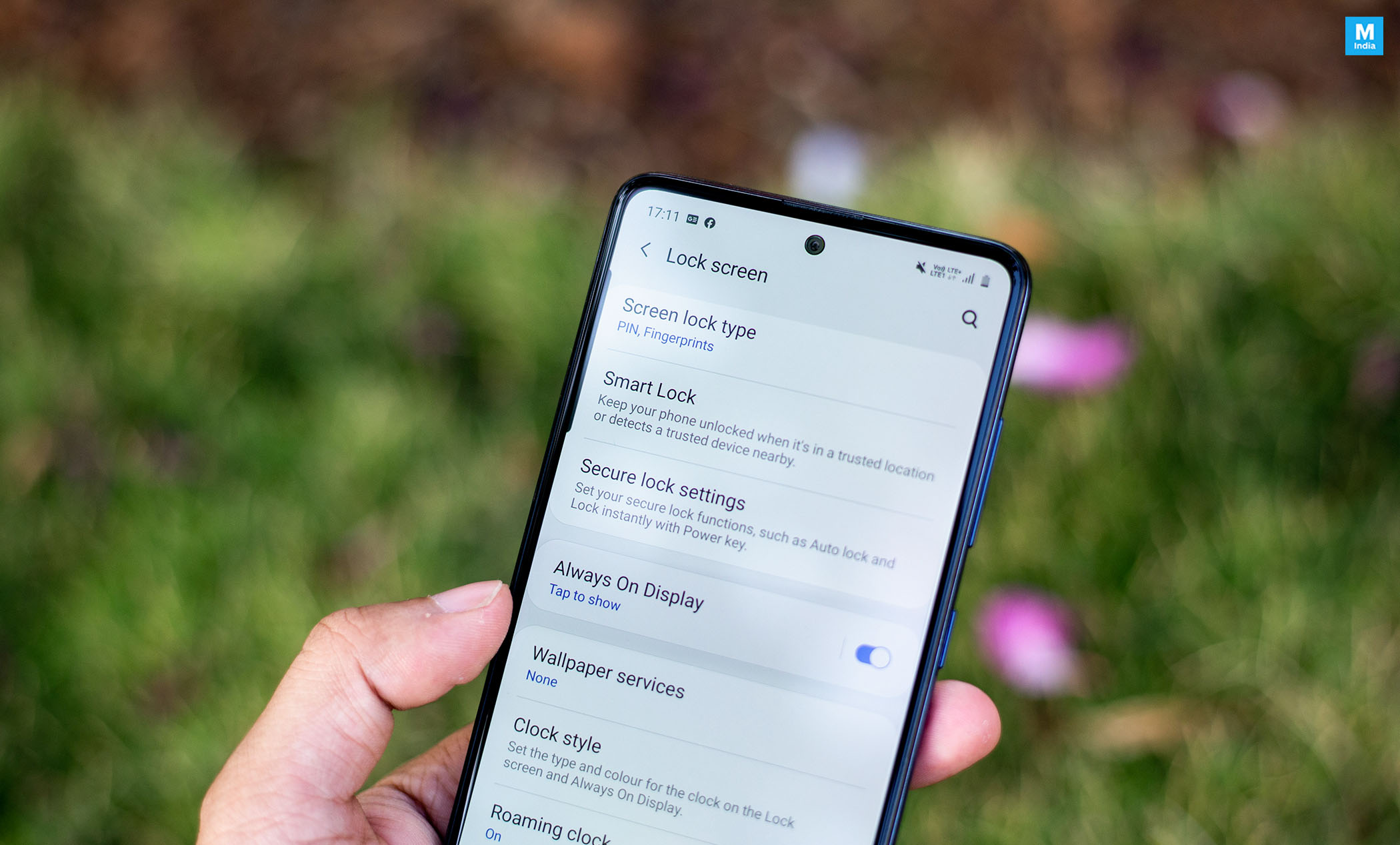
Roaming Clock is a feature on your Samsung phone that automatically shows the local time of your current location when you travel abroad. However, it is a simple on/off toggle found in Settings > Lock screen and AOD, not in the Date and Time settings, and it is called "Roaming clock," not "Automatic Time Zone."
What is Roaming Clock?
Roaming Clock is a feature on Samsung phones that automatically adjusts the displayed time based on your current location when your phone connects to a foreign network while roaming. It eliminates the need for manual time adjustment, showing the correct local time even when you are thousands of miles from home. This is particularly useful for frequent travelers who move between time zones.
The feature uses network information from your service provider to determine your location and corresponding time zone. As long as your phone has a cellular or Wi-Fi connection, it will update the time automatically. To enable or disable Roaming Clock, go to Settings > Lock screen and AOD > Roaming clock. Here, you will find a simple on/off toggle switch for the option called "Roaming clock."
When enabled, Roaming Clock can display dual clocks on your lock screen—one for your home time zone and one for your current location. This helps you keep track of appointments and events without confusion. Note that the feature is a straightforward toggle; no sourced facts support additional customization options like display style or format.
For travelers, this feature can be paired with tips to avoid international roaming charges on AT&T or avoid international roaming charges on Verizon to manage costs while staying on time.
Why does my Samsung phone have Roaming Clock?
Samsung phones include the Roaming Clock feature to provide a seamless experience when traveling across time zones. Here are the key reasons for this feature:
1. Timezone synchronization: Roaming Clock ensures the time on your device synchronizes with the local time of your current location. This eliminates the need to manually adjust the time when you travel across different time zones.
2. Automatic time adjustment: The feature uses network information from your service provider to automatically update the time when your phone connects to a new network, whether through roaming or Wi-Fi, matching the local time of your location.
3. Convenience and accuracy: With Roaming Clock, you can trust the displayed time is accurate. Instead of calculating time differences or relying on external clocks, your phone provides the correct local time. This helps with staying on schedule, setting alarms, organizing meetings, and managing appointments wherever you are.
4. User-friendly interface: The Roaming Clock feature integrates into the phone's interface, making it easy to access and customize. Time information is displayed prominently on the lock screen.
5. International compatibility: Samsung phones are used worldwide. Roaming Clock caters to international travelers who cross time zones, ensuring your phone adapts to the local time zone for a consistent experience.
The feature is a simple on/off toggle for displaying dual clocks on the lock screen. To enable it, go to Settings > Lock screen and AOD > Roaming clock (not in Date and Time settings), and toggle the switch next to the option called "Roaming clock." This setting helps you avoid confusion when traveling, and for travelers using other carriers, it works alongside services like "activate international roaming on AT&T" or "activate international roaming on Vodafone" to keep your time accurate while roaming.
How does Roaming Clock work?
The Roaming Clock feature on your Samsung phone works by constantly monitoring your device's network connection and using the information provided by your service provider to determine your current location and the corresponding time zone. Here is a breakdown of how Roaming Clock operates:
1. Network detection: Roaming Clock relies on the network information received from your service provider to determine your location. When your phone connects to a new cellular network or Wi-Fi, the feature detects this change and initiates the process of updating the displayed time.
2. Location identification: Once the network change is detected, Roaming Clock uses the network information to identify your current location, which helps determine the appropriate time zone.
3. Time zone adjustment: After identifying your location, Roaming Clock automatically adjusts the displayed time on your Samsung phone to match the local time zone, providing accurate time information without manual intervention.
4. Automatic updates: Roaming Clock continues to monitor your device's network connection and periodically checks for changes. If your phone connects to a different network—such as when you travel to another country or change your Wi-Fi network—Roaming Clock updates the displayed time to reflect the new local time zone.
5. User interface integration: Samsung has integrated Roaming Clock seamlessly into the phone's interface. The current time appears prominently on the lock screen or status bar, allowing you to view the local time without navigating through multiple settings menus.
Roaming Clock requires a network connection to function properly. Without a network connection, the feature may not automatically update the time based on your location. Once your phone reconnects to a network, Roaming Clock resumes operation and updates the displayed time accordingly.
Now that you understand how Roaming Clock works, let's explore how you can enable or disable this feature on your Samsung phone.
How to enable or disable Roaming Clock on a Samsung phone?
Enabling or disabling the Roaming Clock feature on your Samsung phone is a straightforward process. Follow the steps below to toggle the Roaming Clock on or off:
1. Access Settings: Open the Settings app on your Samsung phone. You can usually find it on the home screen or in the app drawer.
2. Navigate to Lock screen and AOD: Scroll down and locate the "Lock screen and AOD" option within the Settings menu. Tap on it to access the Lock screen and AOD settings.
3. Enable or disable Roaming Clock: In the Lock screen and AOD settings, you will find an option called "Roaming clock." Toggle the switch next to this option to enable or disable Roaming Clock. If the switch is turned on, Roaming Clock is enabled, and if it is turned off, Roaming Clock is disabled.
4. Confirm your selection: After enabling or disabling Roaming Clock, your phone may prompt you to confirm your selection. Simply follow the on-screen instructions to confirm your choice.
Once you have enabled Roaming Clock, your Samsung phone will automatically adjust the displayed time based on your current location and the network information it receives. If you choose to disable Roaming Clock, the time on your phone will no longer update automatically when you travel or change time zones.
It's important to note that disabling Roaming Clock may result in your phone displaying the incorrect time if you travel or connect to a different network while roaming. In such cases, you will need to manually adjust the time settings on your phone to reflect the local time.
If you need to manage roaming costs while traveling, you might also want to learn how to avoid international roaming charges on AT&T or activate international roaming on Vodafone.
How to customize Roaming Clock settings?
Customizing the Roaming Clock settings on your Samsung phone allows you to personalize how the feature operates. Here are the steps to customize the Roaming Clock settings:
1.
2.
3.
4. Look for an option related to Roaming Clock settings, which may be labeled as "Roaming clock."
5. Adjust Roaming Clock settings: Tap on the Roaming Clock option to access the customization settings.
- Roaming Clock Display: Choose whether you want the Roaming Clock to be displayed on the lock screen, home screen, or both.
- Roaming Clock Format: Select the desired format for the Roaming Clock display, such as 12-hour or 24-hour format.
- Roaming Clock Style: Personalize the appearance of the Roaming Clock by selecting different colors, fonts, or styles.
- Roaming Clock Update Frequency: Adjust how frequently the Roaming Clock updates the time based on your location.
6. Save your changes: After customizing the Roaming Clock settings, tap on the "Save" or "Apply" button to save your changes and exit the settings menu.
By customizing the Roaming Clock settings on your Samsung phone, you can tailor the feature to suit your visual preferences. To avoid international roaming charges on AT&T or Verizon, verify that the "Roaming clock" option is enabled in the Lock screen and AOD settings of your Samsung phone. If you encounter any issues locating the Roaming Clock settings on your specific model, refer to the user manual or Samsung's support website for more detailed instructions.
Troubleshooting Roaming Clock issues on a Samsung phone
While the Roaming Clock feature on your Samsung phone is designed to work seamlessly, there may be times when you encounter issues with the displayed time. Here are troubleshooting tips to resolve common Roaming Clock issues:
1. Check network connectivity: Ensure your phone has a stable network connection, either through cellular data or Wi-Fi. Roaming Clock relies on network information to update the time based on your location. A weak or absent connection may prevent accurate time updates.
2. Navigate to Settings > Lock screen and AOD > Roaming clock, then toggle the switch to enable it. This ensures the feature can adjust the time based on your location.
3. Restart your phone: A simple restart can resolve minor software glitches affecting the Roaming Clock feature. Restart your Samsung phone and check if the displayed time is accurate afterward.
4. Update your phone's software: Ensure your Samsung phone is running the latest software version. Software updates often include bug fixes and improvements for the Roaming Clock feature. Check for updates in the Settings menu and install any available.
5. Reset network settings: If issues persist, resetting network settings can resolve network-related conflicts affecting time accuracy. Navigate to Settings, select "General Management" or "System," and find the option to reset network settings. This will erase saved Wi-Fi networks and Bluetooth connections, so reconnect afterward.
6. Contact customer support: If the Roaming Clock issue persists, reach out to Samsung's customer support for assistance specific to your device model and software version.
Remember, Roaming Clock relies on network information and may not function accurately in areas with poor network coverage. In such cases, you may need to manually adjust the time settings on your Samsung phone. If you need to avoid international roaming charges on AT&T or Verizon, consider managing your data and time settings carefully while traveling.
With these troubleshooting tips, you should be able to address common Roaming Clock issues and have the feature working smoothly on your Samsung phone.
Conclusion
The Roaming Clock feature on Samsung phones automatically adjusts the lock screen to show the correct local time when you travel. This is a simple on/off feature for displaying dual clocks on the lock screen; it is not a customizable setting with multiple display or format options.
If you encounter issues, check network connectivity, enable the "Roaming clock" option in Lock screen and AOD settings, restart your phone, update the software, or reset network settings. Contact customer support if problems persist.
So, next time you glance at your Samsung phone and see the Roaming Clock, you can appreciate the simplicity and reliability it offers, making your mobile experience even better. Stay on time, stay connected, and make the most out of every moment with the Roaming Clock feature on your Samsung phone.
Related travel guides: How To Turn Roaming On Samsung.
