

How Travelers Sign up for Local Deals Without the Inbox Chaos
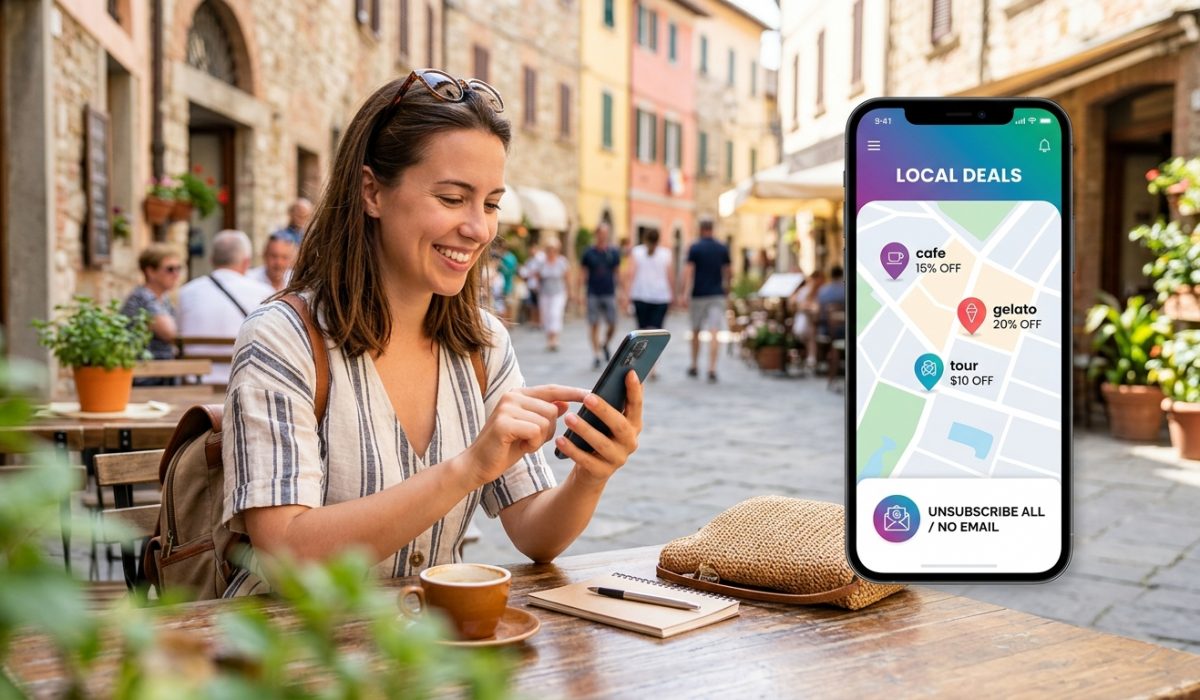
You spot a hostel offering 20% off your first booking. A food tour guide promises a loyalty discount if you hand over your email. A local ferry company runs a flash sale that saves you $15 on a multi-day pass. Every single one of these is a genuine saving worth taking. Every single one also carries a hidden cost that nobody mentions at checkout, and that cost lands in your inbox every week for the next three years.
Key Takeaways:
– Every travel deal you claim is a long-term subscription to promotional email you never asked to keep receiving
– A throwaway email address lets you collect the deal without handing over your real inbox
– An auto-expiring mail address stays live long enough for your confirmation to arrive, then vanishes before the first newsletter hits
– According to widely cited data, spam accounts for a substantial share of all global email traffic, and travel newsletters compete directly for space in that pile
– Adopting this habit at the start of any trip protects your inbox for the duration, and long after you get home
The Hidden Tax on Travel Savings
Think about the last time you signed up for a hostel rewards program. You probably did it because the front desk told you members get a free breakfast upgrade. That was true. What was also true, though buried in paragraph nine of a terms document nobody reads at 11pm after a long flight, is that membership includes marketing communications that you can opt out of “at any time” by clicking an unsubscribe link that may or may not work.
Multiply that across a single two-week trip. The hostel rewards club. The local tour operator. The airport transfer service that offered a 10% code. The museum that emailed your receipt. The car rental company. The regional bus app. By the time you get home, a dozen organizations have your real email address and a legal basis, however flimsy, to contact you indefinitely.
According to global email spam statistics, unsolicited messages have consistently accounted for a massive share of worldwide email volume. Your travel promotions are not arriving in a clean inbox. They are arriving alongside everything else competing for the same limited attention.
Why Travelers Keep Falling Into This Trap
The friction is asymmetric. Signing up takes four seconds. Unsubscribing from a dozen lists takes weeks, and that is if every link works correctly. The deal feels immediate and concrete. The inbox noise feels distant and manageable.
It is not manageable. It compounds. A hostel you stayed in three years ago still knows your name, your home country, and the approximate time of year you like to travel. They will remind you of this every February when they run their spring promotion.
The other problem is that using a fake email is not a real solution. You miss your confirmation. You cannot access your booking. You show up at the hostel and the reservation exists only in your optimistic memory.
How a Throwaway Address Solves Both Problems
A throwaway email address is not a fake address. It is a real, functioning inbox that you create in seconds, use once for a specific purpose, and then walk away from. Your confirmation arrives. You receive it. You click the link if there is one. The booking is secured.
What never arrives is the newsletter. Because you never gave the operator your actual address, they have no route to your personal inbox. The deal was claimed. The relationship ends there.
This is the part travelers often underestimate. The throwaway address does not prevent you from getting your confirmation. It prevents you from getting everything that follows.
Comparison: Real Address vs. Throwaway Address at Signup
| Scenario | Real Email Address | Throwaway Address |
|---|---|---|
| Receive booking confirmation | Yes | Yes |
| Access loyalty discount code | Yes | Yes |
| Receive weekly newsletters | Yes, indefinitely | No |
| Appear on remarketing lists | Yes | No |
| Carry inbox clutter home | Yes | No |
| Works across multiple deals per trip | Yes, accumulates | Yes, stays isolated |
Fitting It Into the Actual Booking Flow
Here is where travelers sometimes hesitate. They worry that a temporary address will expire before the confirmation arrives, or that they will need the address again later and it will be gone.
This is where address lifespan matters. When you use an address with auto-expiring mail settings, you control the window. The address stays active long enough for you to receive the confirmation, click through to your booking, and save the reference number somewhere sensible. Then it expires. Not instantly. On a schedule that makes sense for how email actually works.
The first promotional newsletter typically arrives several days after signup, sometimes a week or two later after a welcome sequence warms up. By that point, the address is gone. There is no inbox to land in. The operator’s marketing platform will eventually register a bounce and remove the address from future sends.
You claimed the deal. You received the confirmation. The follow-up never found you.
The Deals Worth Protecting Your Inbox For
Not every deal is worth your real address. Here is how travelers tend to think about it:
- Hostel loyalty programs, which often require ongoing access to a specific inbox tied to your account
- Long-haul airline miles programs, where you will need that address to log in and redeem points over months or years
- Travel insurance portals, where policy documents and claim updates need a stable, monitored inbox
- Banking and payment apps tied to your identity, where security notifications need to reach you reliably
For everything else, specifically the one-time discount code, the local tour confirmation, the ferry booking receipt, a throwaway address is the appropriate tool. It is not about being secretive. It is about matching the lifespan of the address to the lifespan of the relationship.
Practical Moments to Use This on a Trip
Most travelers figure out the habit after one trip, not before. The moment it clicks is usually when they get home and realize their inbox has been quietly filling up for two weeks with messages from businesses in countries they are no longer in.
The moments where a throwaway address fits naturally:
- Claiming a welcome discount from a hostel booking platform
- Signing up for a city tourism card to get the member rate
- Entering a competition at a travel market or night bazaar
- Registering for a free walking tour that uses email to send the meeting point details
- Joining a local bus company loyalty scheme for a regional pass discount
In each case, the email serves one function. It delivers one piece of information. After that, the address has done its job.
What This Costs You: Nothing
The comparison travelers make is usually with a dedicated junk email account. Some people create a separate Gmail account for “deal signups” and check it occasionally. The problem is that it still exists. It still accumulates. You still have to log in, scan for something real, and then ignore everything else. And that account, if you use it consistently, builds up a profile of your travel habits that is actually quite detailed.
A throwaway address costs nothing to create, requires no account, leaves no profile behind, and takes less time to set up than finding the rewards card you definitely put in your wallet at the last hostel.
Signing up Smarter Means Traveling Lighter
The inbox that follows you home from a trip should contain memories, photos shared by friends you met along the way, the occasional message from a host you want to stay connected with. It should not be a filing cabinet of every organization that caught you in a moment of deal-hunting optimism at a checkout screen.
The savings are real. The deals are worth taking. The habit of using a throwaway address for one-time signups is the single adjustment that lets you keep the deal and skip everything that comes after it. Start the next trip with that habit already in place, and you will notice the difference the moment you get home.
