

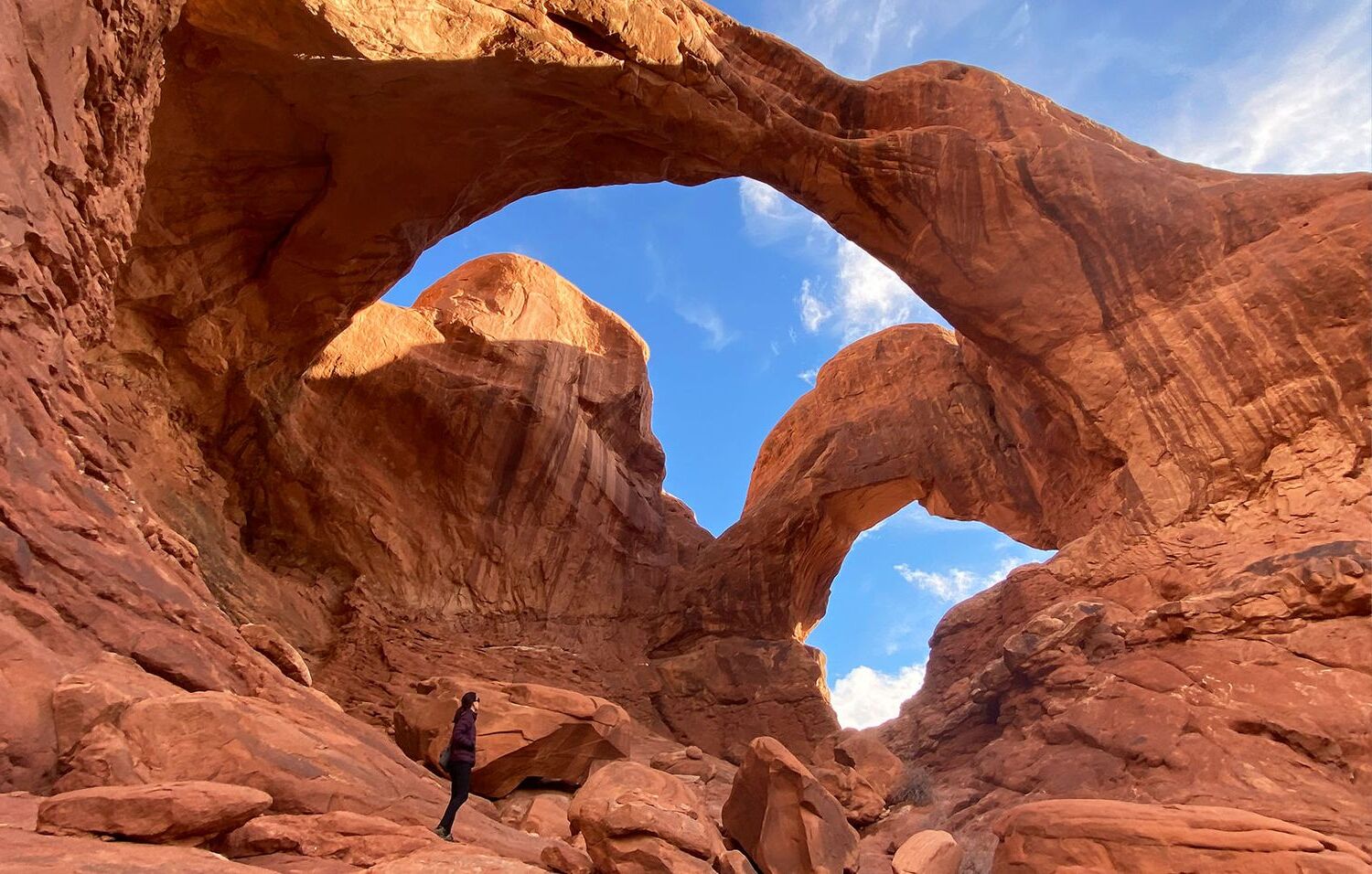
The most concentrated region of natural arch formations on Earth is the Colorado Plateau of the American Southwest, particularly in Utah. Arches National Park alone contains over 2,000 documented stone arches, more than any other location in the world.
Arches National Park, Utah
Arches National Park is home to over 2,000 natural stone arches.
- Delicate Arch: This arch stands alone on a cliff edge, offering a view that is especially dramatic at sunset.
- Landscape Arch: Stretching over 290 feet, this is one of the longest natural arches in the world.
- Double Arch: A formation where two arches share a common end.
Moab, Utah
Moab, located near Arches National Park, has several natural arches.
- Corona Arch: Often called the "Little Rainbow Bridge," this arch is accessible via a hike.
- Bowtie Arch: Located near Corona Arch, this smaller arch has a shape that resembles a bowtie.
- Wilson Arch: Easily visible from the highway, this arch is a stop for travelers exploring the area.
Monument Valley, Arizona-Utah Border
Monument Valley's red sandstone formations include several natural arches.
- Ear of the Wind: This arch, shaped like an ear, frames the surrounding desert scenery.
- Sun's Eye: A lesser-known arch that offers a perspective of the valley's rock formations.
Bryce Canyon National Park, Utah
Bryce Canyon is famous for its hoodoos, but it also features natural arches.
- Natural Bridge: Despite its name, this formation is an arch, set against the backdrop of Bryce Canyon's landscape.
- Fairyland Arch: Located in the Fairyland Loop, this arch is a spot for hikers exploring the park.
Grand Staircase-Escalante National Monument, Utah
This vast and remote area is home to several natural arches.
- Grosvenor Arch: A double arch that stands over 150 feet tall.
- Coyote Gulch: This area features several arches, including Jacob Hamblin Arch, accessible via a hike through the canyon.
Natural Bridges National Monument, Utah
Natural Bridges National Monument preserves some of the most impressive natural bridges in the world.
- Sipapu Bridge: One of the largest natural bridges in the world, standing at 220 feet high and 268 feet long.
- Kachina Bridge: Known for its massive size and shape.
- Owachomo Bridge: The smallest of the three bridges, with a delicate arch.
Canyonlands National Park, Utah
Canyonlands offers a rugged landscape with several natural arches.
- Mesa Arch: This arch is famous for sunrise views, when the rising sun illuminates the arch and the canyon below.
- Druid Arch: Located in the Needles District, this arch resembles a giant stone monolith and requires a challenging hike to reach.
Zion National Park, Utah
Zion National Park is known for its cliffs and canyons, but it also features natural arches.
- Kolob Arch: One of the longest natural arches in the world, stretching over 287 feet.
- Crawford Arch: A lesser-known arch that offers a view of Zion Canyon from above.
Capitol Reef National Park, Utah
Capitol Reef's landscape includes several natural arches.
- Hickman Bridge: A hiking destination, this arch offers a view of the surrounding canyon.
- Cassidy Arch: Named after the outlaw Butch Cassidy, this arch provides a viewpoint over the park's terrain.
Natural arch formations are examples of nature's artistry. From the Delicate Arch in Utah to the Azure Window in Malta, these geological wonders captivate travelers. Exploring these formations offers a blend of adventure and tranquility.
When planning a trip to see these natural arches, respect the environment and follow local guidelines to preserve these formations. Whether you are an avid hiker or a casual traveler, these formations promise views and experiences.
Each destination offers a glimpse into the Earth's history and the power of natural forces.
Related travel guides: Tennessee's Secret Natural Arches And Rock Formations, Secrets Of Indiana's Portland Arch, and Secrets Of Arizona's Dramatic Desert Arches.
