

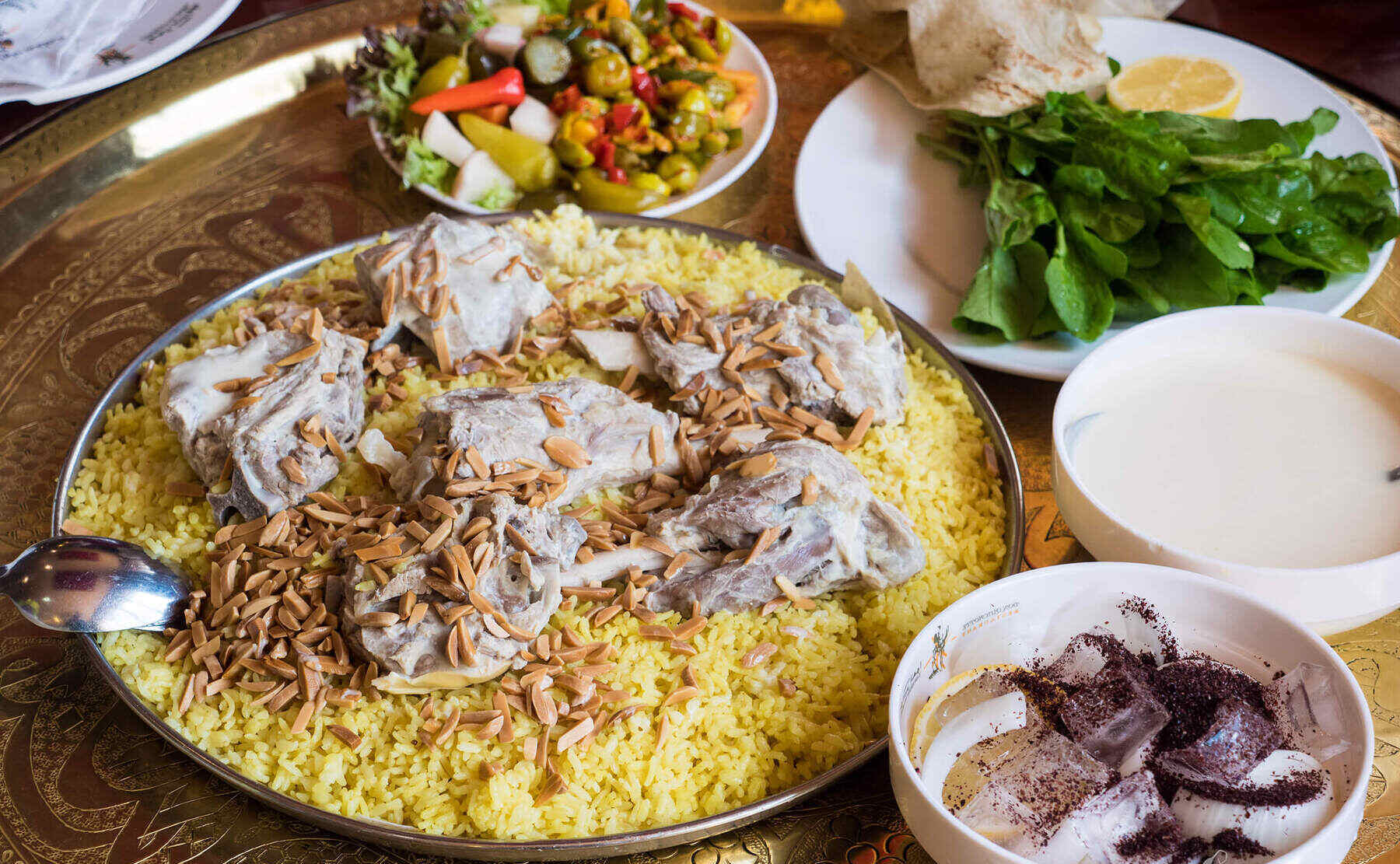
Mansaf, Jordan’s national dish, was born from the survival needs of Bedouin tribes who fermented dried yogurt into jameed to preserve dairy in the desert heat. This slow-cooked meal of lamb, rice, and jameed emerged from a pastoral lifestyle where every ingredient served a practical purpose long before it became a cultural centerpiece.
The Bedouin Foundation
The dish’s story begins with the nomadic Bedouins of Jordan, who relied on livestock for food and mobility. Lamb was a natural choice—herds provided meat, milk, and transport—while rice, introduced later through trade, added a hearty base that stretched the meal. Jameed, made by straining and sun-drying yogurt into a hard ball, could last months without refrigeration, making it essential for long desert journeys. This combination of shelf-stable ingredients and readily available meat created a dish that was both practical and nourishing.
Trade routes through the region brought spices and other ingredients, enriching the dish’s flavor profile over time. Caravans crossing the Arabian Peninsula introduced new seasonings and cooking techniques, but the core trio of lamb, rice, and jameed remained constant. The dish’s evolution was gradual, shaped by what the land and trade networks could provide.
Cultural Significance in Jordan
Mansaf is more than sustenance; it’s a social ritual. In Jordanian culture, the dish is reserved for moments that matter—weddings, religious holidays, and gatherings of extended family. Its preparation and serving follow strict traditions: the meat is simmered until it falls off the bone, the rice is layered with the tangy jameed sauce, and the entire dish is piled onto a large platter called a sadr. Guests eat with their right hand, using three fingers to scoop the rice and meat into a ball—a technique that signals respect for the food and the host.
The communal aspect is deliberate. A single platter is placed at the center of the group, and everyone eats from the same section, reinforcing bonds of trust and equality. Serving Mansaf to a guest is a sign of high honor, and refusing it is considered impolite. This practice has remained unchanged for generations, even as modern Jordanians adapt the recipe for weeknight dinners.
Key Ingredients and Their Roles
- Lamb: The meat is typically from the shoulder or leg, slow-cooked for hours until tender. The fat renders into the rice, adding richness.
- Rice: Usually a long-grain variety like basmati, cooked in the lamb broth to absorb the meat’s flavor.
- Jameed: This is the soul of the dish. The dried yogurt is rehydrated with water and simmered into a thick, tangy sauce. The process of making jameed is labor-intensive—it involves salting, straining, and drying the yogurt for weeks—but it’s what gives Mansaf its distinctive sour edge.
Some modern versions add a sprinkle of toasted nuts or a pinch of allspice, but these are optional. The classic trio remains the standard, and any deviation is noted by traditionalists.
Modern Adaptations
While the traditional recipe dominates special occasions, cooks have created lighter versions for everyday meals. Chicken Mansaf replaces lamb for a leaner protein, though the cooking method and sauce remain identical. Vegetarian versions swap meat for eggplant, mushrooms, or cauliflower, but they still rely on jameed to deliver the signature tang. These adaptations have made Mansaf accessible to those who don’t eat red meat or follow a plant-based diet, without losing the dish’s identity.
In Jordanian restaurants abroad, Mansaf is often served as a tasting portion, allowing diners to experience the dish without committing to a full platter. This has helped introduce the cuisine to a wider audience, though locals argue that the communal aspect is lost in individual servings.
Regional Variations and Global Reach
Mansaf’s popularity extends beyond Jordan’s borders. In Palestine, cooks add a layer of fried onions and sometimes use a thinner jameed sauce. In Syria, the rice is sometimes mixed with bulgur. These regional twists show how the dish adapts to local palates while keeping its core intact.
Internationally, Mansaf has become a symbol of Jordanian identity. Food festivals and cultural events often feature it as a centerpiece, and chefs worldwide have experimented with deconstructed versions or fusion takes. However, these creative spins rarely replace the original—they exist alongside it, a testament to the dish’s versatility.
The Dish’s Enduring Legacy
Mansaf’s history is a lesson in resourcefulness. It was born from necessity, refined by trade, and elevated to a symbol of hospitality. The dish has survived because the ingredients are accessible, the flavors are bold, and the act of eating it brings people together. Whether served at a Bedouin camp in Wadi Rum or a modern Amman apartment, Mansaf carries the weight of tradition while remaining open to interpretation. It is a meal that tells the story of a people, their land, and their values, one bite at a time.
Related travel guides: The Fascinating Origins Of Mexico's National Dish Mole, The Fascinating Story Behind Monaco's Beloved Barbagiuan, and The Surprising Origins Of Grits.
