The Hidden Food Savings Most Travelers Leave on the Table Abroad
The Hidden Food Savings Most Travelers Leave on the Table Abroad
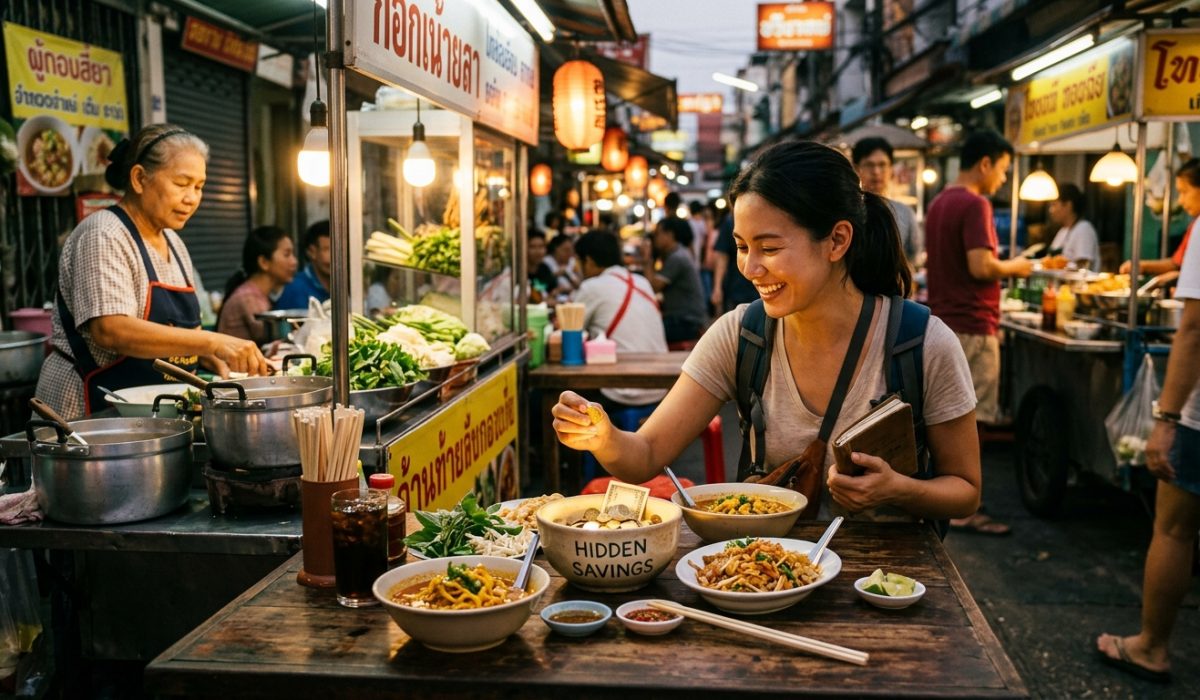
Walk two blocks from Bangkok’s Khao San Road in the wrong direction and you’ll pay triple for food that’s half as interesting. Walk two blocks in the right direction and you’ll eat better than you would at any tourist restaurant in the city, for roughly the cost of a metro ticket back home. The gap between tourist-zone dining and neighborhood eating is not the same everywhere. In some destinations it’s barely noticeable. In others it’s staggering, and the food on the cheaper side frequently wins on flavor. Knowing which cities have which pattern before you fly is what separates a genuinely budget-conscious trip from an expensive one dressed up as spontaneous.
Traveler’s Advantage
- Southeast Asia, Eastern Europe, and parts of Latin America have some of the widest food price gaps in the world between tourist corridors and neighborhood eating spots.
- Targeting specific markets, street corridors, and dish types gives you far better results than simply wandering away from the main drag.
- Doing price research by destination and food category before your trip means you arrive with a plan rather than expensive guesswork.
Why the Pricing Gap Is So Much Wider in Some Cities Than Others
In Zurich or Amsterdam, the price gap between tourist areas and residential neighborhoods is relatively narrow. The food infrastructure is fairly uniform, and local rents affect all restaurants about equally. But in cities where a strong street food or market culture exists alongside a well-developed tourist corridor, two entirely separate economies run side by side.
Bangkok makes this vivid. Sukhumvit Road, the main tourist artery, holds restaurants priced roughly in line with European capitals. Three subway stops east, in neighborhoods like On Nut or Ekkamai, the same quality of food costs a fraction of that. The dishes are identical. The ingredients come from the same wholesale markets. The difference is rent and foot traffic, nothing else.
This pattern repeats across Southeast Asia, Eastern Europe, and Latin America. It takes intention to act on. Most travelers stay where they feel comfortable, and comfortable usually means expensive. The solution isn’t bravery. It’s knowing, in advance, which specific streets and food categories are worth targeting.
Southeast Asia: Where the Street Food Scene Runs Rings Around Tourist Restaurants
In Bangkok, street dishes around Yaowarat Road in Chinatown run about 50 to 80 Thai baht per plate, roughly $1.40 to $2.20 at current exchange rates. The same pad thai at a Sukhumvit tourist restaurant often costs 200 to 300 baht. That’s a 300 percent markup for a dish that frequently tastes better at the street stall.
Penang, Malaysia, offers even sharper contrasts. The hawker stalls around Lorong Baru (New Lane) in George Town attract a mostly local crowd and price accordingly. A full dinner for two of char kway teow and asam laksa rarely exceeds $8 to $10 USD. The famous stalls along Gurney Drive are slightly more expensive, though still well below any sit-down restaurant charging tourist prices.
Vietnam adds its own layer. In Ho Chi Minh City, the streets around Ben Thanh Market are priced almost entirely for foreign visitors. Cross over to District 3 or District 10 and the banh mi, com tam, and bun bo Hue spots run by families with plastic chairs and hand-painted signs charge under $2 for breakfast or lunch. In Hanoi, the side streets off Hang Manh Street in the Old Quarter still have spots where a bowl of bun cha costs 40,000 to 60,000 Vietnamese dong, far below the inflated versions served at tourist cafes in the same neighborhood.
The organized approach to street food in this region runs deep. In Singapore and Malaysia, a hawker centre grew from public health initiatives that brought itinerant food vendors into covered, regulated spaces, creating a tradition where affordability and quality reinforce each other rather than trade off.
Eastern Europe’s Milk Bars and Market Halls Have Almost No Tourist Equivalent
Poland is arguably the best country in Europe for food savings if you know the mechanism. Warsaw and Krakow both have a network of bar mleczny, literally “milk bars,” which are subsidized canteen-style restaurants dating to the communist era. They serve traditional Polish dishes including borscht, pierogi, bigos (hunter’s stew), and zurek (sour rye soup) at prices that seem impossible by Western standards. A full hot lunch in a Warsaw milk bar typically runs under 25 Polish zloty, or about $6 USD. The tourist restaurants in the same neighborhoods charge two to three times that for smaller portions.
These canteens have been around since the early twentieth century, and reading about their origins and politics before your trip adds real context to every meal you eat in one. They survived the shift from communism to capitalism by staying stubbornly affordable and stubbornly genuine. Krakow’s Stary Kleparz market, a few minutes north of the Old Town, sells fresh produce and prepared foods aimed entirely at locals. The restaurants along Florianska Street in the Old Town charge two to three times more for the same dishes available at a milk bar five minutes’ walk away.
Budapest adds another dimension. The Central Market Hall on the Pest side is partly aimed at tourists now, but the upper floor’s food stalls still serve langos (fried dough with sour cream and cheese) and goulash at prices well below anything on Vaci Street. The sharper savings come from heading toward Hold Street Market or eating at canteen-style spots around Rakoczi Street, where office workers eat lunch daily and menus are in Hungarian only.
Georgia is one of the most underrated cases in the region. In Tbilisi, khinkali dumplings at a tourist restaurant on Shardeni Street cost roughly double what you pay near the Dezerter Bazaar. A plate of five or six khinkali at a neighborhood spot runs about 4 to 6 Georgian lari, which is $1.50 to $2.20 USD. Tourist-facing menus in the same city price the same dish at 15 to 20 lari.
Latin America’s Comida Corrida Is the Most Overlooked Meal Format in Travel
Latin America has an institution most tourists walk straight past: the comida corrida or menu del dia. This is a fixed set lunch, usually two or three courses, served from noon to about 3 PM at small neighborhood spots called fondas, picanterias, or huariques depending on which country you’re in. The price is fixed, the portions are generous, and the entire model is aimed at local workers eating their main meal of the day.
In Mexico City, a comida corrida in neighborhoods like Roma Norte or Doctores runs 80 to 120 pesos, roughly $4 to $6 USD, and includes soup, a main dish, rice, beans, and often a drink. The tourist restaurants in Condesa or near the Zocalo charge three to four times that for individual plates. The quality difference rarely favors the expensive side.
Peru is particularly compelling. Lima’s Mercado de Surquillo, a working market in the Miraflores district, has a second floor lined with family-run lunch spots where a full ceviche plate with leche de tigre (the curing liquid), rice, and corn costs under $5 USD. The ceviche restaurants on the Miraflores seafront charge $18 to $25 for the same dish. The fish comes from the same morning catch at the same port.
Bogota’s Paloquemao market follows a version of the same logic. The small stands inside sell ajiaco, bandeja paisa, and fresh fruit juices at prices that make the tourist-facing restaurants in Candelaria look dramatically overpriced. It’s also one of the best places in the Americas to eat tropical fruits you’ve never encountered, at a price that feels like a rounding error.
Mapping Price Gaps Before You Leave Home
Knowing which destinations have wide gaps is a start. Knowing which specific food categories show the most dramatic disparities in each city adds real precision. Spending time before your trip with data on biggest price gaps by destination and food type gives you a structured view of where your budget stretches furthest, rather than arriving with vague intentions to eat locally.
The point of this research is not to obsess over every meal. It’s to know, in advance, which categories are worth targeting in each destination. In Bangkok, street food is the move. In Poland, the milk bar lunch is where savings concentrate. In Peru, the market lunch circuit is what works. Each destination has its own pressure point, and knowing it ahead of time means you spend less time wandering and more time eating.
Six Steps for Finding Honest Food on the Ground in Any City
Pre-trip research sets the direction, but you still need to navigate in real time. These steps work across most destinations and food cultures:
- Walk at least five minutes away from the main tourist street in any direction. The price drop often starts within a block or two, but moving further into residential or commercial zones makes it more reliable.
- Look for menus posted in the local language only. Menus in English, French, or German displayed at a restaurant entrance are a reliable signal that pricing has been adjusted for foreign visitors.
- Eat lunch where local office workers eat at midday. The lunchtime crowd in any working neighborhood gravitates toward value. A restaurant full of people in work clothes at noon is almost always a good sign.
- Ask your accommodation host where they personally eat. Not where they send guests. Where they actually go on a Tuesday when they don’t feel like cooking.
- Target markets in the morning and early afternoon. Many of the best market food spots wind down or sell out by mid-afternoon, especially in Latin America and Southeast Asia. Arriving by 11 AM gives you the full selection.
- Check prices before sitting down at an unfamiliar spot. This avoids the uncomfortable situation of an inflated bill at a place that looks local but prices itself differently for foreign visitors.
The Meal You Remember Is Almost Never the Expensive One
The practical savings from eating in neighborhood spots add up faster than most travelers expect. Three weeks in Southeast Asia eating two meals a day from street stalls and local markets rather than tourist restaurants can save $200 to $400 USD over the trip. In Eastern Europe, the margin is more moderate but still meaningful, particularly in Poland and Georgia. In Latin America, the comida corrida habit alone can cut daily food costs by half.
But the financial argument almost undersells it. The food you eat at neighborhood spots tends to be more regionally specific, more carefully prepared, and more connected to what people in that place actually eat. Tourist restaurant menus homogenize toward dishes that photograph well and require minimal explanation. Neighborhood food tends to be the opposite: specific, layered, sometimes inexplicable without context, and frequently the most memorable thing you eat on the entire trip.
The travelers who come home talking about that incredible 80-cent soup or the dumplings they ate standing at a market stall in Tbilisi did not find those things by accident. They knew which direction to walk before they got off the plane. That knowledge is the simplest, most replicable form of travel prep there is.