Part of our Pennsylvania guide.
Hidden trading in Pennsylvania spans 13 historic sites, from Amish farm markets to Whiskey Rebellion taverns and colonial trading posts. These places reveal how goods, cultures, and currencies moved through the state long before interstates.
Amish Farms In Pennsylvania's Lancaster Valley
Amish farms in Pennsylvania's Lancaster Valley operate without modern machinery, using horse-drawn plows and hand-built barns. Visitors can see fields tended by hand, buy fresh produce at roadside stands, and observe the seasonal rhythms of planting and harvest. These farms offer a direct link to 18th-century agricultural methods still in use today.
The Whiskey Rebellion
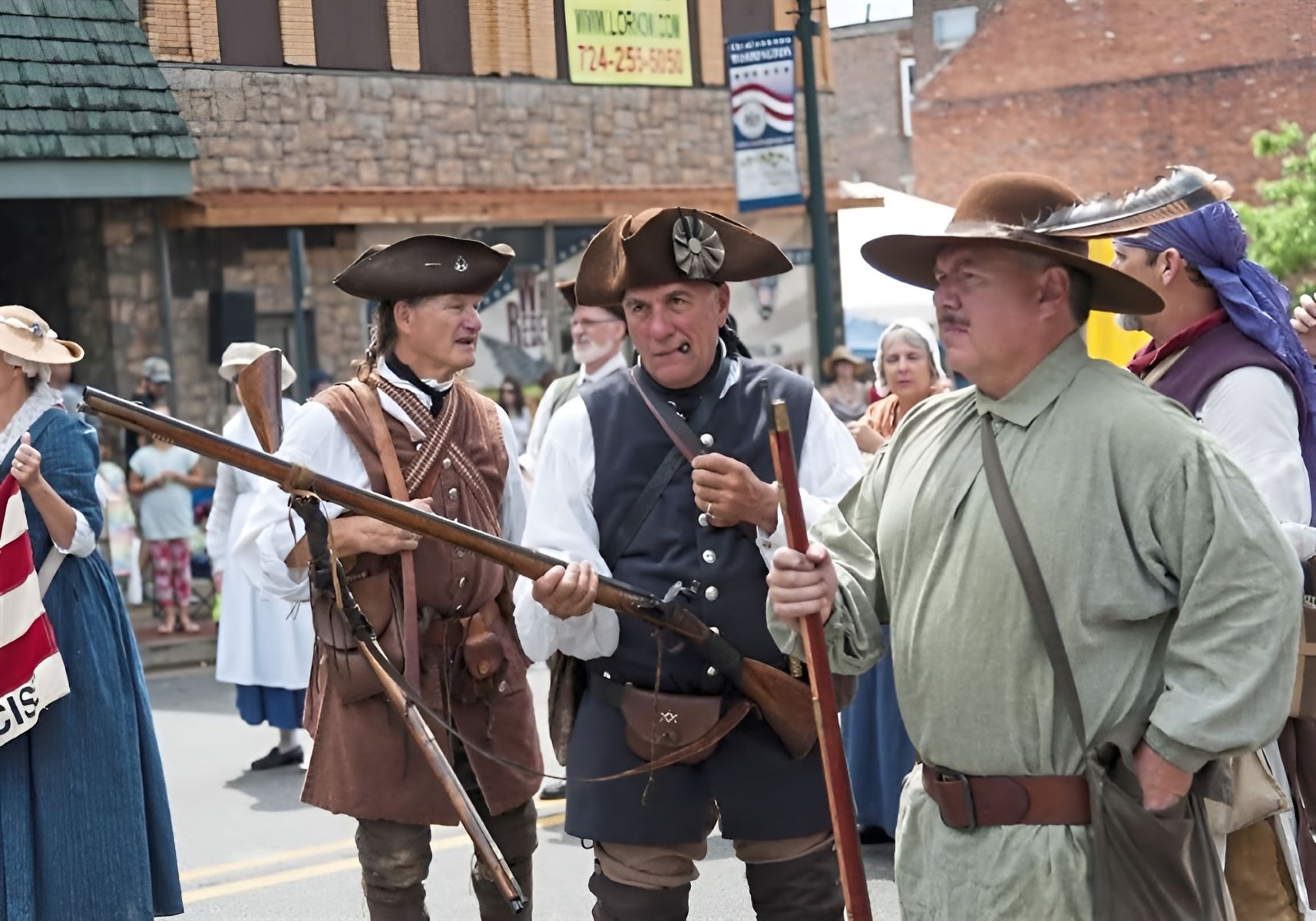
The Whiskey Rebellion of the 1790s began when Western Pennsylvania farmers protested a federal tax on whiskey. Their resistance escalated into an uprising, and President George Washington sent troops to quell it. Today, you can visit old taverns where rebels plotted, historic battlefields, and former distillery locations. These places provide a tangible connection to the early republic's most serious domestic challenge.
Handcrafted Furniture In Pennsylvania's Amish Country
In Pennsylvania's Amish Country, skilled artisans create handcrafted furniture using traditional joinery and hand-finishing techniques passed down through generations. Each piece is built from solid hardwoods without particleboard or veneers. Visitors can watch craftsmen work in open studios and commission custom tables, chairs, or cabinets.
Ephrata's Historic Printing Press Secrets
Ephrata's historic printing press, housed at the Ephrata Cloister, produced some of the earliest German-language books in America during the 18th century. The religious community founded in 1732 operated the press entirely by hand, setting type letter by letter. Visitors can see the original printing equipment, including the wooden press and type cases. Guided tours explain how each page was inked and pressed on handmade paper.
Fort Ligonier
Fort Ligonier, in the Laurel Highlands, served as a vital supply hub during the French and Indian War. Reconstructed buildings include the trading posts where settlers and Native Americans exchanged furs, tools, and food. Walking the fort's grounds, you can see the original well, artillery placements, and a museum displaying artifacts from the 1750s. The site hosts living-history demonstrations of 18th-century trade.
Brandywine Valley
The Brandywine Valley's colonial mills ground grain and produced textiles that powered the early American economy. Many of these stone mills still stand along the Brandywine Creek, their waterwheels and millraces intact. Visitors can tour the Hagley Museum's powder mills, see the Brandywine River Museum's collection of mill artifacts, and walk the trails that connect former industrial sites. The valley's mills operated continuously from the 1700s into the 20th century.
French Azilum
French Azilum, in the Endless Mountains, was a refuge for French aristocrats fleeing the Revolution in the 1790s. The settlement's trading posts provided food, clothing, and tools. Visitors can explore the remnants of log cabins, a reconstructed chapel, and interpretive signs that detail daily life. The site features a small museum with period artifacts.
Fort Wheeler
Fort Wheeler served as a hub for traders and settlers in Pennsylvania's interior during the 18th century. The fort's trading post exchanged furs, guns, and cloth between Native American tribes and European colonists. Archaeological digs have uncovered trade beads, musket balls, and pottery fragments. The site is now a public park with walking paths and interpretive panels that explain the barter economy that sustained the frontier.
Dutch Country Taverns
Pennsylvania Dutch Country taverns feature original wooden beams, antique decor, and traditional foods like schnitz und knepp and whoopie pies. Many have operated continuously for over 200 years, serving as meeting places for farmers, traders, and travelers. The oldest, the 1744 Black Horse Tavern in Lancaster County, still serves meals in its original stone building. Each tavern has its own stories, from Revolutionary War meetings to ghost legends.
Forbes Road Trading Junctions
Forbes Road, carved through the Pennsylvania wilderness in 1758, connected frontier forts and trading junctions. Key stops include the sites of Fort Bedford, Fort Ligonier, and the former trading post at Raystown (now Bedford). These junctions saw the exchange of furs, whiskey, and salt between settlers and Native American traders. Markers and museums along the route explain how this road shaped the region's economy and settlement patterns.
Chester County's Colonial Stone Springhouses
Chester County's colonial stone springhouses used natural spring water to keep milk, butter, and meat cool before refrigeration. These small buildings were built directly over springs, with stone walls that maintained a constant temperature. Over 200 springhouses still stand in Chester County, many on private farms but visible from public roads. The Chester County Historical Society offers maps for self-guided tours of the best-preserved examples.
Trading Posts Hidden In Fort Necessity Pennsylvania
Fort Necessity, in the Allegheny Mountains, was a hub for trade during the French and Indian War. Traders exchanged furs, tools, and food at posts located just outside the fort's stockade. The site's museum displays trade goods such as brass kettles, glass beads, and iron axes. Walking trails connect the fort to the nearby Great Meadows, where the original trading paths converged.
Drake Well
Drake Well in Titusville, the birthplace of the modern oil industry, also hosted trading posts that supplied early drillers. Before the 1859 oil strike, the area was a crossroads for fur traders and Seneca Indians. The Drake Well Museum includes a reconstructed trading post where visitors can see how barter worked alongside the new cash economy. The site features a working oil derrick and a collection of 19th-century trade goods.
More about Hidden Trading
- Secrets Of Pennsylvania's Lost Gristmills
- Hidden Wild Pawpaw Patches In Pennsylvania
- Hidden Company Towns Of Pennsylvania's Coal Region
- Dive Into Raystown Lake's Hidden Ghost Town
- Secrets Of Pennsylvania's Mountain Laurel Tunnels
- Secrets Of Pennsylvania's Ancient Rock Art Sites
- Hidden Trout Streams In Pennsylvania's Pocono Mountains
- Secret Swimming Holes In Pennsylvania's Pocono Mountains
- Secrets Of Pennsylvania's Ancient Earthwork Sites
- Hidden Iron Furnaces Of Pennsylvania
- Pennsylvania's Hidden Steel Mills Forgotten By Time
- Secrets Of Pennsylvania's Mason-Dixon Stone Markers
- Hidden Firefly Synchronization Sites In Pennsylvania's Allegheny Forest
- Secrets Of Amish Backroads In Pennsylvania's Lancaster County
- Secrets Of Black Bear Dens In Pennsylvania's Pocono Mountains
- Mysteries Of Pennsylvania's Blue Hole
- Secrets Of Pennsylvania's Delaware River Towns
- Mysteries Of Pennsylvania's Blue Rocks
- Secrets Of Pennsylvanias Sacred Stone Circless
- Secrets Of Pennsylvanias Abandoned Railways
- Secrets Of Pennsylvania's Bedford Mineral Springs
- Secrets Of Pennsylvania's Colonial Taverns
- Mysteries Hidden In Pennsylvania's Allegheny
- Secrets Of Pennsylvanias Hawk Mountain Eagle Migration
- Secrets Of Pennsylvanias Abandoned Railroad Tunnels
- Mysteries Of Pennsylvanias Hammersley Wild
- Hidden Mysteries Of Pennsylvanias Abandoned Turnpike Tunnels
- 15 Hidden Towns in Pennsylvanias Laurel Highlands
- Hidden Gems Of Pennsylvanias Delaware Canal Towpath
- Secrets Of Pennsylvanias Tuscarora Mountain
- Secrets Of Pennsylvanias Iron Mountain
- Hidden Secretts Of Pennsylvanias Gettysburg Quarry Sites
- Secrets Of Pennsylvanias Pine Creek Stone Chambers
- Secrets Of Pennsylvanias Silk Mill Towns
- Secrets Of Pennsylvanias Cook Forest Remnant Virgin Forests
- Hidden Gems: Pennsylvanias 10 Most Beautiful Towns And Cities
- Secrets Of Pennsylvanias Highland Bogs
- Hidden Lore: Forgotten Folklore Sites Of Pennsylvania Dutch Country
- Hidden Whiskey Rebellion Spots In Pennsylvanias Laurel Highlands
- Hidden Swimming Holes In Pennsylvanias Ricketts Glen