

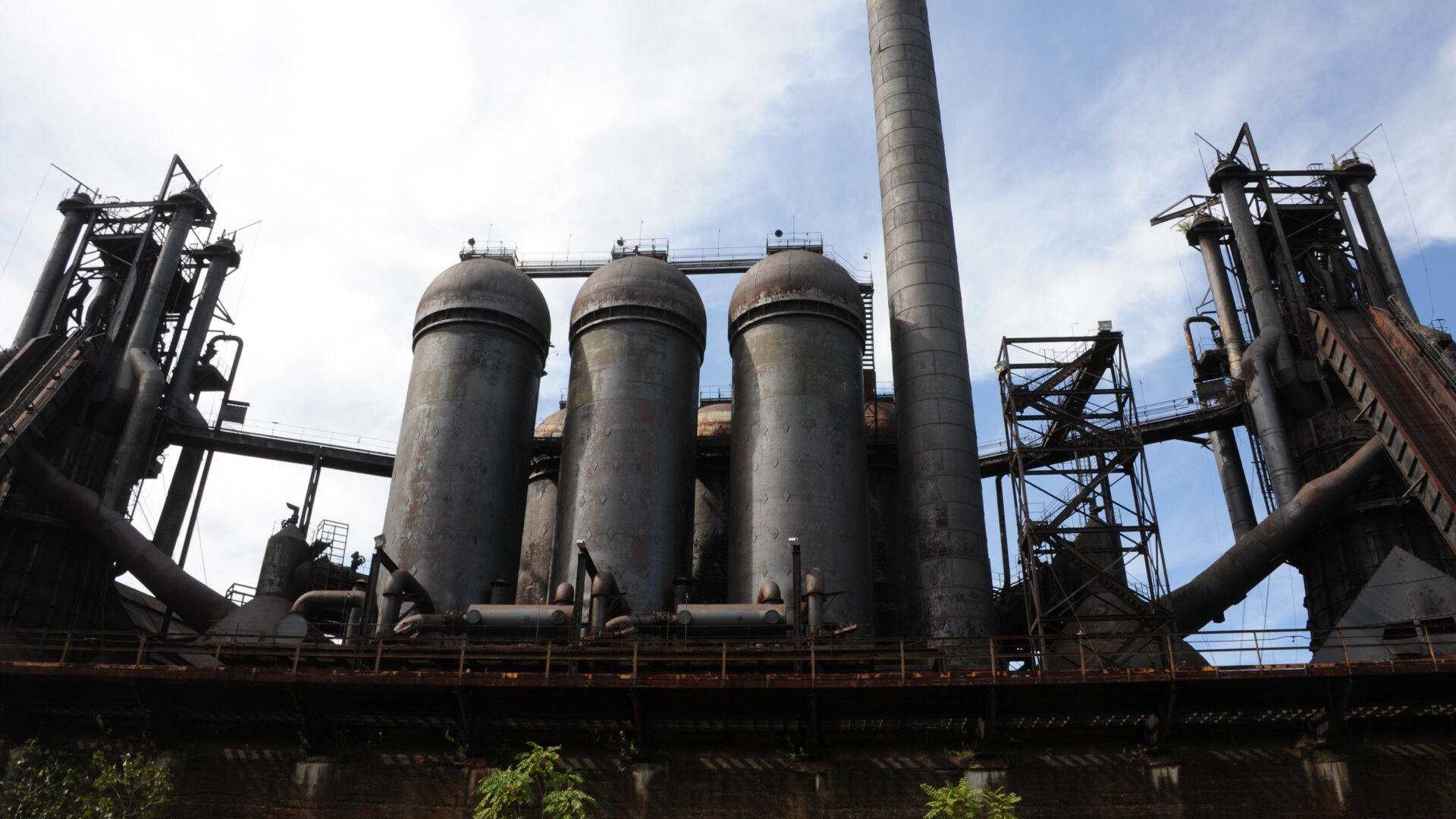
Pennsylvania’s hidden steel mills date back to 1907, when the first Carrie Blast Furnace was built—and they operated until 1978. These industrial sites, once the engine of American manufacturing, now stand as weathered monuments you can walk through, touch, and explore.
Pennsylvania’s Forgotten Steel Mills
Pennsylvania once powered the nation’s steel industry, and scattered across its towns are the rusting remains of mills that built skyscrapers, battleships, and bridges. These aren’t empty lots—they’re preserved landmarks with guided tours, interpretive exhibits, and stories of labor and innovation. Here’s where to find them and what still stands today.
Bethlehem Steel Plant
Bethlehem Steel Plant was one of the largest steelmakers on Earth, producing material for the Golden Gate Bridge and warships for the U.S. Navy. Though the plant ceased operations in 1995, its towering blast furnaces remain a centerpiece of the local cultural district.
- Bethlehem Steel Plant: Located in Bethlehem, this mill’s blast furnaces still rise above the Lehigh Valley, now part of the Bethlehem Works cultural and arts center. Guided tours lead visitors through the casting area and past the iconic “SteelStacks,” with exhibits on the plant’s role in building modern America.
Homestead Steel Works
Homestead Steel Works, just outside Pittsburgh, was a production powerhouse and the site of the Homestead Strike of 1892—a turning point in U.S. labor history. Most of the mill was redeveloped, but two structures survive as landmarks.
- Homestead Steel Works: Situated in Homestead, the mill’s Pump House and Water Tower still stand along the Monongahela River. The Pump House, where striking workers clashed with Pinkerton detectives, is now a museum; the Water Tower marks the edge of the original complex. Both are accessible from the riverfront trail.
Carrie Blast Furnaces
The Carrie Blast Furnaces were part of the larger Homestead Works complex but operated as a separate entity for decades. They’re now a National Historic Landmark and one of the few remaining examples of pre–World War II iron-making technology in the country.
- Carrie Blast Furnaces: Located in Rankin, these furnaces were built in 1907 and operated until 1978. Today, guided tours take you inside the towering iron columns, through the casting house, and up to the furnace tops for a view of the Monongahela Valley. The site also hosts art installations and events, blending industrial history with contemporary culture.
Cambria Iron Works
Cambria Iron Works in Johnstown was a pioneer in steel production, known for developing the “Cambria process” that improved the quality of rails and structural steel. The company also built the Conemaugh River Lake dam, whose failure caused the 1889 Johnstown Flood.
- Cambria Iron Works: Found in Johnstown, this mill’s remaining structures are preserved as the Cambria Iron National Historic Landmark District. Visitors can walk past the old blacksmith shop, the machine shop, and the remains of the blast furnaces, with interpretive signs explaining the site’s role in advancing steel technology. The nearby Johnstown Flood Museum provides context for the disaster that the mill’s dam caused.
Lackawanna Steel Company
Lackawanna Steel Company began in Scranton before relocating to Buffalo, New York, in the early 1900s. Its Pennsylvania roots run deep—the company was founded by the Scranton family, who also developed the Lackawanna Railroad and the Delaware, Lackawanna & Western line.
- Lackawanna Steel Company: Initially located in Scranton, this company moved to Buffalo, New York, but its original site in Scranton is now the Lackawanna County Electric City Trolley Station and Museum. The site includes the remains of the company’s early blast furnaces, visible from the Lackawanna River Heritage Trail. Visitors can learn about the company’s early days and its impact on the region’s coal and iron trade.
Phoenix Iron Works
Phoenix Iron Works, in Phoenixville, was known for producing the Phoenix Column—a patented structural iron that supported buildings, bridges, and the U.S. Capitol dome. The company also pioneered the use of “puddled iron” in large-scale construction.
- Phoenix Iron Works: Situated in Phoenixville, this mill’s site now houses the Schuylkill River Heritage Center, where exhibits cover the mill’s history and the broader industrial revolution. The center offers walking tours of the remaining structures, including the 1857 rolling mill and the 1875 “Phoenix Column” bridge, which still spans French Creek.
Jones and Laughlin Steel Company
Jones and Laughlin Steel Company, based in Pittsburgh, was a major producer of steel for pipelines, automobiles, and appliances. The company’s South Side works were among the most productive in the world, but the site was largely demolished after the mill closed in the 1980s.
- Jones and Laughlin Steel Company: Located in Pittsburgh, the original mill site is now the South Side Works, a mixed-use development with offices, apartments, and shops. While the mill itself is gone, a few remnants remain, including the old “J&L” sign on the riverfront and a preserved blast furnace blower engine on display at the nearby Rivers of Steel Heritage Center. The surrounding neighborhood still bears the imprint of the company’s workers’ housing and social clubs.
Rediscovering Pennsylvania’s Industrial Past
Pennsylvania’s hidden steel mills are more than rusted relics—they’re open-air museums where you can hear the echoes of hammers and the hiss of steam. Each site tells a different story: the labor wars at Homestead, the engineering breakthroughs at Phoenix, the immigrant communities that built Carnegie and Jones and Laughlin. Many of these locations are free to visit, with guided tours ranging from $10 to $25 per person. Some, like Carrie Furnaces, require advance reservations, while others, like the Pump House in Homestead, are open on weekends only. Check individual websites for seasonal hours, as many sites close during winter months. For those planning a longer trip, the region around Pittsburgh offers a month-by-month guide to the weather in Italy—but for a true industrial history tour, Pennsylvania’s steel valley is best visited between May and October, when the weather is mild and the tours run daily. Whether you’re walking through a blast furnace or standing beneath a 100-foot smokestack, these sites offer a rare, tangible connection to the people who built the modern world. The steel may be gone, but the stories—and the structures—remain.
Related travel guides: Hidden Iron Furnaces Of Pennsylvania and Hidden Company Towns Of Pennsylvania's Coal Region.
