

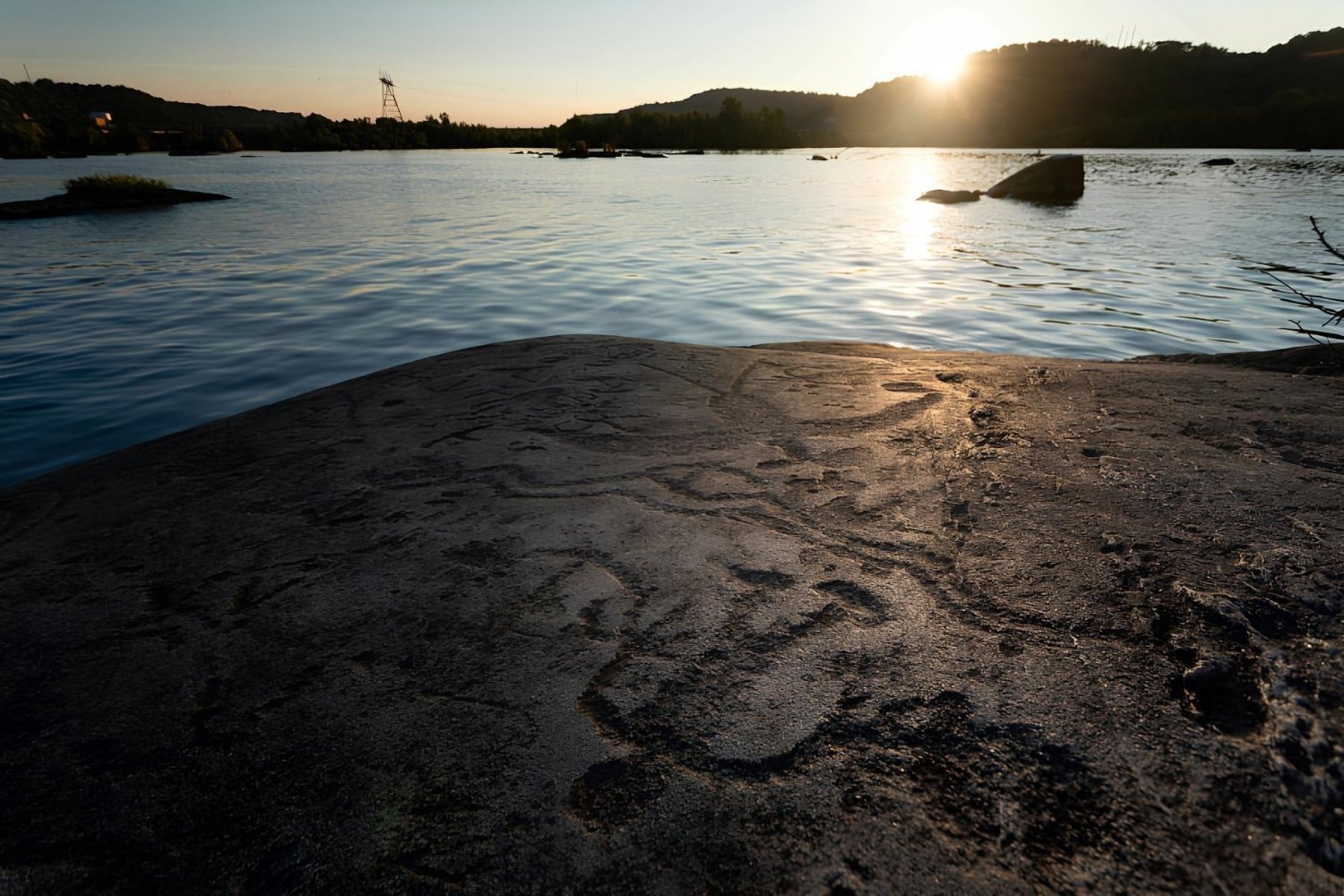
Pennsylvania's ancient rock art sites hold far more than simple carvings—they hold the keys to understanding the region's earliest peoples. The most accessible and best-documented site, Safe Harbor, contains more than 300 carvings across six rocks near the Susquehanna River, not the thousands some sources claim. Here's what's actually known about the Keystone State's petroglyphs, where to find them, and how to visit responsibly.
1. Safe Harbor Petroglyphs
Located along the Susquehanna River near the Safe Harbor Dam in Lancaster County, these are the most famous petroglyphs in Pennsylvania. A Lancaster-area report documents more than 300 carvings across six rocks, including turtles, snakes, and human figures.
- Location: Near Safe Harbor Dam, Lancaster County
- Highlights: More than 300 carvings across six rocks, including turtles, snakes, and human figures
- Accessibility: Accessible by boat or a short hike
2. Indian God Rock
Indian God Rock stands as a testament to the cultural heritage of the Native American tribes that once inhabited the area. This large boulder, adorned with carvings, sits along the Allegheny River in Venango County.
- Location: Venango County, near Franklin
- Highlights: Depictions of human figures, animals, and geometric shapes
- Accessibility: Accessible by a short hike from the nearest road
3. Little Indian Rock
Little Indian Rock offers a more intimate experience with ancient rock art. This site features a variety of carvings, including animals and abstract designs, providing insight into the artistic expressions of early inhabitants.
- Location: Near the Susquehanna River, Lancaster County
- Highlights: Detailed carvings of animals and abstract symbols
- Accessibility: Accessible by boat or a short hike
4. Bald Friar Petroglyphs
The Bald Friar Petroglyphs, once located on the Susquehanna River, were relocated to preserve them. These carvings are believed to date back thousands of years, though their exact age remains undocumented in available sources.
- Location: Originally in Lancaster County, now in Maryland
- Highlights: Intricate carvings of animals, human figures, and symbols
- Accessibility: Viewable by appointment at the conservation laboratory
5. Big Indian Rock
Big Indian Rock, another site along the Susquehanna River, showcases a variety of petroglyphs in their natural setting.
- Location: Lancaster County, near Safe Harbor
- Highlights: Carvings of animals, human figures, and abstract designs
- Accessibility: Accessible by boat or a short hike
6. Conemaugh Rock Art
Conemaugh Rock Art offers a glimpse into the past with its collection of petroglyphs. These carvings, found along the Conemaugh River, depict various symbols and figures.
- Location: Westmoreland County, near Saltsburg
- Highlights: Carvings of animals, human figures, and geometric shapes
- Accessibility: Accessible by a short hike from the nearest road
7. Walnut Island Petroglyphs
Walnut Island Petroglyphs, located in the Susquehanna River, feature a variety of carvings that provide insight into the beliefs and practices of the region's early inhabitants.
- Location: Near Walnut Island, Lancaster County
- Highlights: Carvings of animals, human figures, and abstract symbols
- Accessibility: Accessible by boat
8. Indian Steps Museum
Indian Steps Museum houses a collection of artifacts and features rock art on its grounds. This museum offers a comprehensive look at the region's Native American history.
- Location: York County, near Airville
- Highlights: Petroglyphs on the museum grounds, along with a vast collection of artifacts
- Accessibility: Easily accessible by car
9. Columbia-Wrightsville Petroglyphs
The Columbia-Wrightsville Petroglyphs, located along the Susquehanna River, showcase a variety of carvings that provide a window into the past.
- Location: Near Columbia and Wrightsville, Lancaster County
- Highlights: Carvings of animals, human figures, and geometric shapes
- Accessibility: Accessible by boat or a short hike
10. Safe Harbor Dam Petroglyphs
Safe Harbor Dam Petroglyphs, located near the Safe Harbor Dam, feature a variety of carvings that offer insight into the lives and beliefs of the region's early inhabitants.
- Location: Lancaster County, near Safe Harbor Dam
- Highlights: Carvings of animals, human figures, and abstract symbols
- Accessibility: Accessible by boat or a short hike
Practical Tips for Visiting
When planning your trip, remember that many of these sites are only reachable by boat or on foot. The Safe Harbor Petroglyphs are the most documented, with the Lancaster-area report confirming the count of more than 300 carvings across six rocks. For the Bald Friar Petroglyphs, note that they are now in Maryland, and viewing requires an appointment at the conservation laboratory—their exact current location is not publicly detailed.
For those interested in hiking and the outdoors in Pennsylvania, the trails leading to sites like Indian God Rock and Conemaugh Rock Art offer scenic routes through the state's woodlands. The scenic hikes to take in Lancaster, Pennsylvania provide a perfect preamble to reaching the riverside petroglyphs near Safe Harbor. Remember that these are sacred spaces—do not touch the carvings, and keep dogs on leashes to avoid disturbing the terrain.
If you're short on time, prioritize the Safe Harbor area, where you can see multiple rocks with carvings in a single visit. The nearby Susquehanna River also offers kayak rentals, making it easier to reach the island sites. Always check water levels before heading out, as some rocks are submerged during high flow.
While the secrets hidden in Pennsylvania include these petroglyphs, the state also holds other historical mysteries. For those interested in industrial history, the secrets of Pennsylvania's lost gristmills offer a parallel story of early industry along the same waterways. But for now, focus on the rocks—they've waited centuries for you to read their stories.
Before you go, note that the Columbia-Wrightsville Petroglyphs and Indian Steps Museum are both accessible by car, making them easier stops for families. However, the most rewarding experiences often require a bit of effort—pack water, wear sturdy shoes, and bring a camera with a zoom lens to avoid stepping too close to the fragile carvings.
Respect the past, preserve the present, and let these ancient symbols speak to you across millennia. The rocks are waiting.
