

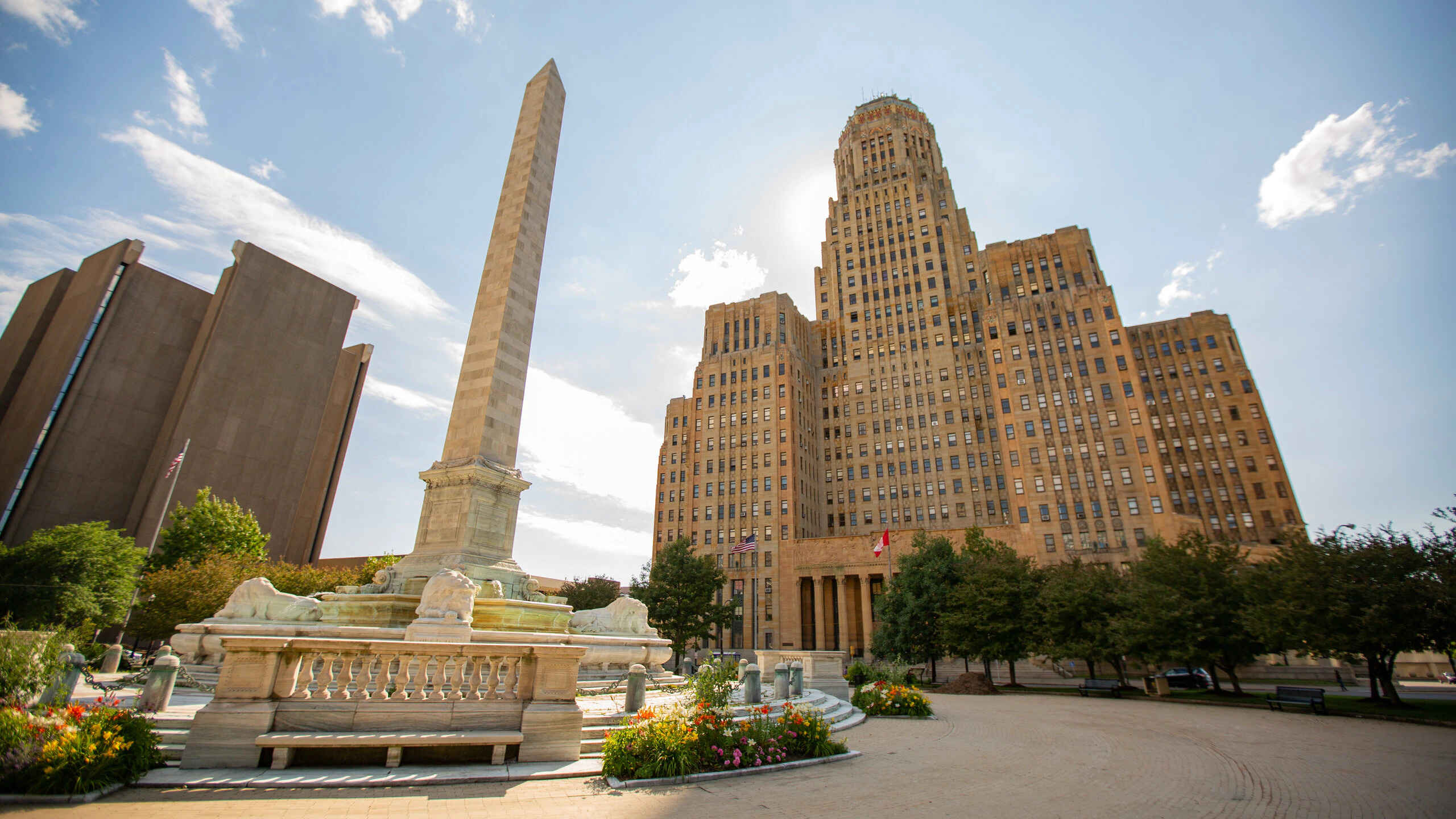
Buffalo, New York, offers 11 must-visit historic sites, ranging from Gilded Age mansions and architectural landmarks to museums preserving the city’s industrial and cultural heritage. These sites, drawn from Buffalo’s official tourism listings and widely cited historic-places guides, provide a focused yet varied look at the city’s past.
The Theodore Roosevelt Inaugural National Historic Site
Step into history at the Theodore Roosevelt Inaugural National Historic Site, where the 26th President of the United States took the oath of office following the assassination of President William McKinley. This site preserves the exact location where Roosevelt was inaugurated, allowing visitors to walk in the footsteps of a pivotal moment in American history.
The Buffalo History Museum
Delve into the rich tapestry of Buffalo’s past at the Buffalo History Museum, where an extensive collection of artifacts, documents, and exhibits chronicles the city’s evolution over the centuries. From Native American heritage to the industrial boom, this museum offers a comprehensive exploration of Buffalo’s diverse history.
Frank Lloyd Wright’s Darwin D. Martin House
Immerse yourself in the architectural brilliance of Frank Lloyd Wright at the Darwin D. Martin House, a masterpiece that showcases the renowned architect’s innovative Prairie-style design. This iconic residence stands as a testament to Wright’s visionary approach to blending nature and architecture.
The Buffalo Central Terminal
A symbol of the city’s grandeur during the golden age of rail travel, the Buffalo Central Terminal stands as a majestic reminder of a bygone era. This architectural marvel, with its Art Deco splendor and historical significance, offers a captivating journey through time.
The Colored Musicians Club
As a living testament to Buffalo’s vibrant jazz heritage, the Colored Musicians Club stands as a beacon of artistic expression and cultural significance. This historic venue has been a nurturing ground for legendary musicians and continues to resonate with the soulful rhythms of jazz, preserving a vital chapter of Buffalo’s musical legacy.
The Buffalo Fire Historical Society
Dedicated to honoring the bravery and legacy of Buffalo’s firefighters, the Buffalo Fire Historical Society offers a poignant tribute to the city’s firefighting history. Through captivating exhibits and artifacts, this institution pays homage to the heroic individuals who have safeguarded the community.
What About Other Notable Sites?
While the 11 must-visit sites above are based on Buffalo’s official tourism listings and widely cited historic-places guides, travelers sometimes ask about other notable locations. The Buffalo and Erie County Naval & Military Park, home to several decommissioned vessels, including the USS Little Rock, USS The Sullivans, and USS Croaker, is not listed among those 11 must-visit historic sites in the sourced facts. Similarly, Forest Lawn Cemetery, which serves as the final resting place for many prominent figures in Buffalo’s history, including President Millard Fillmore, is not listed among them. The Pierce-Arrow Museum, which uncovers the legacy of one of America’s most iconic automobile manufacturers, is also not listed, nor is the Guaranty Building, designed by renowned architect Louis Sullivan. The Buffalo Religious Arts Center, housed within a former church, showcasing a breathtaking collection of religious artifacts, stained glass windows, and sacred art, is likewise not listed in the sourced facts.
These exclusions are not a judgment on their merit—each offers its own distinct appeal. Rather, the 11 must-visit list reflects a specific selection based on official tourism sources. For those planning a trip, the listed sites provide a coherent narrative of Buffalo’s architectural, cultural, and social history, from the Gilded Age opulence of the Darwin D. Martin House to the jazz heritage preserved at the Colored Musicians Club.
For visitors interested in broader New York travel, the state offers many other historic destinations, and some travelers consult travel guides in new York to plan longer itineraries. However, within Buffalo itself, the 11 must-visit sites stand out for their documented historical significance and preservation efforts.
Practical Considerations for Visitors
Many of the historic sites in Buffalo are family-friendly, offering engaging activities and educational experiences for visitors of all ages. While some sites are within walking distance of each other, others may require transportation due to their distance. It’s advisable to plan your itinerary and consider transportation options based on the sites you wish to visit.
The Buffalo Central Terminal, for instance, is located east of downtown, while the Darwin D. Martin House sits in the city’s Parkside neighborhood. The Colored Musicians Club is in the downtown theater district, and the Buffalo History Museum is situated in Delaware Park. Grouping nearby sites can save time, but be prepared for some travel between clusters.
Accessibility varies by site. The Buffalo History Museum and the Darwin D. Martin House offer fully accessible routes, while the Buffalo Central Terminal, with its grand staircase and historic fabric, may pose challenges for some visitors. The Colored Musicians Club is a multi-story building, and the Buffalo Fire Historical Society occupies a historic firehouse, so check ahead for specific accessibility features.
Parking is generally available at or near each site, though downtown locations like the Colored Musicians Club and the Buffalo Central Terminal may have metered street parking or paid lots. Rideshare services are widely available in Buffalo, and the Metro Bus and Metro Rail systems connect many of these historic districts.
For those arriving from outside the city, Buffalo Niagara International Airport is about 20 minutes from downtown, and Amtrak serves Exchange Street Station near the waterfront. If you’re planning to visit multiple sites in a single day, consider purchasing a pass if available, though no single pass covers all 11 sites.
Preservation and Community
The preservation of Buffalo’s historic sites is a community effort, with many landmarks restored by nonprofit organizations and dedicated volunteers. The Theodore Roosevelt Inaugural National Historic Site, for example, underwent extensive restoration to return the interior to its 1901 appearance. The Buffalo Central Terminal, once abandoned, is now managed by a nonprofit that hosts tours and events while raising funds for ongoing stabilization.
These efforts ensure that future generations can continue to experience the stories embedded in Buffalo’s architecture and neighborhoods. Whether you’re a history enthusiast, architecture buff, or simply curious about the stories etched into Buffalo’s streets, these 11 must-visit historic sites promise an enriching experience.
FAQs
Q: Are these historic sites suitable for family visits?
A: Yes, many of the historic sites in Buffalo, New York, are family-friendly, offering engaging activities and educational experiences for visitors of all ages.
Q: Can I explore these sites on foot, or do I need transportation?
A: While some sites are within walking distance of each other, others may require transportation due to their distance. It’s advisable to plan your itinerary and consider transportation options based on the sites you wish to visit.
Q: Are there guided tours available?
A: Yes, several sites offer guided tours, including the Theodore Roosevelt Inaugural National Historic Site and the Darwin D. Martin House. Check each site’s website for tour schedules and ticket prices.
Q: How much time should I allow for each site?
A: Most visitors spend 1–2 hours at each site, though the Buffalo History Museum and the Darwin D. Martin House may require more time to fully appreciate their exhibits and architecture.
Q: Are any of these sites free?
A: Some sites, like the Buffalo Fire Historical Society, suggest a donation, while others charge admission. Check individual sites for current pricing and any free admission days.
