Part of our Missouri guide.
Missouri’s best seasons for visiting its springs and caves are spring and fall, when temperatures are mild and water levels are high. Summer brings reliable warmth for swimming and snorkeling, while winter offers solitude but colder water and air.
Related travel guides: Events And Seasons In Kentucky, Events And Seasons In Indiana, and Secrets Of Missouri's Devil's Icebox.
Secret Caves At Bennett Spring
Bennett Spring State Park hides a network of caves beneath its forested trails. These underground passages reveal limestone formations, narrow chambers, and seasonal bat roosts. The caves are not developed for public tours, so exploring them requires proper gear, a headlamp, and experience with wild caving. The park’s main attraction is the spring itself, which releases over 100 million gallons of water daily, feeding a trout hatchery and a popular fishing area. Above ground, the park offers over 12 miles of hiking trails that wind through oak-hickory woods and along the spring branch.
Secret Greer Spring
Greer Spring, the second largest spring in Missouri, sits deep within the Mark Twain National Forest. It releases an average of 220 million gallons of water per day, pouring into the Eleven Point River, a designated National Wild and Scenic River. The spring emerges from a rocky bluff and forms a large pool before cascading over a small ledge. A short, steep trail leads from the parking area to the overlook, but the water is off-limits for swimming to protect the fragile ecosystem. The surrounding forest is home to wild turkeys, white-tailed deer, and a variety of warblers, making it a prime spot for birdwatching in early morning.
Mysteries Beneath Missouri's Round Spring
Round Spring, in the Ozark National Scenic Riverways, is a collapsed dolomite sinkhole that forms a perfect circular pool. The spring is fed by an underground aquifer that surfaces through a deep vertical shaft; divers have explored it to a depth of 80 feet without reaching the bottom. The cavern system beneath is part of Round Spring Cave, which offers guided tours from Memorial Day through Labor Day. The cave features rimstone pools, flowstone formations, and a narrow canyon passage that fills with water during heavy rains. Visitors can also hike the nearby Ozark Trail, which connects to the larger trail system in the area.
Maramec Spring Park Rivers
Maramec Spring Park in St. James, Missouri, is built around the fifth-largest spring in the state, discharging over 100 million gallons of water daily. The spring feeds the Little Piney River, a clear, gravel-bottomed stream that supports rainbow trout stocked from the park’s own hatchery. The park’s historic ironworks, which operated from 1829 to 1876, still stand near the spring, and interpretive signs explain the smelting process. Hikers can follow the 5.5-mile loop trail that crosses the river twice and climbs onto limestone bluffs overlooking the valley. The park also has picnic shelters, a nature center, and a small museum open seasonally.
Alley Spring Snorkeling Basin
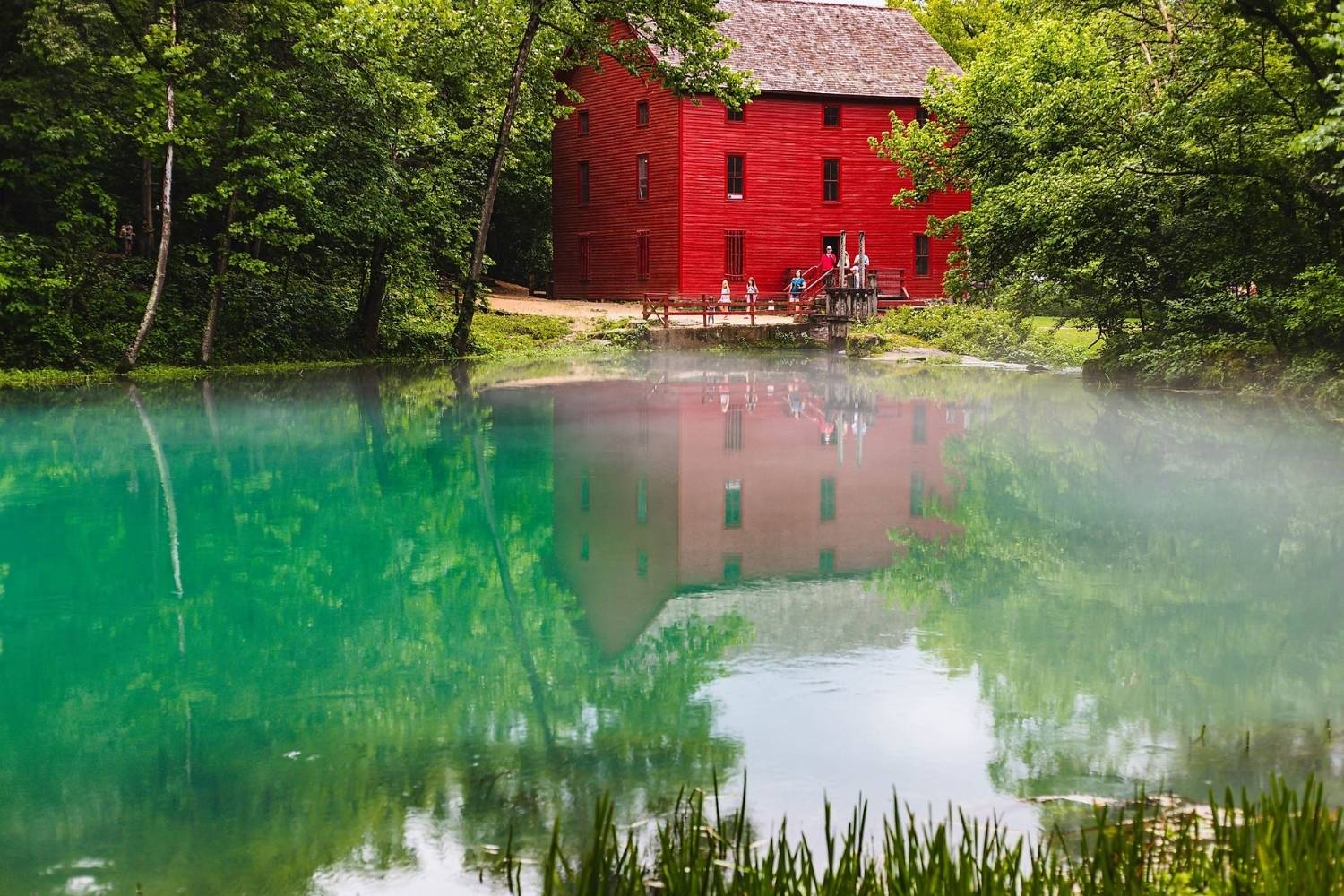
Alley Spring Snorkeling Basin in the Ozark National Scenic Riverways is a designated swimming area fed by the spring’s 81-million-gallon-per-day flow. The water stays at a constant 56 degrees Fahrenheit year-round, so snorkelers should bring a wetsuit even in July. The basin is shallow near the edges but drops to about 10 feet in the center, where the spring’s blue-green vent is visible. Submerged logs and rock ledges provide habitat for sunfish, bass, and the occasional snapping turtle. The park’s red mill, built in 1894, sits beside the spring and houses a small interpretive exhibit. A footbridge crosses the spring branch, leading to a short trail that follows the riverbank.
Mysterious Ghost Camps Of Missouri's Bennett Spring
Bennett Spring State Park contains remnants of summer camps abandoned in the 1930s and 1940s. These overgrown sites include stone fireplaces, rusted bed frames, and collapsed log cabins. The camps were built by families who came to fish for trout during the Great Depression, and some stayed for months at a time. Park rangers occasionally lead guided walks to these locations, but most are not marked on standard trail maps. The best time to spot them is in late fall after the leaves drop, when the outlines of foundations become visible from the main hiking paths.
Ozark: Alley Spring Adventure Awaits
The red mill at Alley Spring is one of the most photographed structures in Missouri, and the spring’s 81-million-gallon daily flow creates a wide, clear pool suited for canoeing and kayaking. The upper section of the spring branch is too shallow for boats, but the Jacks Fork River, which the spring feeds, offers 20 miles of navigable water downstream. Canoe rentals are available in Eminence from March through October. The river’s gravel bars make excellent campsites, and the surrounding hills are home to deer, wild turkeys, and bald eagles in winter. The park’s hiking trails include the 2.5-mile Alley Spring Loop, which climbs to a bluff overlook with views of the river valley.
Big Spring Branch Bluffs
Big Spring Branch Bluffs in the Ozark National Scenic Riverways feature limestone cliffs that rise 100 feet above the spring branch. The spring itself is the largest in Missouri, discharging over 280 million gallons of water per day. A paved, wheelchair-accessible trail follows the spring branch for about a mile, passing through a shaded glade with ferns and mosses. The bluffs are a popular spot for rock climbing, though the limestone is soft and requires careful route-finding. Birders come to see the cerulean warbler and the Louisiana waterthrush, both of which nest along the water. The trail connects to the 10-mile Big Spring Loop, which offers more challenging terrain and backcountry camping.