

Part of our Indiana guide.
Indiana’s seasons shape when you can comfortably explore its caves, gorges, and canal paths. Spring and fall offer the mildest weather for outdoor trips. Summer brings heat and humidity, while winter can close some natural sites. Plan around the specific attractions below.
Related travel guides: Events And Seasons In Missouri, Secrets Mysteries In Indiana, Mystery Of Indiana's Hidden Mines, Secrets Of Indiana's Portland Arch, Events And Seasons In Kentucky, and Hidden Pawpaw Patches Of Indiana.
Spring Mill Caves
Spring Mill State Park, in southern Indiana, centers on a cave system with guided tours past underground rivers and rock formations. Tours run from spring through fall; the cave keeps a steady cool temperature even in summer. The park also includes a restored pioneer village with working mills, hiking trails, and a nature center. Allow a half-day to see the cave and village without rushing.
Fall Creek Gorge
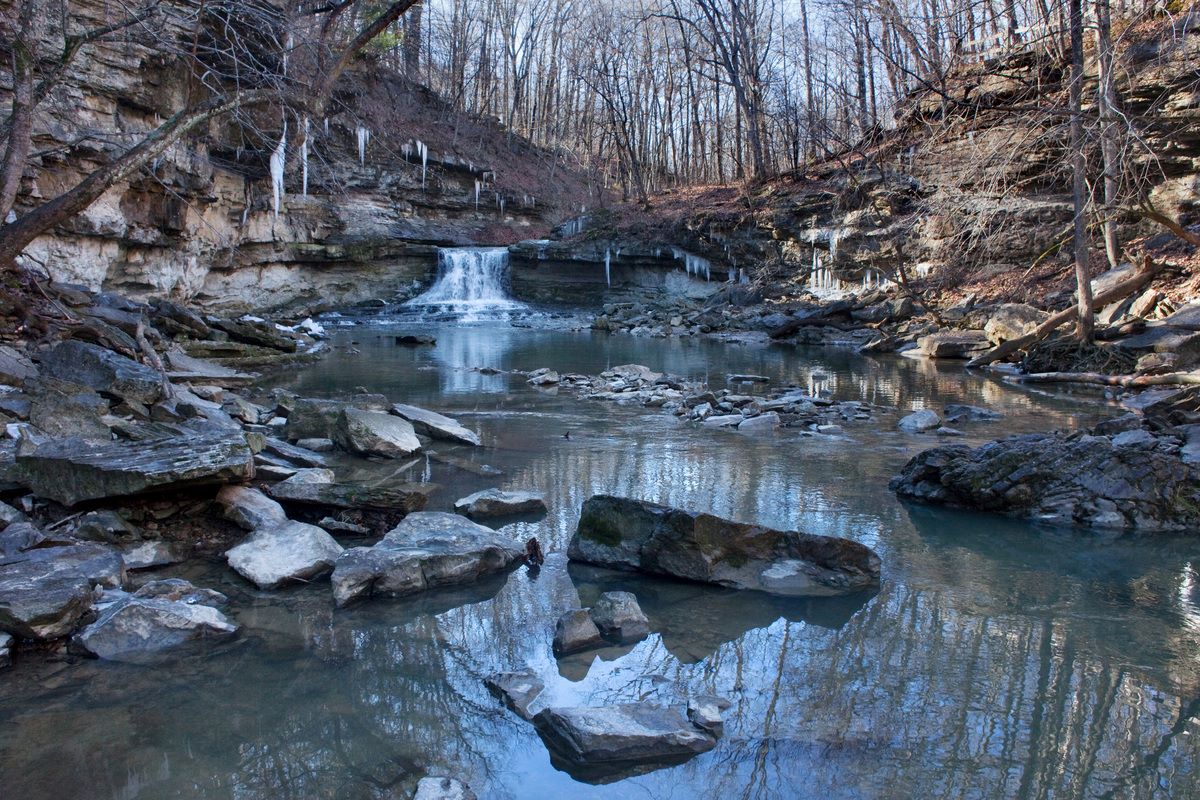
Fall Creek Gorge, known locally as the "Potholes," sits in west-central Indiana near Williamsport. The swirling rock formations and clear water are best viewed in late spring or early fall when water levels are moderate. After heavy rain, the gorge can flood quickly, so check conditions before hiking in. A short trail leads to overlooks and down to the water’s edge. There are no marked swimming areas. The site is open year-round, but ice makes the rocks slippery in winter.
Blue Spring Caverns
Blue Spring Caverns, in Lawrence County, contains one of the longest underground rivers in the United States, and the only way to see it is by boat tour. Tours run daily from March through October, with reduced hours in November and December; the caverns close in January and February. The boat ride glides through winding passages past stalactites and stalagmites, and you’ll likely spot blind cavefish and crayfish in the clear water. The tour lasts about 45 minutes, and the cave stays at a constant 52°F, so bring a light jacket even in summer.
Canal Spring
Canal Spring, in the central part of the state, feeds a historic canal that once floated boats along the Wabash and Erie route. The spring flows year-round, but the best time to visit is April through October when the towpath is dry and the interpretive signs are accessible. You can walk the flat trail where mules once pulled canal boats, or picnic near the water’s edge. The site has no entrance fee, and parking is free. For a quieter visit, go on a weekday morning before school groups arrive.
