

To get to Pulpit Rock, take a ferry from Stavanger to Tau, then a bus to the trailhead. But the drive takes 45 minutes, so renting a car gives you more freedom to explore the surrounding areas at your own pace.
Background on Pulpit Rock
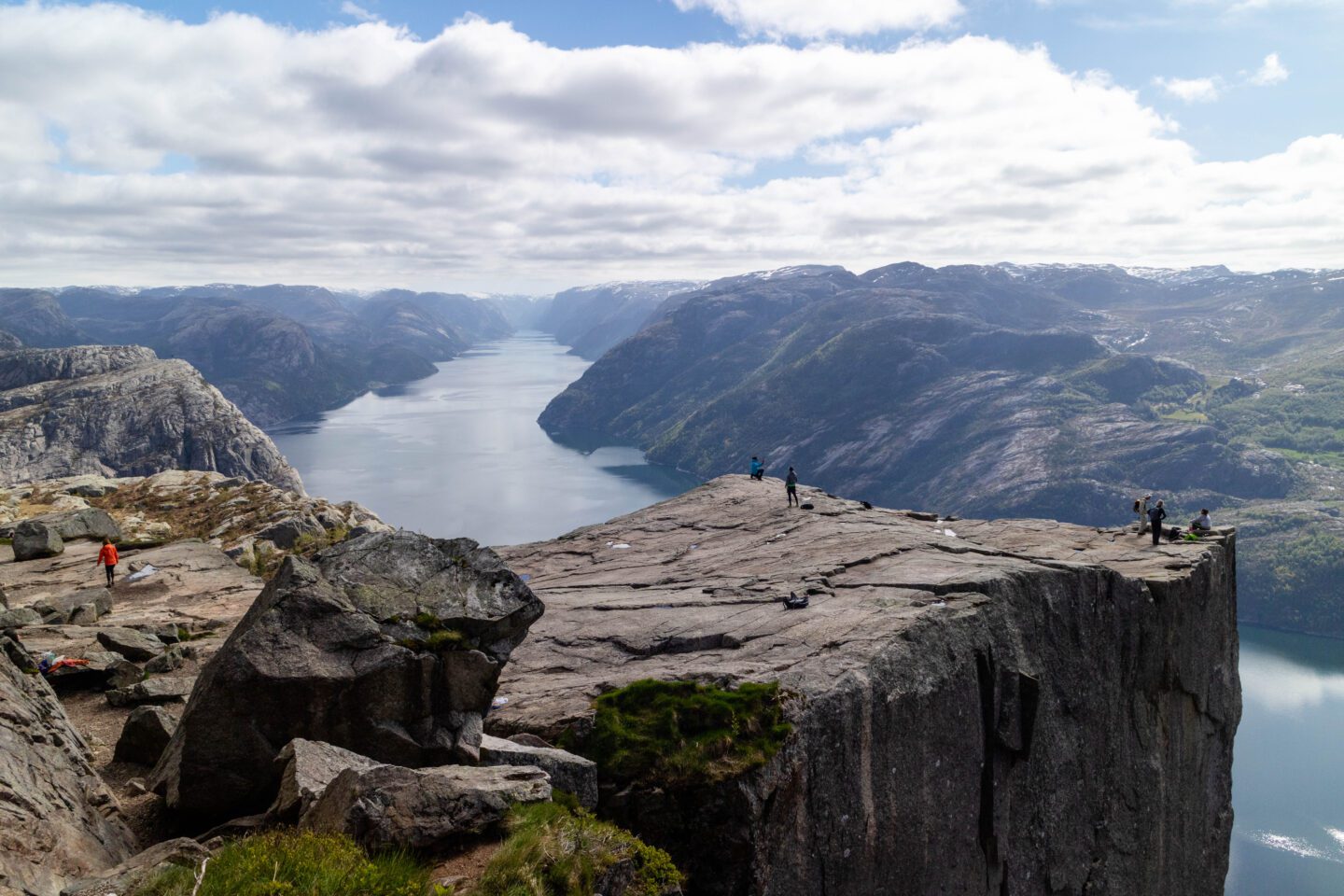
Pulpit Rock, also known as Preikestolen in Norwegian, has a rich geological and cultural history. The rock formation was created during the last Ice Age, when retreating glaciers shaped the landscape, leaving behind a mesmerizing cliff that now attracts visitors from all over the world.
The name "Pulpit Rock" originates from the flat, squared-off plateau that resembles a preacher's pulpit. This unique feature, combined with its panoramic views, has made it a popular destination for hikers, nature enthusiasts, and photographers.
The plateau itself measures around 25 by 25 meters, offering ample space for visitors to take in the awe-inspiring surroundings. With its location approximately 604 meters above the Lysefjord, the views from Pulpit Rock are simply breathtaking, showcasing the fjord's sparkling waters, towering cliffs, and lush greenery. These views are a highlight of any fjord adventures in Norway.
Pulpit Rock gained international recognition after being featured in various films, advertisements, and travel documentaries, further cementing its status as one of Norway's most iconic landmarks. The site's popularity has grown significantly over the years, drawing both locals and tourists seeking stunning natural beauty.
While the main attraction may be the impressive cliff and its panoramic views, Pulpit Rock is also home to a vibrant ecosystem. The surrounding area boasts an array of flora and fauna, including wild berries, mosses, ferns, and various bird species. Keen-eyed hikers might even spot reindeer or foxes roaming the hillsides.
It is worth noting that Pulpit Rock is a protected area, and visitors are encouraged to practice Leave No Trace principles to help preserve this natural wonder for future generations. With its breathtaking beauty and intriguing history, Pulpit Rock continues to capture the hearts and minds of all those who venture to its edge.
Best Time to Visit Pulpit Rock
Choosing the right time to visit Pulpit Rock can greatly enhance your experience. The best time to visit largely depends on weather conditions, crowd levels, and personal preferences.
One of the most popular times is during the summer months, from June to August, when the weather is mild and the days are long. However, this is also peak tourist season, so expect larger crowds. If you prefer a quieter experience, consider visiting during the spring or fall. The months of May and September offer favorable weather with fewer tourists, giving you a better chance to enjoy the stunning views in a tranquil setting and capture photographs without too many people around.
Keep in mind that the weather in Norway can be unpredictable regardless of the season. Check the forecast before your trip and come prepared with appropriate clothing, especially if you plan to hike to Pulpit Rock.
During winter, Pulpit Rock transforms into a winter wonderland, blanketed in snow and ice. The hike can be more challenging but offers a unique experience for those who enjoy winter sports and are well-equipped for cold temperatures. Trail conditions may vary, so take necessary precautions and follow safety guidelines.
One way to reach Pulpit Rock is by taking a ferry from Stavanger to Tau. The ferry ride offers stunning views of the fjord along the way. From Tau, a bus service is available to take you to the base of the trailhead. It is advisable to check the bus schedule in advance to plan your trip accordingly. If driving, the direct trip from Stavanger to the trailhead takes around 45 minutes, allowing you to set your own pace and explore the surrounding areas at your leisure. For those seeking more extensive exploration, consider road tripping around Alesund and the fjords, Norway for a broader fjord adventures in Norway experience.
Ultimately, the best time to visit depends on your preferences. Whether you prefer the vibrancy of summer or the tranquility of the shoulder seasons, Pulpit Rock promises breathtaking views and an unforgettable adventure.
Getting to Stavanger, Norway
Located on the southwestern coast of Norway, Stavanger serves as the gateway to Pulpit Rock. Getting to Stavanger is relatively easy, thanks to its well-connected transportation network.
For international travelers, the most convenient way to reach Stavanger is by flying into Stavanger Airport, Sola (SVG). The airport is served by numerous domestic and international airlines, making it easily accessible from major cities in Europe and beyond. From the airport, you can take a taxi or a shuttle bus to the city center, which is approximately a 20-minute drive away.
If you're already in Norway, another option to consider is traveling by train. Stavanger is connected to Oslo, the capital city, by a scenic train route. The journey takes approximately 7-8 hours, but it offers breathtaking views of Norway's picturesque landscapes along the way.
For a more adventurous journey, you can also consider taking a ferry to Stavanger. The city has a port that receives regular ferry services from various destinations, including Bergen, Haugesund, and the Danish city of Hirtshals.
Once you arrive in Stavanger, you'll find that the public transportation system is efficient and reliable. Buses and taxis are available to take you to different parts of the city, including the starting point of the hike to Pulpit Rock. For the simplest public-transport option to the trailhead, take the direct bus from Stavanger.
If you prefer the flexibility of having your own vehicle, renting a car is also a popular option. Stavanger has several car rental agencies where you can easily find a vehicle to suit your needs. The drive from Stavanger to the trailhead takes around 45 minutes, and it allows you to set your own pace and explore the surrounding areas at your leisure.
As you plan your trip to Pulpit Rock, it's essential to consider the transportation options that best suit your travel preferences and budget. Whether you choose to fly, take a train, ferry, or rent a car, getting to Stavanger is the first step towards embarking on your unforgettable adventure to Pulpit Rock.
Transportation Options to Pulpit Rock
Once you've arrived in Stavanger, you have several transportation options to reach Pulpit Rock, each offering a unique experience and level of convenience.
For a simpler public-transport option, consider the direct bus from Stavanger to the trailhead.
If you prefer a more private and flexible mode of transportation, renting a car in Stavanger and driving to the Pulpit Rock trailhead is an option worth considering. However, it's important to note that parking at the trailhead may be limited during peak tourist season, so arrive early to secure a parking spot. For those seeking broader fjord adventures in Norway, a car also provides flexibility to visit other nearby sights.
For those looking for an authentic and active experience, biking to Pulpit Rock is a popular option. Stavanger and the surrounding region have well-maintained bike paths, allowing cyclists to enjoy the scenic landscapes while making their way to the trailhead. It's important to be prepared for the challenging terrain and ensure you have the necessary equipment for a long bike ride.
While there are other transportation options available, such as guided tours and private transfers, these may come with additional costs. It's essential to do thorough research and choose a reputable provider if you decide to go with these options.
Regardless of the transportation option you choose, it's important to plan ahead and check for any schedule changes or restrictions, especially during the high season. Having a clear understanding of your transportation arrangements will help ensure a smooth and enjoyable journey to Pulpit Rock.
Hiking to Pulpit Rock
Hiking to Pulpit Rock is a thrilling adventure that immerses you in the Norwegian wilderness. The trail is well-marked and maintained, accessible to hikers of various skill levels. The total distance is approximately 8 kilometers (round trip), and it typically takes 4-5 hours to complete, depending on your pace.
The trail starts at the Pulpit Rock parking lot, where the trailhead is clearly marked. The route gradually ascends through rocky paths, forested areas, and open plateaus, with occasional steep sections and challenging inclines. Wear sturdy hiking shoes and pack plenty of water and snacks.
As you climb, the trail offers vistas of the surrounding mountains, fjord, and lush landscapes. The final stretch to Pulpit Rock involves a short but steep ascent, which may require scrambling. Once at the top, you’ll be rewarded with a panoramic view.
Caution should be exercised during wet or icy conditions. Stay on designated paths, follow safety signs, and be aware of your surroundings. For those interested in the area’s natural and cultural history, guided hiking tours are available, providing knowledgeable guides who offer insights into the region.
Whether you hike independently or join a tour, check the weather forecast and dress in layered clothing, as conditions can change unexpectedly. Hiking to Pulpit Rock is a remarkable way to experience Norway’s nature up close, testing your stamina and rewarding you with unforgettable memories. For more fjord adventures in Norway, this hike is a must-do.
Safety Tips for Visiting Pulpit Rock
While visiting Pulpit Rock is an exciting adventure, it's important to prioritize safety to ensure a smooth and enjoyable experience. Here are some essential safety tips to keep in mind:
- Be prepared: Before setting out on your hike to Pulpit Rock, make sure you are well-prepared. Wear appropriate hiking shoes, dress in layers, carry plenty of water, and pack some snacks for energy. It's also advisable to bring a map, compass, or GPS device, as well as a first aid kit.
- Check the weather: Always check the weather forecast before starting your hike. Avoid hiking in severe weather conditions, such as heavy rainfall, strong winds, or foggy conditions, as they can affect visibility and make the trail slippery and dangerous.
- Stay on the designated trail: Stick to the marked path and avoid venturing off-trail. Straying from the designated trail can lead to hazardous terrain, increase the risk of accidents, and potentially harm the fragile ecosystem surrounding Pulpit Rock.
- Watch your step: The trail to Pulpit Rock includes some steep and rocky sections. Take your time, watch your step, and be cautious. Use handrails if available and be mindful of loose rocks or slippery surfaces, especially during wet weather.
- Respect your limitations: Know your own physical abilities and limitations. The hike to Pulpit Rock can be challenging, and it's essential to listen to your body. Take breaks when needed and do not push yourself beyond your capabilities.
- Be mindful of the edge: Pulpit Rock offers stunning panoramic views, but it's crucial to exercise caution near the edge. Stay away from the cliff's edge and ensure children are closely supervised. Avoid standing on unstable or overhanging rocks that may pose a risk of falling.
- Leave no trace: Respect the natural environment and practice Leave No Trace principles. Carry out any trash or waste you generate and avoid littering. Keep the surroundings clean and undisturbed for future visitors to enjoy.
- Inform someone of your plans: Before embarking on your hike, let someone know your itinerary and estimated time of return. This will ensure that someone is aware of your whereabouts and can alert authorities if necessary.
- Follow any safety guidelines: Be aware of any additional safety guidelines or regulations that may be in place for visiting Pulpit Rock. These can include restrictions during adverse weather conditions or specific precautions for certain areas.
Remember, safety should always be a priority when visiting Pulpit Rock. By following these tips and being aware of your surroundings, you can enjoy a safe and memorable experience at this iconic attraction in Norway, whether you are planning fjord adventures in Norway or seeking out hidden gems in Norway.
Other Attractions Near Pulpit Rock
While Pulpit Rock is the main highlight, there are other attractions near Pulpit Rock worth exploring. Here are a few destinations to consider adding to your itinerary:
- Kjerag: Located about 2.5 hours away by car, Kjerag is another famous Norwegian hiking destination. The hike involves a steep climb and offers mesmerizing views of the Lysefjord. Kjerag is also known for the iconic Kjeragbolten, a large boulder wedged between two cliffs.
- Lysefjord: Experience the beauty of the Lysefjord from a different perspective by taking a fjord cruise. These boat tours allow you to admire the towering cliffs, cascading waterfalls, and lush greenery that make the Lysefjord such a breathtaking natural wonder. This is one of the best fjord adventures in Norway.
- Flørli 4444: For a unique adventure, visit Flørli 4444, home to the world's longest wooden staircase. Climb the 4,444 steps to the top and enjoy panoramic views of the fjord and surrounding mountains. The climb is challenging but rewarding, and it's a great way to test your endurance.
- Stavanger City Center: Take the time to explore the charming city of Stavanger itself. The city is known for its colorful wooden houses, lively waterfront, and vibrant culinary scene. Visit the Stavanger Cathedral, wander through its quaint streets, and indulge in delicious Norwegian cuisine.
- Månafossen Waterfall: Located about an hour's drive from Pulpit Rock, Månafossen is one of the highest waterfalls in the region. The hike to the waterfall offers stunning views of the surrounding landscapes, and you can even venture behind the cascading waters for a unique perspective.
- Old Stavanger: Explore the historic district of Old Stavanger, which consists of beautifully preserved wooden houses dating back to the 18th century. Take a leisurely stroll through the narrow cobblestone streets, browse the local boutiques, and immerse yourself in the city's rich cultural heritage. It is one of the hidden gems in Norway.
These are just a few of the many attractions near Pulpit Rock and Stavanger. Whether you want to continue your exploration of Norway's nature, delve into its history and culture, or simply relax and enjoy the local ambiance, you'll find plenty of options to suit your interests and add depth to your visit to this beautiful region.
Conclusion
A journey to Pulpit Rock in Norway is an experience that will leave you with lasting memories and a deep appreciation for the country's natural beauty. From the awe-inspiring views atop the cliff to the invigorating hike through the Norwegian wilderness, Pulpit Rock offers a unique adventure.
As you plan your visit, remember to consider the best time to go, taking into account weather conditions and crowd levels. Arriving in Stavanger, the gateway to Pulpit Rock, is easily achievable through international flights to Stavanger Airport, Sola, or by train or ferry from nearby destinations.
Once you've reached Stavanger, various transportation options, including ferries, buses, and even biking, are available to take you to the trailhead. For those seeking deeper immersion, the region offers unforgettable fjord adventures in Norway.
As you explore Pulpit Rock, don't forget about the other attractions nearby. Whether it's visiting the stunning Kjerag or taking a fjord cruise to admire the Lysefjord, there are plenty of adventures waiting to be discovered.
In conclusion, a trip to Pulpit Rock is a must for nature lovers and adventure seekers alike. The combination of Norway's awe-inspiring landscapes and the extraordinary view from Pulpit Rock will leave you in awe of the country's natural wonders.
