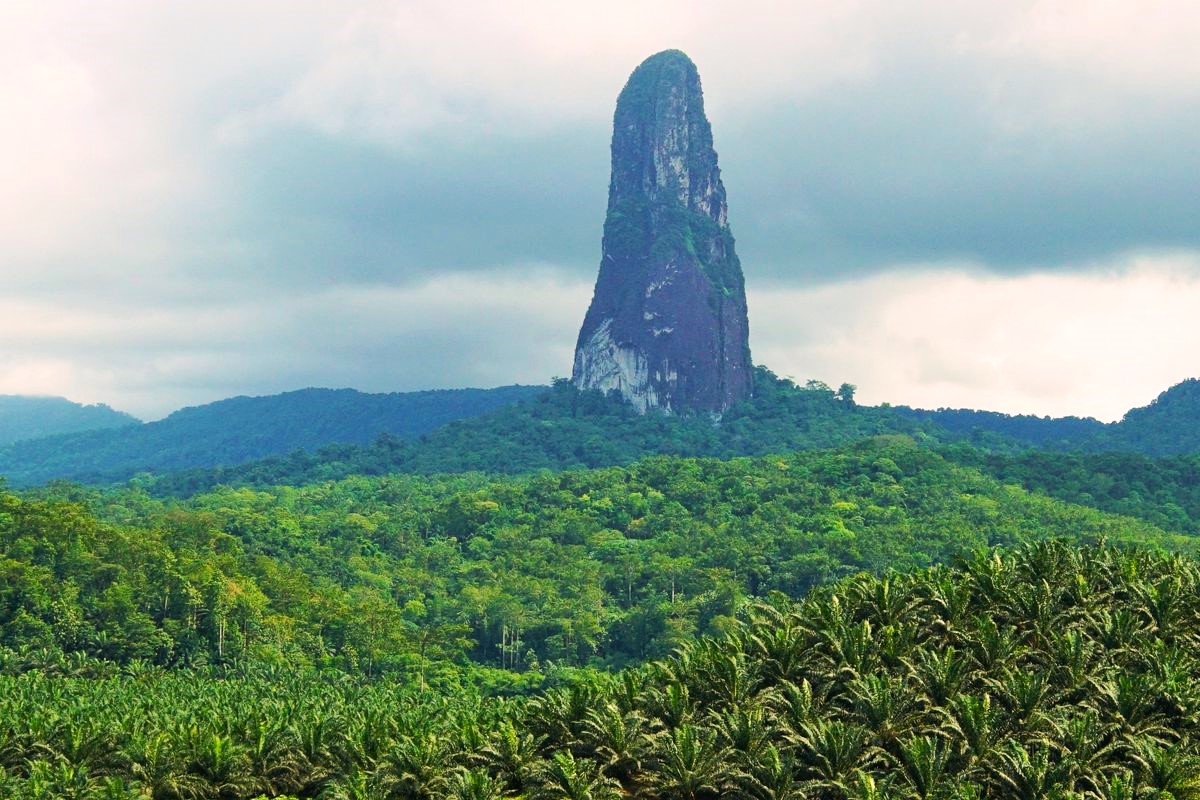
Pico Cão Grande is a 370-meter (1,214-foot) needle of volcanic rock that juts abruptly from the jungle floor of São Tomé and Príncipe, an island nation off Central Africa's Atlantic coast. This dramatic formation, also called the Great Dog Peak, is a near-vertical spire.
What is Pico Cão Grande?
Pico Cão Grande is a volcanic plug—the solidified core of an ancient volcano, exposed after softer rock eroded away. It rises from dense rainforest in the southern part of São Tomé Island, within the Obô Natural Park. Its sheer, moss-draped walls and distinctive needle profile make it one of the most recognizable landmarks in the Gulf of Guinea.
Related travel guides: Devils Tower National Monument - Wyoming's Iconic Butte, Germany's Hidden Gems: The Most Beautiful National Parks, and National Parks, Caves, and Scenic Landscapes.
Why Climb Pico Cão Grande?
Climbing Pico Cão Grande is a serious undertaking. The ascent is steep, vertical in places, and demands technical climbing skill, upper-body strength, and mental fortitude. There are no switchbacks—just a continuous push up rock faces, ledges, and exposed sections. The reward is a summit perch with sweeping views over the island's emerald canopy and the Atlantic beyond, plus the chance to see endemic species found nowhere else on Earth.
How to Prepare for the Climb
Preparation is not optional. This is a technical climb, not a walk. Here's what you need to focus on:
- Physical Training: Build grip strength, core stability, and cardiovascular endurance. Climbing-specific workouts, such as bouldering and hangboarding, help. Aim for at least three months of consistent training before attempting the route.
- Climbing Gear: Bring your own harness, helmet, climbing shoes, chalk bag, and a personal anchor system. Ropes and protection are typically used for the final pitch—check with your guide what is supplied and what you need to bring.
- Mental Preparation: Expect exposure. The climb involves long drops and narrow ledges. Practice staying calm and focused in high places before you arrive.
- Local Guides: Hiring an experienced local guide is essential. They know the route's hidden holds, the best timing, and how to handle sudden weather changes. They also handle permits and logistics.
The Climbing Route
The route is short but intense—most parties complete the technical section in a single day, though the approach and descent add time. Here's the breakdown:
- Base Camp: You'll start at a clearing near the base of the rock. This is where you gear up, review the route, and make final checks. The base sits at the edge of the forest, so you can also use it as a reference point for weather.
- Jungle Trek: A short but steep hike through dense rainforest gets you to the rock's base. The trail is muddy and slippery even in the dry season, so trekking poles help. Watch for colorful frogs, chameleons, and giant millipedes along the way.
- Rock Face: The first pitches involve scrambling up vegetated ledges and low-angle rock. As you gain height, the holds get smaller and the exposure grows. Bolts are present on some sections, but don't rely on them—carry a small rack of nuts and cams for protection.
- Summit Push: The final section is the hardest. A steep, exposed crack system leads to the summit block. This is where technical climbing skills are tested. Many parties use a rope here, even if they free-climbed the lower sections. The summit itself is a small, flat area with room for just a few people—take turns enjoying the view.
What to Expect at the Summit
Reaching the top delivers pure adrenaline. The summit offers a 360-degree panorama: to the east, the Atlantic stretches to the horizon; to the west, the island's central mountain range fades into cloud forest. Look down and you'll see the canopy broken by the occasional clearing, with birds of prey circling below you.
- Breathtaking Views: On a clear day, you can see both the northern and southern coasts of São Tomé. The light changes quickly, so bring a camera and shoot early.
- Unique Flora and Fauna: The summit and upper rock faces host endemic plants like the São Tomé giant begonia and the rare orchid Polystachya. You may also spot the São Tomé paradise flycatcher or the giant sunbird, both endemic to the island.
- Sense of Achievement: Fewer than a few hundred people have summited Pico Cão Grande. Standing on that narrow peak, you'll understand why it's considered one of Africa's most unique climbing experiences.
Safety Tips for Climbing Pico Cão Grande
Safety is non-negotiable. The rock is remote, and rescue is difficult if something goes wrong. Follow these rules:
- Weather Conditions: Check the forecast before you start. Storms roll in fast, and wet rock becomes dangerously slick. If clouds gather, turn back—the summit is not worth the risk.
- Stay Hydrated: Carry at least 2 liters of water. The climb is physically demanding, and dehydration affects judgment and grip strength.
- Climbing Partners: Never climb alone. Always have at least one partner, and ideally a group of three or more. Your guide should be in radio contact with base camp.
- Emergency Plan: Know the emergency procedures before you start. The nearest medical facility is in São Tomé city, about a 90-minute drive from the trailhead. Carry a satellite phone or personal locator beacon—cell service is unreliable.
Best Time to Climb Pico Cão Grande
The dry season, from June to September, offers the most stable conditions. Rainfall is lower, and the rock is drier, which makes the climb safer and more enjoyable. The months of July and August are particularly popular, so book guides and accommodation well in advance.
- Dry Season: June to September is the prime window. Expect less mud on the approach and better friction on the rock.
- Avoid Rainy Season: From October to May, frequent downpours make the rock dangerously slippery and reduce visibility. The jungle trail becomes a quagmire, and the summit may be shrouded for days.
- Early Morning Climbs: Start at first light. This gives you the best chance of clear skies and avoids the heat of midday. It also leaves time for a safe descent before dusk.
Local Culture and Traditions
Beyond the climb, São Tomé and Príncipe offers a rich cultural experience. The islands were uninhabited until the Portuguese arrived in the late 15th century, and their legacy is visible in the architecture, language, and cuisine.
- Local Cuisine: Try calulu, a hearty stew of fish, vegetables, and palm oil, often served with rice and banana. Grilled fish and chicken are staples, and fresh tropical fruit is abundant.
- Music and Dance: The islands have a lively music scene. Listen for ússua and socopé, traditional rhythms played on drums and stringed instruments. Local festivals often feature dancing and singing.
- Community Interaction: Villagers are welcoming to visitors. Learning a few phrases in Portuguese or Forro Creole goes a long way. Ask permission before taking photos, and support local businesses by hiring guides and buying crafts.
Environmental Considerations
The rainforest around Pico Cão Grande is a biodiversity hotspot under pressure from deforestation and invasive species. Your visit can help or harm—choose to help.
- Leave No Trace: Pack out everything you bring in, including food wrappers and tape from gear. The rock is a fragile ecosystem, and even small litter can harm wildlife.
- Respect Wildlife: Observe animals from a distance. Do not feed them, and avoid touching plants—some are rare and can be damaged by a single touch.
- Sustainable Practices: Stay on marked trails, support eco-lodges, and contribute to local conservation groups. The Obô Natural Park entrance fee goes toward protecting the area—pay it willingly.
The Allure of Pico Cão Grande
Pico Cão Grande is more than a climb—it's a journey into one of Africa's last wild places. The rock itself is a geological marvel, but the real magic lies in the surrounding rainforest, the endemic wildlife, and the warmth of the islanders. Whether you're a seasoned climber or simply someone who appreciates natural wonders, this needle rock delivers an experience like no other. The approach through the jungle is an adventure in itself, and the summit views are worth every ounce of effort. Plan carefully, respect the environment, and you'll leave with memories that last a lifetime.