

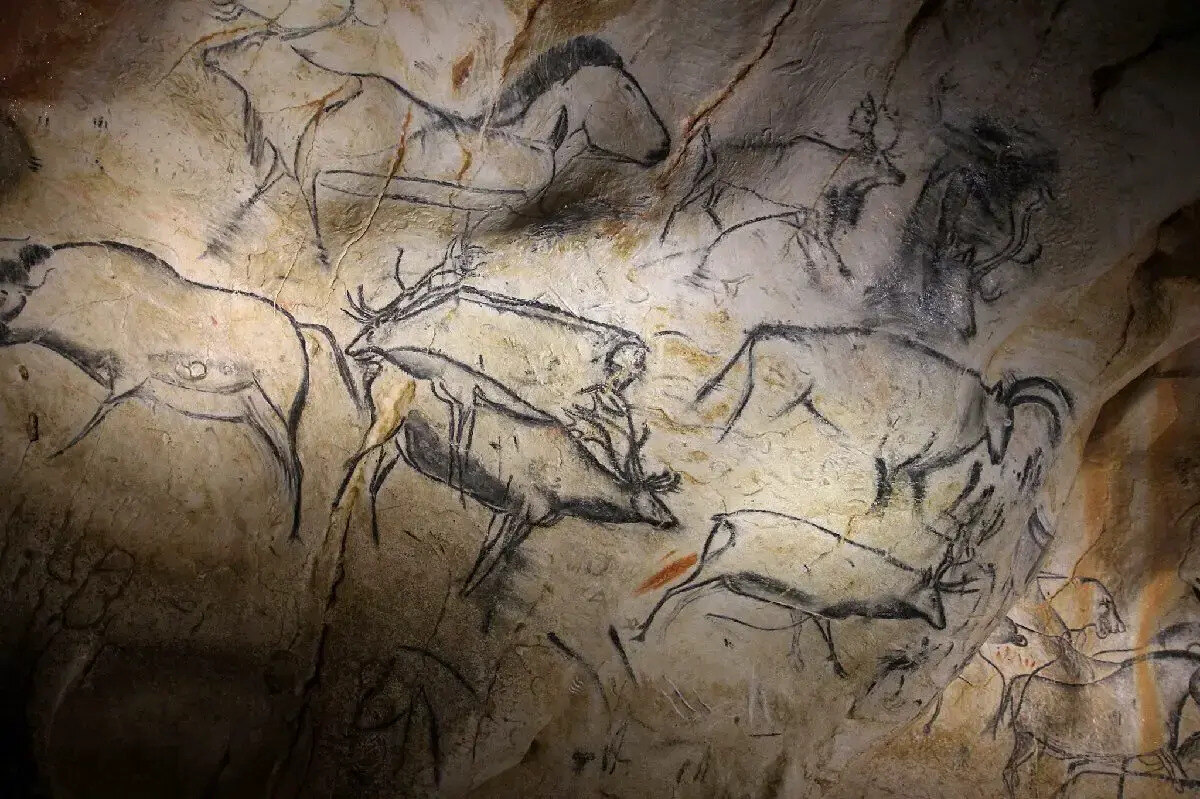
The hidden painted caves of Dordogne are France’s most intimate prehistoric art experience, with Font-de-Gaume and Combarelles offering direct views of Ice Age masterpieces. These caves survive because they were sealed for millennia, preserving the earliest human artistic expressions in their original settings.
1. Lascaux Cave
Lascaux Cave, often called the “Sistine Chapel of Prehistory,” is renowned for its wall paintings. Discovered in 1940, this cave features over 600 paintings of animals, humans, and abstract signs. The original cave is closed to preserve the art, but a meticulous replica, Lascaux IV, lets visitors experience the full effect.
2. Font-de-Gaume
Font-de-Gaume is one of the few caves still open to the public. It houses about 230 engraved and painted figures, including bison, horses, and mammoths. The cave’s natural contours enhance the artwork, creating a three-dimensional effect. Access is limited to small groups, so book ahead.
3. Rouffignac Cave
Rouffignac Cave, also known as the “Cave of a Hundred Mammoths,” boasts over 250 engravings and drawings. The cave’s vast chambers and long galleries are adorned with images of mammoths, woolly rhinoceroses, and other Ice Age animals. An electric train carries visitors through the mile-long route.
4. Combarelles Cave
Combarelles Cave is famous for its detailed engravings. With over 800 engravings, this cave offers a unique look at prehistoric art. The engravings depict animals, humans, and abstract shapes. The narrow passageway means you’ll need to walk single file, adding to the sense of discovery.
5. Pech Merle
Pech Merle is a cave with both paintings and engravings. The cave features images of spotted horses, handprints, and abstract symbols. The combination of natural formations and prehistoric art creates a mesmerizing experience. Unlike many other sites, Pech Merle allows photography without flash.
6. Cougnac Caves
Cougnac Caves consist of two separate caves filled with prehistoric art. The first cave contains paintings of ibex, mammoths, and human figures. The second cave features impressive stalactites and stalagmites. The walk between the two caves is short but steep, so wear sturdy shoes.
7. Grotte de Bernifal
Grotte de Bernifal is a lesser-known gem with over 100 engravings and paintings. The cave’s artwork includes mammoths, bison, and reindeer. The intimate setting allows visitors to appreciate the art up close. You’ll need to bring a flashlight, as the cave is only dimly lit to protect the pigments.
8. Grotte de Villars
Grotte de Villars is unique for its combination of prehistoric art and natural formations. The cave features paintings of horses, bison, and human figures, alongside stunning stalactites and stalagmites. The cave is also home to a colony of hibernating bats in winter, so check seasonal closures.
9. Abri du Cap Blanc
Abri du Cap Blanc is an open-air rock shelter with remarkable high-relief sculptures. The carvings depict life-sized horses, bison, and deer. This site offers a rare opportunity to see prehistoric sculpture in its original setting. The shelter is covered by a modern building, protecting the frieze from the elements.
10. Grotte de Roucadour
Grotte de Roucadour is a hidden treasure with engravings and paintings. The cave’s artwork includes images of horses, bison, and abstract symbols. The cave is less crowded than others, giving you time to absorb the details.
Discovering Dordogne’s Hidden Treasures
Exploring the hidden painted caves of Dordogne offers a unique glimpse into prehistoric art. These ancient masterpieces, tucked away in the French countryside, reveal the creativity and skill of early humans. Visiting these sites, like Lascaux and Rouffignac, provides an unforgettable experience, connecting us to our distant ancestors.
Plan your trip to Dordogne to see these incredible cave paintings firsthand. Remember to book tours in advance, as access is often limited to preserve the delicate artwork. Bring a sense of wonder and curiosity, ready to step back in time.
Dordogne’s caves are more than just historical sites; they are windows into the past, showcasing the rich heritage of human expression. Don’t miss the chance to witness these hidden treasures and gain a deeper appreciation for the origins of art.
Related travel guides: Hidden Underground City Of Naours: France's Subterranean Refuge, Secret Underground Caves of New York, and Whispers Of The Ancients: Secret Pictograph Caves In Montana.
