

Part of our Italy guide.
This guide covers Aci Castello and Aci Trezza, two coastal towns on Sicily’s eastern coast, and a selection of lesser-known towns across the island. Aci Castello and Aci Trezza offer a slower pace of life, authentic Sicilian culture, and a history that has drawn artists and writers for centuries.
Related travel guides: Catania Cruise Port Guide, Sicily Italy, A Short Guide To Ragusa - Sicily's City Of Two Halves, and A Short Guide To Modica - The Beautiful Home Of Sicily's Best Chocolate.
A Guide To Aci Castello And Aci Trezza - Two Coastal Treasures In Sicily
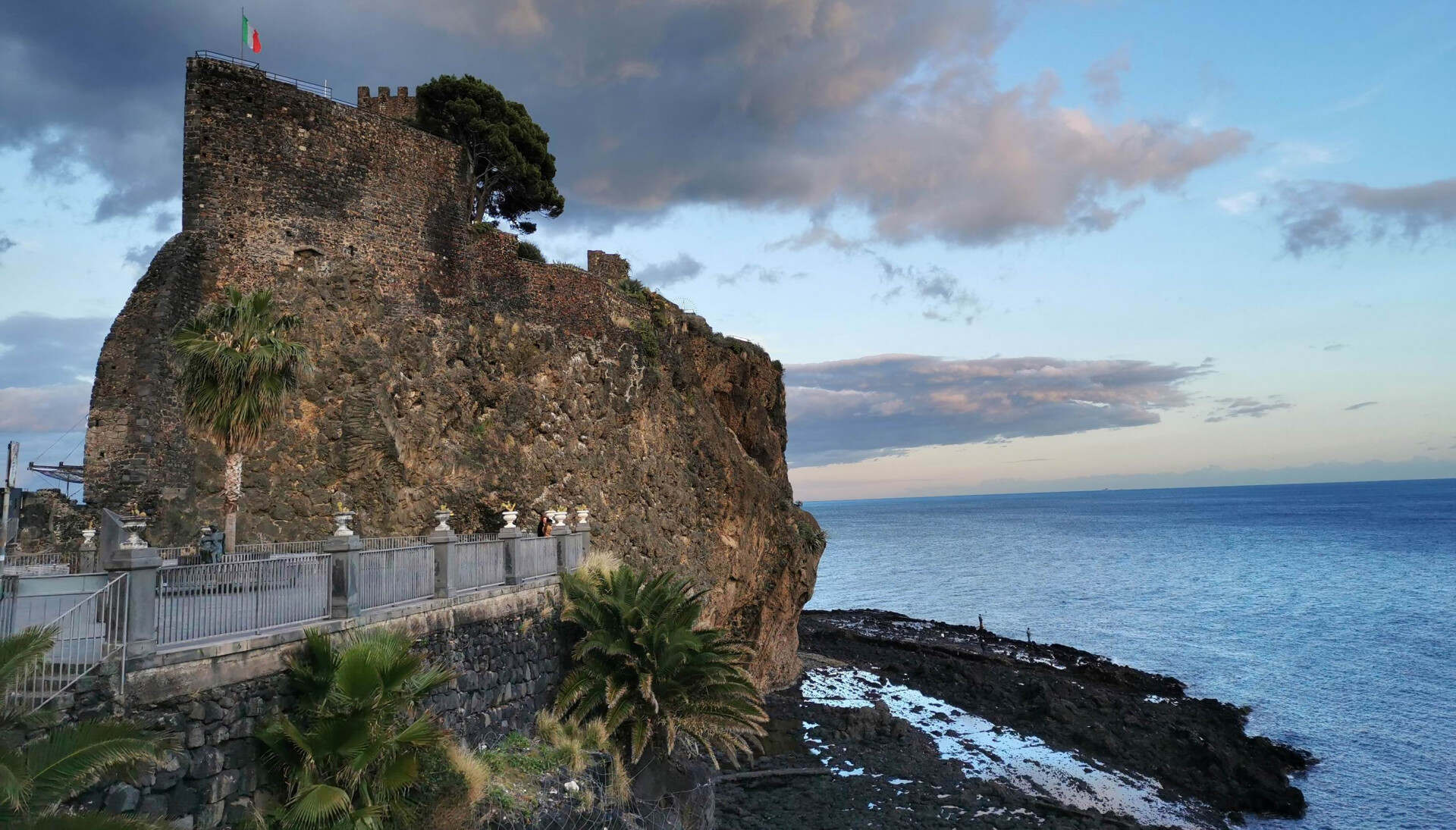
These two towns sit on the eastern coast of Sicily, known for their rich history, natural beauty, and mouthwatering cuisine. Aci Castello is built around a Norman castle that sits on a volcanic rock promontory jutting into the Ionian Sea. The castle, which dates to the 11th century, now houses a small museum of paleontology and mineralogy. Visitors can walk the ramparts for views of the coast and Mount Etna on a clear day. The town’s narrow streets lead down to a small pebble beach and a harbour where fishing boats bob in the water. Aci Trezza, just a few kilometres north, is famous for its trio of sea stacks called the Faraglioni dei Ciclopi. According to local legend, these basalt columns are the rocks the Cyclops Polyphemus hurled at Odysseus in Homer’s Odyssey. The town’s main square, Piazza dei Ciclopi, faces the harbour and is lined with seafood restaurants serving pasta con le sarde, grilled swordfish, and the local specialty, granita with brioche. Aci Trezza also has a small archaeological museum displaying artefacts from the nearby Greek colony of Naxos. Both towns are easily reached by train from Catania; the journey takes about 20 minutes on the regional line that runs along the coast. The train station in Aci Castello is a short walk from the castle, while Aci Trezza’s station is about 500 metres from the harbour. For those driving, the A18 motorway connects Catania to both towns, with exits at Aci Castello and Acireale. Parking is limited in the historic centres, so arriving early is advisable. The best time to visit is late spring or early autumn, when the weather is warm but the summer crowds have not yet arrived. For a broader view of when to plan your trip, see our a month-by-month guide to the weather in Italy. The towns are also a good base for exploring the nearby Etna National Park, where you can hike on the volcano’s slopes or take a guided tour to the summit craters. If you are considering a longer stay in the region, note that the ferry ride from mainland Italy to Sicily takes anywhere from 20 minutes to several hours depending on the route, as detailed in our article How Long Is The Ferry Ride From Italy To Sicily.
Sicily You Need To See
Beyond Palermo and Catania, Sicily has many hidden gem towns that offer a unique glimpse into the island’s culture, history, and natural beauty. These lesser-known spots include coastal villages with stunning sea views and mountain towns with breathtaking landscapes. In the west, the town of Erice sits on a mountain overlooking Trapani and the Egadi Islands, with a medieval centre of cobbled streets and a castle built by the Normans. In the southeast, the Baroque towns of the Val di Noto—Ragusa, Modica, and Noto—are UNESCO World Heritage sites, their honey-coloured stone buildings rebuilt after the 1693 earthquake. In the interior, the hill town of Enna, often called the “belly button of Sicily,” offers panoramic views over the island’s wheat fields and olive groves. For a coastal escape, the fishing village of Cefalù, about an hour east of Palermo, has a long sandy beach and a 12th-century cathedral with striking Byzantine mosaics. If you are interested in the island’s ancient past, the Valley of the Temples in Agrigento is one of the best-preserved Greek archaeological sites outside Greece. For a more off-the-beaten-path experience, the Aeolian Islands north of Sicily—Lipari, Salina, Stromboli, and others—are accessible by hydrofoil from Milazzo and offer volcanic landscapes, black sand beaches, and active fumaroles. Each of these destinations provides a different side of Sicily, from its Greek and Roman ruins to its Arab-Norman architecture and its vibrant street markets. For those planning a longer itinerary, consider combining a few of these towns with a stay in the Sicilian capital, Palermo, where you can explore the Capuchin Catacombs, the Palermo Cathedral, and the bustling Ballarò market. If you are travelling with family or on a budget, note that many of these towns offer free walking tours and affordable local eateries where a full meal costs under €15 per person. For more details on the island’s literary side, see our list of 7 Must-Visit Bookstores In Sicily You Didn't Know Existed.
