

Part of our Russia guide.
Places and guides from our Russia coverage, gathered into one page.
Related travel guides: Things To Do In Russia.
A Guide To Russian Food - What To Eat In Russia
Borscht, a beetroot-based soup often served with sour cream and hearty black bread, is one of the most iconic dishes in Russia. Russian cuisine blends Eastern European, Central Asian, and Siberian traditions, offering hearty soups, indulgent desserts, and unique flavors shaped by the country’s vast geography.
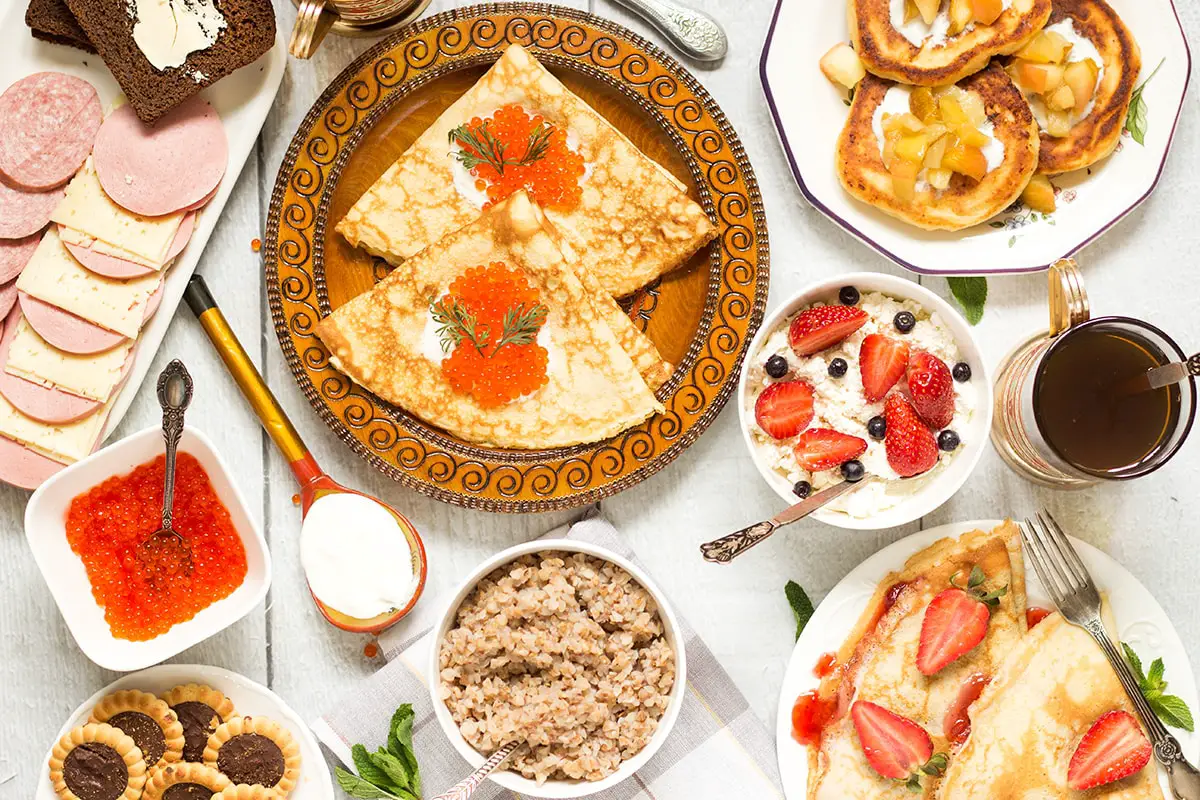
Beyond borscht, pelmeni (dumplings filled with meat or vegetables) are a staple, often served with butter, vinegar, or sour cream. Blini, thin pancakes, are eaten with savory toppings like smoked salmon or sweet fillings such as jam and honey. For a main course, try beef stroganoff—tender strips of beef in a creamy mushroom sauce—or shashlik, skewered and grilled meat popular across the Caucasus. A classic Russian meal often begins with zakuski (appetizers), including pickled vegetables, salted fish, and cured meats.
Desserts include syrniki (fried quark pancakes) and medovik (honey cake). During Maslenitsa: Russia's farewell to winter, blini are the centerpiece of celebrations, symbolizing the sun. For those exploring hidden gems in Russia, regional specialties like Siberian stroganina (frozen raw fish) or Tatar echpochmak (meat-filled pastries) offer authentic local flavors.
Dining in Russia ranges from Soviet-era canteens (stolovye) serving affordable, hearty meals to high-end restaurants in Moscow and St. Petersburg. A meal at a mid-range restaurant typically costs 1,500–3,000 RUB (roughly $20–$40 USD as of 2023). Tea is the traditional beverage, often brewed strong and served with sugar or jam. Vodka is also common, but it is typically consumed with food, not as a standalone drink.
Many restaurants close for a few hours in the afternoon (between 2:00 PM and 4:00 PM). Tipping 10% is customary. Vegetarians may find options limited outside major cities, as Russian cuisine relies heavily on meat, dairy, and root vegetables. Markets like Moscow’s Dorogomilovsky or St. Petersburg’s Kuznechny offer fresh produce and local specialties.
Seasonal eating is important: in winter, hearty soups like shchi (cabbage soup) and solyanka (thick, spicy soup) warm diners, while summer brings fresh salads, berries, and kvass (a fermented rye beverage). The traces of the Volga Germans are visible in the baked goods and sausages found in the Volga region, adding another layer to Russia’s culinary diversity.
For a deeper dive into Russian food culture, explore Russian travel and life to understand how meals connect to daily routines and holidays. Surprising facts about Easter celebrations in Russia include the tradition of baking kulich (tall, sweet bread) and paskha (a creamy cheese dessert), both central to the holiday table.
