

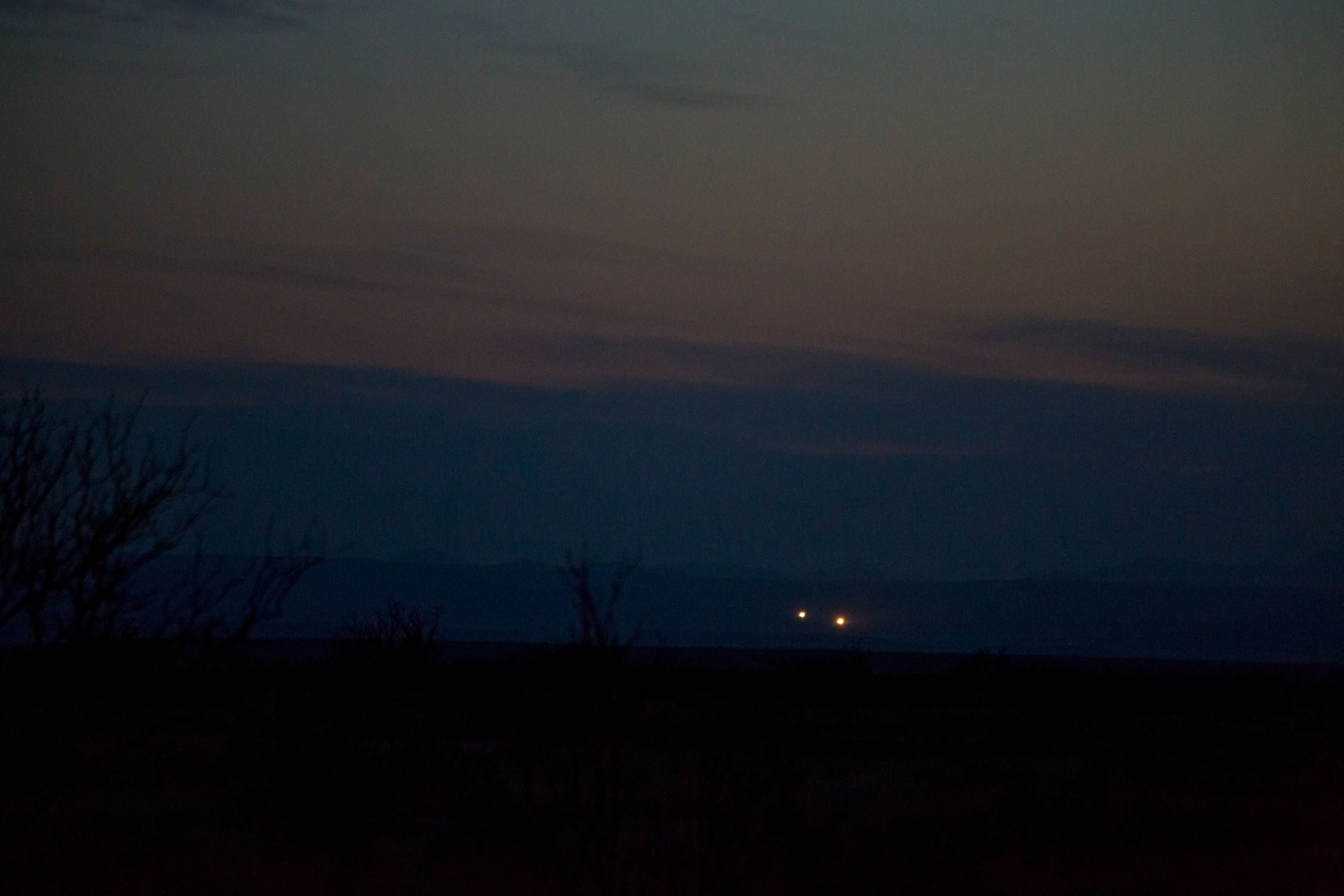
You can see the Marfa Lights on almost any clear night from a designated viewing area nine miles east of Marfa on U.S. Route 90, but the best chance comes after sunset on moonless nights when the desert sky is at its darkest. These glowing orbs—variously described as white, orange, or red—have been reported in the region since the 1880s, and they flicker, split, merge, and drift in ways that still defy a single explanation.
What Are the Marfa Lights?
The Marfa Lights are unexplained luminous phenomena that appear near the Chinati Mountains in the high desert of West Texas. Witnesses often describe them as basketball-sized spheres that hover just above the horizon, sometimes pulsing with color before vanishing and reappearing elsewhere. They can last from a few seconds to over an hour, and their movements—erratic, zigzagging, or gently bobbing—have been recorded on video but never fully replicated under controlled conditions. The phenomenon has been observed for over a century, with accounts dating back to the 1880s.
Best Spots to See the Marfa Lights
Here are the prime viewing locations:
- Marfa Lights Viewing Area: Located nine miles east of Marfa on U.S. Route 90, this designated spot has a parking lot, restrooms, and informative plaques. The viewing area faces south toward the Chinati Mountains, where the lights most often appear.
- Paisano Pass: Just west of the viewing area, this pass sits at a slightly higher elevation, offering a broader sightline over the desert floor. The elevation can help you see the lights against a darker horizon, especially on nights with a faint moon.
- Mitchell Flat: This open expanse lies north of the highway and provides an unobstructed 180-degree view. With no trees or structures, you can scan the entire mountain base, where the lights tend to hover. It’s a favorite for serious observers who bring telescopes.
- Chinati Mountains: For hikers, the mountain slopes offer a remote and elevated perspective. The hike takes about an hour to reach a suitable ridge, and the higher altitude places you above some ground-level haze, which can sharpen the lights. Bring your own light source for the return trip.
When to See the Marfa Lights
The lights are most visible under specific conditions:
- Clear Nights: Cloud cover blocks the lights, so check the forecast for a dry, cloudless evening. The desert’s dry air also reduces atmospheric distortion, making the orbs appear sharper.
- New Moon: The darkest nights—those around a new moon—are ideal. Without moonlight washing out the sky, the faint glow of the lights stands out against the blackness.
- Late Evening: The lights typically begin appearing after sunset, with peak activity often reported between 9 p.m. and midnight. Arriving an hour before full dark gives you time to set up your chair and let your eyes adjust.
Theories Behind the Marfa Lights
No single explanation has satisfied everyone, but the main theories fall into a few camps:
- Atmospheric Refraction: Some scientists propose that temperature inversions in the desert air bend light from distant sources—like campfires or stars—creating the illusion of floating orbs. The hot days and cold nights of West Texas create perfect conditions for such refraction.
- Car Headlights: Another theory suggests that the lights are reflections of car headlights from nearby highways. However, this doesn’t explain all reported characteristics, including their color changes and the fact that they sometimes move against the wind. The phenomenon was documented in the 1880s, before automobiles were common in the region, so headlights alone cannot account for the full history of sightings.
- Swamp Gas: The combustion of methane or phosphine from decaying organic matter is a classic explanation for ghost lights elsewhere, but the Marfa desert is too arid for significant organic decay. Critics also note that swamp gas would produce a steady glow, not the darting, splitting motion often reported.
- Ghost Lights: Local legends attribute the lights to Apache spirits, Spanish conquistadors’ lanterns, or the ghosts of pioneers. While not scientifically testable, these stories have been part of the region’s folklore for over a century.
Tips for Visiting Marfa
Here’s how to make your trip smooth and comfortable:
- Bring Binoculars: A good pair of binoculars will let you zoom in on the lights and catch details like color shifts or splitting. A tripod-mounted spotting scope works even better.
- Dress Warmly: Desert nights in Texas can drop 30 degrees after sunset, even in summer. Bring a windbreaker, a hat, and gloves—you’ll be sitting still for hours.
- Pack Snacks and Water: The viewing areas are remote, with no stores nearby. Bring enough water for the evening, plus high-energy snacks like nuts or trail mix.
- Be Patient: The lights don’t appear on a schedule. Some visitors see them within minutes; others wait for hours. Bring a comfortable chair, a red flashlight to preserve your night vision, and a star chart to enjoy the sky while you wait.
Other Attractions in Marfa
While the lights are the main draw, Marfa itself is worth exploring:
- Chinati Foundation: This contemporary art museum, founded by artist Donald Judd, houses large-scale installations in repurposed military buildings. The permanent collection includes Judd’s concrete and aluminum works, plus rotating exhibits.
- Marfa Prada: A quirky art installation designed to look like a Prada store, this small adobe structure sits alone on a dusty road just outside town. It’s a favorite photo spot, though the interior is never open to visitors.
- Marfa Mystery Lights Festival: Held annually in September, this festival celebrates the phenomenon with live music, food, and family activities. It’s a good way to meet other enthusiasts and hear local lore.
- Marfa Film Festival: This event showcases independent films and attracts filmmakers from around the world. It typically runs for several days in the fall, with screenings at the historic Crowley Theatre.
Marfa Lights: A Must-See Mystery
Marfa Lights are a mysterious phenomenon that continues to captivate visitors. Found in the remote desert of Texas, these unexplained lights have puzzled scientists and intrigued travelers for decades. Whether you’re a skeptic or a believer, witnessing the Marfa Lights is an experience you won’t forget. The best time to see them is at night, from the Marfa Lights Viewing Area, located just east of Marfa on U.S. Route 90. Bring a chair, some snacks, and a sense of wonder. The lights might appear as glowing orbs, flickering in the distance, or moving in strange patterns. No one knows exactly what causes them, but that’s part of the charm. If you’re planning a trip to Texas, make sure to add this unique attraction to your itinerary.
Related travel guides: Singing Rocks And Musical Formations and Secret Spots For Fata Morgana Mirage Viewing.
