

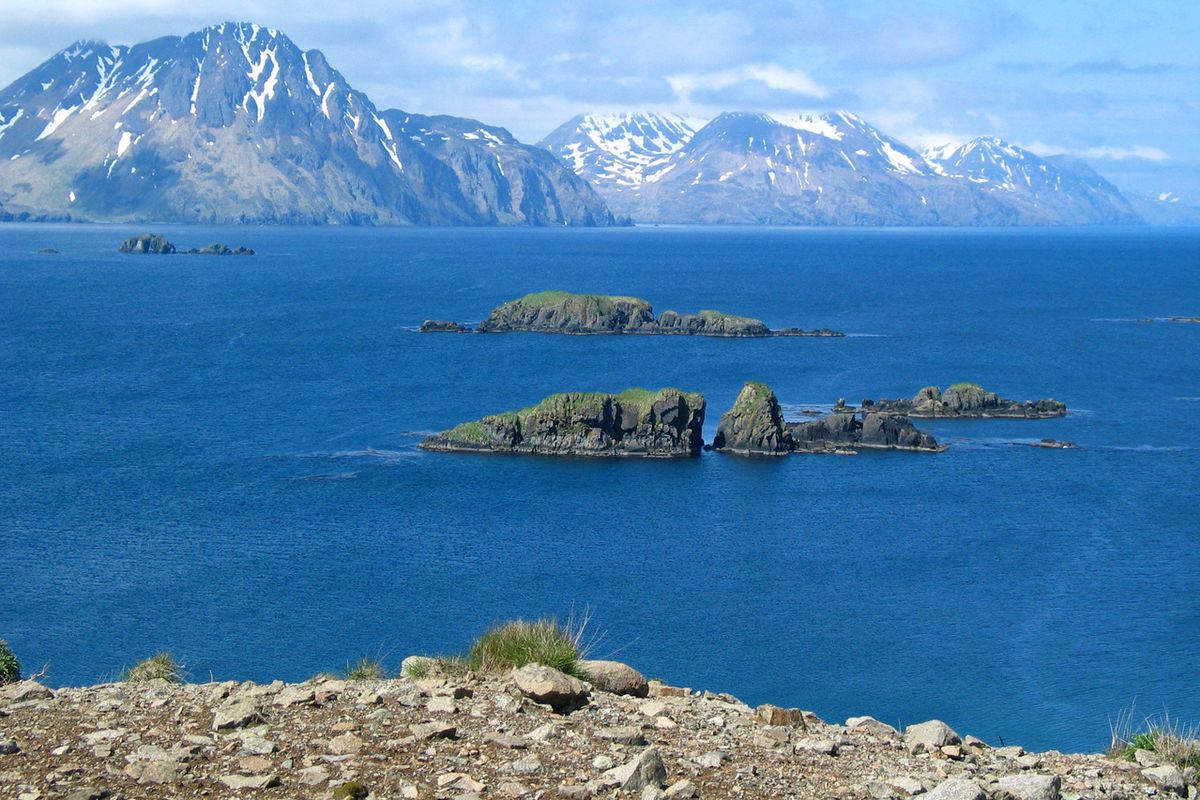
Have you ever wondered about the hidden military bases in Alaska's Aleutian Islands? These remote islands, stretching between Alaska and Russia, hold secrets from World War II and the Cold War, with remnants of bunkers, airstrips, and radar stations scattered across the rugged landscape.
Adak Island
Adak Island, one of the larger Aleutian Islands, played a significant role during World War II. Its strategic location made it a prime spot for military installations.
- Adak Army Base and Adak Naval Operating Base
Established in 1942, this base served as a launch point for air and naval operations against Japanese forces. The remnants of bunkers, airstrips, and barracks still stand. - Naval Air Facility Adak
This facility operated until 1997, providing support for anti-submarine warfare during the Cold War. Today, it remains a ghost town, with abandoned buildings and overgrown runways.
Attu Island
Attu Island, the westernmost point of the United States, saw intense battles during World War II. Its rugged terrain and harsh weather made it a challenging but vital location.
- Attu Airfield
Built by Japanese forces and later captured by the U.S., this airfield was used by Japanese forces before its capture. The airfield's ruins are a testament to the fierce battles fought here. - Casco Cove Coast Guard LORAN Station
Established in 1944, this station provided long-range navigation signals for ships and aircraft. Though decommissioned in 2010, the site still holds the remains of its once-bustling operations.
Kiska Island
Kiska Island, another key location during World War II, was occupied by Japanese forces and later recaptured by the Allies. Its hidden military bases tell stories of occupation and liberation.
- Kiska Harbor
Japanese forces fortified this harbor with bunkers, tunnels, and gun emplacements. After the island's recapture, these structures were used by Allied forces. Today, they stand as eerie reminders of the island's wartime history. - Kiska Army Airfield
This airfield, built by Japanese forces, was used for launching attacks on Allied positions before the island's recapture by Allied forces. After the island's liberation, the airfield fell into disuse, leaving behind crumbling runways and abandoned buildings.
Shemya Island
Shemya Island, part of the Near Islands group, played a crucial role during the Cold War. Its remote location made it ideal for surveillance and intelligence operations.
- Eareckson Air Station
Established in 1943, this air station was later used for reconnaissance missions during the Cold War. The station's radar domes and abandoned facilities still dot the island's landscape. - Cobra Dane Radar System
Installed in 1977, this radar system monitored Soviet missile tests and space activities. Though still operational, its imposing structure stands as a relic of Cold War tensions.
Umnak Island
Umnak Island, one of the largest Aleutian Islands, housed several military installations during World War II. Its strategic location made it a key point for defense and operations.
- Fort Glenn
Established in 1942, this base supported air operations against Japanese forces. Built under the fake name 'Blair Fish Packing Company,' its runways, hangars, and barracks remain, slowly being reclaimed by nature. - Cape Air Force Station
This radar station, part of the Cold War defense network, monitored airspace for potential threats. Though decommissioned, the station's radar towers and buildings still stand, weathered by time and the elements.
The Mystique of Alaska's Hidden Military Bases
Alaska's Aleutian Islands hold secrets from World War II, with hidden military bases that played crucial roles. These bases offer a glimpse into a past filled with strategic importance and wartime efforts. Exploring these sites reveals military history and the rugged beauty of the Aleutian landscape. The remnants of bunkers, airstrips, and other structures stand as silent witnesses to a time when these remote islands were at the forefront of defense. For history buffs and adventure seekers alike, the Aleutian Islands provide an opportunity to connect with a lesser-known chapter of American history. Whether hiking through overgrown trails or standing atop a windswept cliff, the echoes of the past are ever-present.
Related travel guides: Alaska's Mysterious Giant Igloo Hotel, Secrets Of Pacific Northwest Military Bunkers, and D-Day Beaches In Normandy: A WWII Historical Tour (Guide).
