

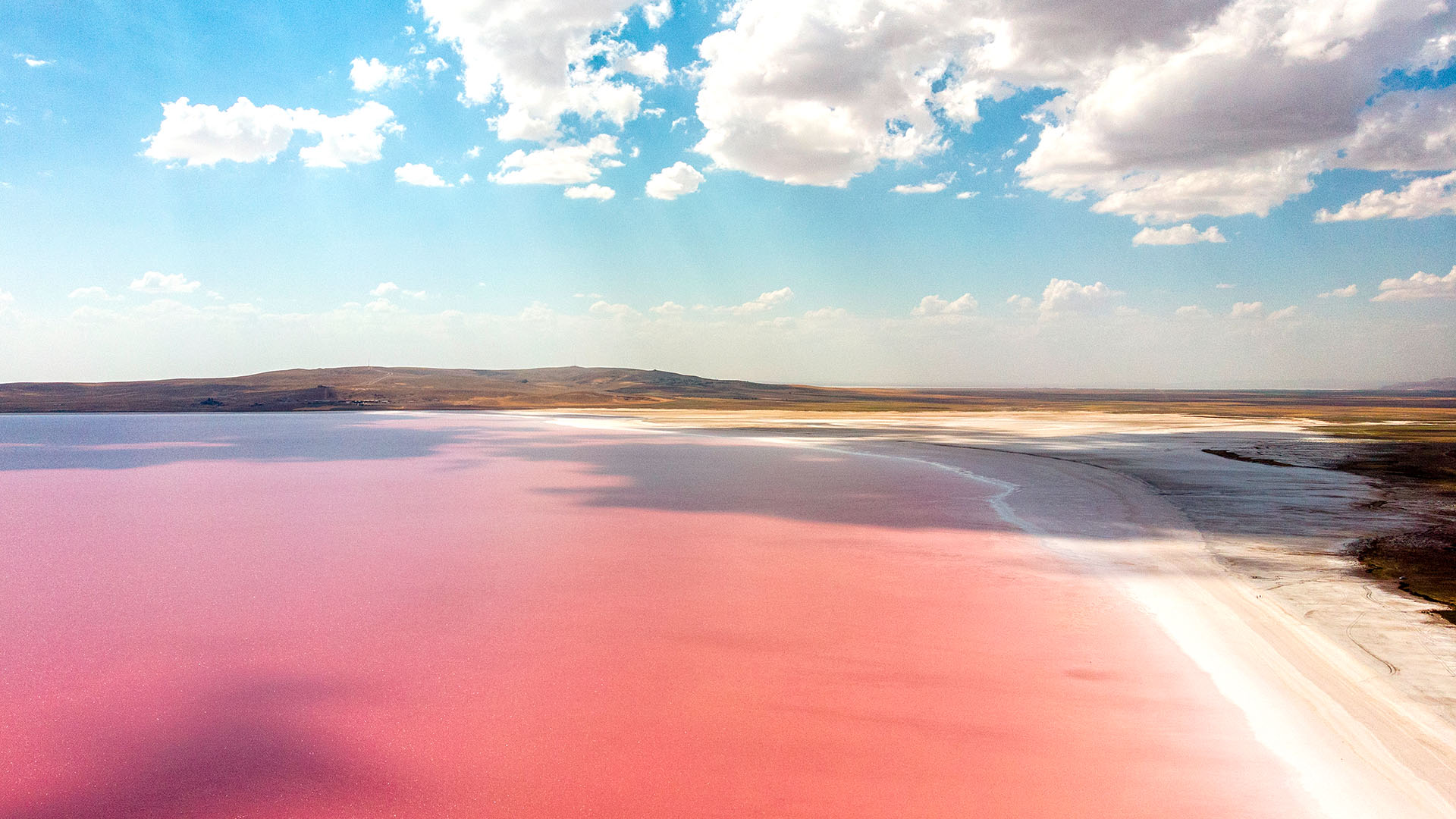
Lake Tuz is a pink salt lake near Cappadocia, Turkey, colored by algae and microorganisms that thrive in summer heat. However, its most vibrant pink hues appear only during the hottest, driest months, when the Dunaliella salina algae bloom peaks.
Location of Lake Tuz
Lake Tuz is located in central Turkey, near the region of Cappadocia, in the province of Aksaray, approximately 150 kilometers southeast of Ankara. The lake is easily accessible from major cities like Ankara and Istanbul, making it a popular destination for travelers.
The exact coordinates are approximately 38.4167° N latitude and 33.9167° E longitude, on the Central Anatolian Plateau. The lake sits at an altitude of about 905 meters above sea level, offering panoramic views of the salt flats, especially during sunrise or sunset.
The pink color of Lake Tuz is primarily caused by a type of algae called Dunaliella salina, along with halobacteria and other microorganisms that produce pigments under high heat and evaporation. In summer, when the weather is hottest and driest, the algae tend to thrive, leading to a more vibrant pink hue. The pink hues of Lake Tuz are most vibrant during the summer months when the weather is hottest and the algae bloom is at its peak.
The proximity of Lake Tuz to Cappadocia makes it a popular side trip for visitors exploring the region. If you're traveling by car, the lake is accessible from major cities like Ankara and Istanbul, though driving times vary.
History and Formation of Lake Tuz
The history of Lake Tuz stretches back thousands of years, with the lake itself being formed through a fascinating geological process. It is believed that the lake originated from the evaporation of ancient seas that covered the region millions of years ago.
During the Miocene Epoch, the area now occupied by Lake Tuz was part of a vast inland sea. Over time, as the climate changed and the sea retreated, the water evaporated, leaving behind huge deposits of salt. The remnants of this ancient sea floor gradually transformed into what is now known as the mesmerizing salt flats of Lake Tuz.
The formation of the lake is also closely linked to the tectonic activity in the region. The influence of geological forces, including fault lines and uplifts, played a significant role in shaping the landscape and creating the unique geological features seen today. These geological processes, combined with the hot and arid climate of the area, contribute to the ongoing evaporation of water and the concentration of salt in the lake.
Throughout history, Lake Tuz has been an important resource for the local communities. Salt extraction has been a thriving industry in the region for centuries, with locals utilizing the abundant salt reserves for various purposes. The lake's high saline content makes it an ideal location for salt production, and the tradition of salt mining continues to this day.
In addition to its economic significance, Lake Tuz also holds cultural and historical importance. It has been referenced in ancient texts and historical records, and its salt deposits were used for preserving food and trading in the past. The lake's unique environment and its striking pink color have also attracted artists, photographers, and nature enthusiasts, sparking inspiration and awe throughout the ages.
Today, Lake Tuz stands as a testament to the remarkable geological processes that have shaped our planet over millions of years. Its history and formation continue to fascinate visitors from around the world, providing a glimpse into the ancient past and an opportunity to appreciate the true wonders of nature.
Unique Pink Color of Lake Tuz
One of the most fascinating aspects of Lake Tuz is its striking pink color, which sets it apart from other salt lakes around the world. The hue can range from a soft pastel pink to a vibrant, almost surreal, shade.
This microscopic algae thrives in highly saline environments and produces beta-carotene, which gives the lake its distinct pinkish tint.
The presence of these organisms varies based on temperature, salinity levels, and sunlight exposure. During certain seasons, when conditions are favorable, the algae bloom rapidly, transforming the lake's surface into a breathtaking sight.
The intensity of the pink color changes throughout the year. As the seasons transition to autumn and winter, the color appears less vibrant but still retains a subtle blush.
The pink color is not just a visual treat; it serves as a reminder of the delicate balance of nature. The presence of Dunaliella salina and halobacteria contributes to the unique ecology of the lake. These organisms not only provide an enchanting aesthetic but also play a crucial role in the ecosystem as a food source for various microorganisms and bird species.
Witnessing the pink hues of Lake Tuz is a truly magical experience. Whether you visit during the peak bloom season or when the color is more subdued, the ever-changing shades of pink offer a glimpse into the wonders of the natural world. For those planning a trip, this phenomenon is a prime example of why is exploration so rewarding in unique landscapes.
Salt Extraction at Lake Tuz
Lake Tuz is not only renowned for its natural beauty but also for its significant salt deposits. The lake has been a vital source of salt for centuries, and salt extraction continues to be a thriving industry in the region.
The process of salt extraction at Lake Tuz begins with the accumulation of salt on the surface of the lake bed. As the water evaporates due to the arid climate, it leaves behind a thin layer of salt crystals. These salt flats cover a vast area and give the lake its distinctive appearance.
Local workers, often referred to as "salt farmers," carefully harvest the salt by hand. They use special tools to break the salt crust and collect the salt crystals. The harvested salt is then piled up in small mounds to dry under the sun, allowing any remaining moisture to evaporate.
Once the salt is sufficiently dried, it goes through a refining process to remove impurities and achieve the desired level of purity. The salt is crushed, ground, and sieved to obtain fine salt particles, ready for packaging and distribution.
The salt extracted from Lake Tuz is highly regarded for its quality and purity. It is prized for its high mineral content, which lends a unique flavor and texture to culinary dishes. The salt is commonly used in Turkish cuisine and is also exported to various parts of the world.
Visitors to Lake Tuz have the opportunity to witness the salt extraction process firsthand. Some local salt farms offer guided tours where visitors can learn about the traditional methods of salt harvesting and gain insight into the industry's importance to the local economy.
It is important to note that while salt extraction is an essential part of the cultural heritage and economy of the region, efforts are being made to ensure sustainable practices. Environmental conservation measures are implemented to minimize the impact on the delicate ecosystem of Lake Tuz, ensuring its preservation for generations to come.
Exploring the salt extraction process at Lake Tuz provides a unique glimpse into the region's history, cultural significance, and the intrinsic connection between humans and nature. For travelers, this exploration is a reminder of how traditional industries and natural wonders coexist, much like the spirit of adventure that drives is exploration in remote landscapes.
Wildlife and Ecology of Lake Tuz
The unique ecosystem of Lake Tuz offers a habitat for a diverse range of wildlife, making it a haven for nature enthusiasts. Despite the harsh and saline environment, the lake and its surrounding wetlands support an array of plant and animal species.
One notable bird species that thrives in the area is the flamingo. Lake Tuz serves as an important breeding ground and feeding site for these birds. During their breeding season, which typically occurs between April and July, thousands of flamingos gather at the lake, creating a stunning spectacle.
In addition to flamingos, Lake Tuz is home to numerous bird species, including pelicans, herons, ducks, and various migratory birds. The wetlands surrounding the lake provide vital nesting and feeding grounds for these avian inhabitants.
The lake's saline waters also support the growth of halophyte plants, which are specially adapted to thrive in high saline environments. These plants play a crucial role in stabilizing the soil and providing habitat and food sources for insects and small mammals.
The brine shrimp, known as Artemia, is another resident of Lake Tuz. These tiny crustaceans inhabit the lake's saline waters and serve as an important food source for many bird species, contributing to the balance of the ecosystem.
Despite the challenging conditions, the delicate balance of the lake's ecology is highly dependent on the salt flats, the algae, the birds, and the interplay between them. This intricate web of life highlights the resilience and adaptability of the species that call Lake Tuz their home.
Protection of Lake Tuz's biodiversity and conservation efforts are of paramount importance. Steps are being taken to preserve the fragile ecosystem, ensuring that future generations can continue to witness the remarkable wildlife and ecological wonders that make Lake Tuz so unique.
Exploring the wildlife and ecology of Lake Tuz provides a deeper appreciation for the interconnectedness of all living things and the delicate balance necessary for a thriving ecosystem. For those planning a visit, the lake is accessible from major cities like Ankara and Istanbul, though driving times vary.
Visiting Lake Tuz
Visiting Lake Tuz offers a chance to witness the awe-inspiring salt flats. Here are tips to make the most of your visit:
1. However, the lake's unique beauty can be enjoyed year-round.
2. Transportation: Lake Tuz is easily accessible from major cities like Ankara and Istanbul. Additionally, guided tours and private transportation options are available.
3. Safety Precautions: The lake's salt flats can be slippery, so wearing appropriate footwear is recommended. Stay hydrated, especially during summer, as the region can get quite hot.
4. Photography Opportunities: Lake Tuz offers countless photography opportunities, especially at sunrise or sunset when light illuminates the salt flats and creates stunning reflections. Capture the vibrant pink hues, the vast expanse of the salt flats, and the unique landscapes.
5. Guided Tours: Consider joining a guided tour to learn about the history, geology, and ecology of Lake Tuz. Local guides can provide insights into the region's cultural and natural heritage.
6. Environmental Conservation: Avoid littering and follow any guidelines provided by local authorities. Appreciate the natural beauty while leaving only footprints behind.
7. Nearby Attractions: Lake Tuz is near other popular destinations. Explore the landscapes and rock formations of Cappadocia or visit the historic city of Aksaray, known for its rich cultural heritage.
Visiting Lake Tuz provides an opportunity to connect with nature, witness the remarkable pink salt flats, and delve into the fascinating history and ecology of the region. Pack your bags and embark on a memorable journey.
Nearby Attractions in Cappadocia
Located in close proximity to Lake Tuz, Cappadocia is a captivating region in central Turkey, renowned for its unique landscapes, cave dwellings, and rich cultural heritage. Exploring Cappadocia is a must-do when visiting Lake Tuz, as it offers a plethora of attractions and activities. Here are some of the nearby attractions in Cappadocia that you should consider visiting:
1. Fairy Chimneys: These peculiar rock formations, eroded over millions of years, resemble giant mushrooms or chimneys. The fairy chimneys of Cappadocia are a UNESCO World Heritage Site and an iconic symbol of the region. You can take a hot air balloon ride or go hiking through the valleys to truly appreciate their beauty.
2. Goreme Open-Air Museum: Step back in time and explore the ancient rock-cut churches and monasteries of Goreme. This open-air museum is home to magnificent frescoes and religious artifacts dating back to the Byzantine period. It offers a glimpse into the region's rich history and religious heritage.
3. Underground Cities: Cappadocia is famous for its extensive network of underground cities, carved into the soft volcanic rock. Kaymakli and Derinkuyu are two of the largest and most impressive underground cities, offering a fascinating insight into the ancient civilizations that once inhabited the region.
4. Hot Air Balloon Rides: Cappadocia is renowned for its stunning landscape and is considered one of the best places in the world for hot air balloon rides. Soar above the fairy chimneys, valleys, and vineyards as you witness the breathtaking panoramic views of Cappadocia from above.
5. Pasabag (Monks Valley): Pasabag is famous for its unique and distinct rock formations, often referred to as "fairy chimneys." The valley is also home to a cave monastery and offers an otherworldly experience as you wander through the surreal landscapes.
6. Uchisar Castle: Perched atop a natural rock formation, Uchisar Castle is the highest point in Cappadocia, offering commanding views of the surrounding region. Explore the ancient tunnels and chambers within the castle and witness a bird's-eye view of the stunning Cappadocian landscape.
7. Love Valley: Known for its phallic-shaped rock formations, Love Valley offers a unique and picturesque landscape. Take a leisurely hike or horseback ride through the valley and marvel at the whimsical formations that have been shaped by nature.
Cappadocia is a treasure trove of natural and cultural wonders, and these nearby attractions provide a diverse range of experiences. From exploring ancient cave dwellings and underground cities to witnessing the ethereal beauty of the landscape from a hot air balloon, Cappadocia promises an unforgettable adventure unlike any other.
Tips for Exploring Lake Tuz
Exploring Lake Tuz and its surrounding areas can be a truly remarkable experience. To make the most of your visit, here are some helpful tips to keep in mind:
1. Wear Appropriate Footwear: The salt flats of Lake Tuz can be slippery, so it's essential to wear sturdy and comfortable footwear to ensure your safety. Opt for shoes with good traction to navigate the sometimes uneven and salty terrain.
2. Protect Yourself from the Sun: The region around Lake Tuz can get quite hot, especially during the summer months. Bring and apply sunscreen, wear a hat, and consider wearing lightweight clothing to protect yourself from the sun's rays.
3. Stay Hydrated: It's crucial to stay hydrated while exploring Lake Tuz, especially during warmer months. Bring an adequate supply of water and drink regularly to avoid dehydration.
4. Respect the Environment: As a visitor, it's important to respect the environment and the delicate ecosystem of Lake Tuz. Avoid disturbing or damaging the salt flats, follow any designated trails, and adhere to any guidelines or regulations provided by local authorities.
5. Capture the Magic: Lake Tuz offers incredible opportunities for photography. Don't forget to bring your camera or smartphone to capture the mesmerizing pink hues, the vast salt flats, and the unique landscapes. Experiment with different angles and lighting to truly capture the magic of the lake.
6. Learn about the Culture and History: Take the time to learn about the rich cultural and historical significance of Lake Tuz and the surrounding region. Understanding the background and heritage will deepen your appreciation for the area and enhance your overall experience.
7. Plan for the Seasons: Consider the time of year you plan to visit and research the seasonal changes. So if witnessing the vibrant pink hues is a priority, plan your visit accordingly.
8. Guided Tours and Local Expertise: Consider joining a guided tour or seeking the expertise of local guides who can provide valuable insights into the history, geology, and biology of Lake Tuz. Their knowledge can enrich your experience and help you discover hidden gems in the area.
9. Respect Wildlife: Lake Tuz is home to various bird species and other wildlife. Respect their habitats and keep a safe distance to avoid disturbing them. Observe from afar and take care not to leave any litter that may harm the local flora and fauna.
10. Take Your Time and Enjoy: Lake Tuz is a place of serene beauty. Take your time to soak in the tranquil surroundings, breathe in the fresh air, and appreciate the natural wonders. Slow down, breathe, and let the magic of Lake Tuz captivate your senses.
By following these tips, you can have a safe and fulfilling journey while exploring the enchanting landscapes and the unique charm of Lake Tuz.
Conclusion
Lake Tuz, with its mesmerizing pink salt flats near Cappadocia, Turkey, offers a unique experience for nature enthusiasts and adventure seekers.
From its fascinating history and formation to the salt extraction industry rooted in the region’s cultural heritage, the lake showcases nature’s artistry. It also supports diverse wildlife, including flamingos and halophyte plants, reminding visitors of ecological interconnectedness.
Visiting Lake Tuz offers a chance to witness the salt flats, explore nearby Cappadocia, and immerse in local culture. Whether you witness the vibrant pink hues during peak summer or at other times, the lake invites you to pause and appreciate its magnificence.
As you plan your visit, respect the environment, stay hydrated, and learn about local history. Capture the magic through photography and embrace the opportunity to connect with nature. Lake Tuz is a place where dreams and reality intertwine, making for an extraordinary adventure that leaves an indelible mark on your soul. For those who love exploration, this destination embodies what is exploration at its most surreal.
Related travel guides: Cappadocia Hot Air Balloon Rides: A Comprehensive Guide and Cappadocia Travel Guide.
