

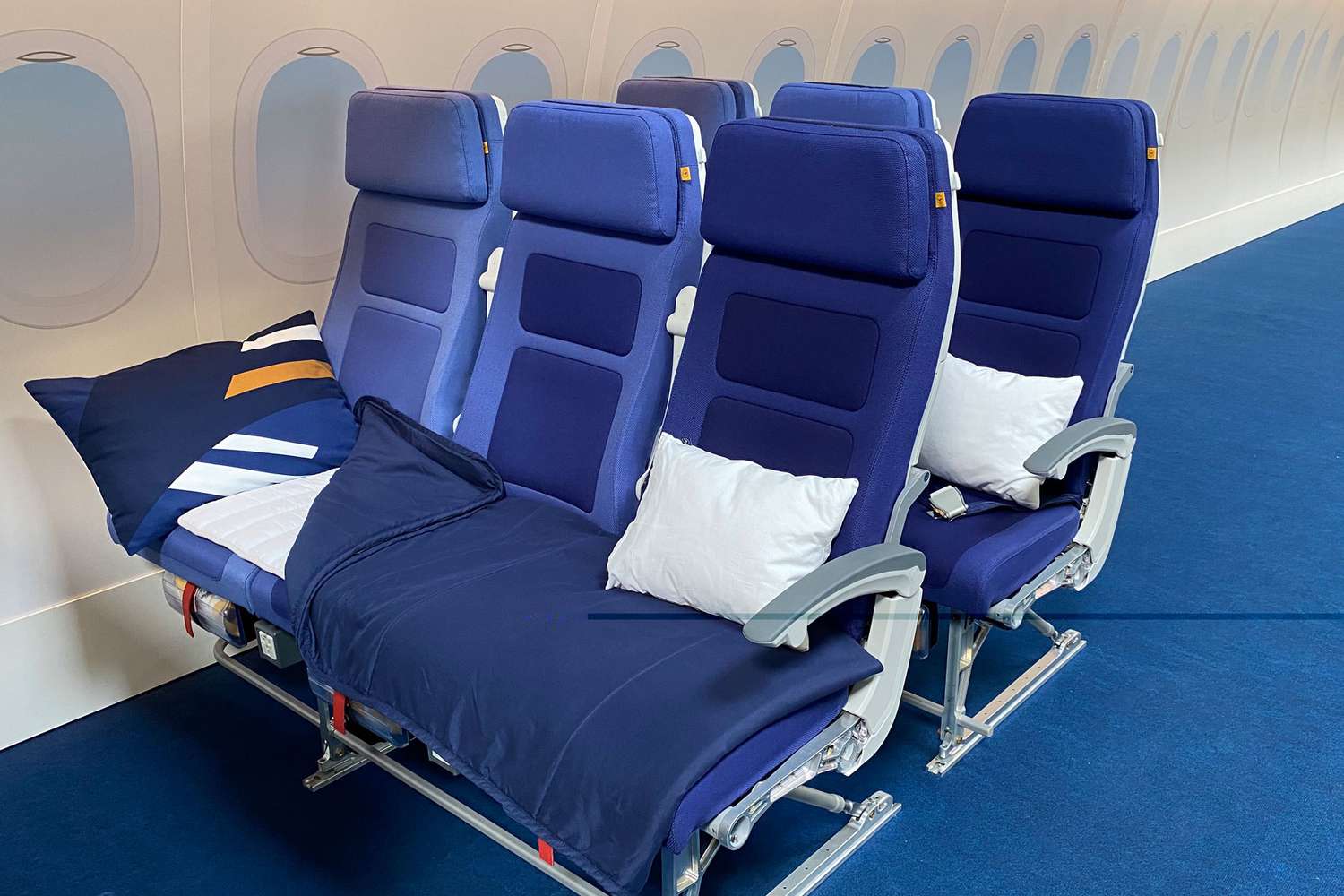
To turn an airplane seat into a bed, use an inflatable footrest or seat extender to fill the gap between your seat and the one in front, creating a flatter surface for rest. However, this works best on long-haul flights where you can also elevate your legs to improve blood circulation and reduce the risk of deep vein thrombosis (DVT).
Why Convert Airplane Seats into a Bed?
Converting airplane seats into a bed offers numerous advantages for travelers seeking maximum comfort during long flights. Here’s why you should consider it:
Related travel guides: Where Are The Safest Seats On An Airplane and What Is The Fog Inside Airplane.
- Restful Sleep: Airplane seats are not known for their comfort, especially during overnight flights. By converting your seat into a bed, you can create a cozy and supportive sleeping space, allowing you to get much-needed rest and arrive feeling refreshed.
- Improved Blood Circulation: Sitting upright for extended periods can lead to poor circulation. Converting your seat into a bed lets you lie down and elevate your legs, promoting better blood flow and reducing the risk of deep vein thrombosis (DVT). Use an inflatable footrest or seat extender, if permitted by the airline, to prop up your legs and elevate them slightly.
- Privacy and Relaxation: Airplanes can be crowded and noisy. By converting your seat into a bed, you can create a private enclave within the cabin, shielding yourself from distractions and creating a calm environment for reading, meditating, or unwinding.
- Comfort in Economy Class: Economy seats are notorious for limited legroom. Converting your seat into a bed allows you to stretch out and make the most of the available space, providing a more comfortable experience throughout the flight.
- Health and Well-being: Quality sleep is essential for overall health. By converting your seat into a bed, you prioritize rest, which can positively impact your mood, energy levels, and immune system.
Converting airplane seats into a bed is a game-changer for travelers who prioritize comfort and tranquility. With a few essential items and the right techniques, you can transform your seat into a haven of relaxation, ensuring a more enjoyable and restful flight experience.
Preparing for Your Flight
Before you embark on your flight and convert your airplane seat into a bed, it's essential to make some preparations to ensure a smooth and comfortable experience. Here are some tips to help you get ready:
- Choose the Right Flight: If possible, opt for a long-haul flight that aligns with your natural sleep patterns. Consider flights that depart in the evening or at night, allowing you to maximize your sleep time onboard.
- Check Seat Availability: When booking your flight, explore the seating options available. Choose seats with extra legroom or seats in the bulkhead row that provide more space and can be converted into a bed more easily.
- Pack Comfort Essentials: Pack a few comfort essentials in your carry-on bag to enhance your in-flight experience. This may include a neck pillow, eye mask, earplugs, and a cozy blanket to help you relax and sleep better.
- Dress Comfortably: Wear loose-fitting and comfortable clothing that allows for ease of movement. Avoid tight-fitting garments or restrictive footwear that can hinder your ability to convert your seat into a bed.
- Stay Hydrated: Hydration is crucial during flights, as the cabin air tends to be dry. Remember to drink plenty of water before, during, and after the flight to keep yourself hydrated and prevent discomfort.
- Charge Your Electronic Devices: If you plan on using electronic devices during the flight, make sure they are fully charged or bring along a power bank to ensure you have enough battery life.
- Prepare Entertainment: Bring along books, magazines, or download movies, TV shows, or podcasts on your electronic devices to keep yourself entertained during the flight.
- Check Airline Policies: Different airlines may have specific rules and regulations regarding converting seats into a bed. Familiarize yourself with the airline's policies and guidelines to ensure you comply with their requirements. Also, verify that your carry-on meets the airline's size restrictions so it fits under the seat in front of you.
By following these preparations, you'll be well-equipped to transform your airplane seat into a comfortable bed and enjoy a relaxing and rejuvenating flight experience.
Choosing the Right Seat
Choosing the right seat is crucial when it comes to converting your airplane seat into a bed. Here are some factors to consider when selecting the ideal seat:
- Seat Configuration: Different airlines and aircraft have varying seat configurations. Look for seats with adjustable or reclining features that will make it easier for you to convert them into a bed.
- Seat Position: Seats in the bulkhead row or exit row tend to offer more legroom, making them ideal for converting into a bed. Additionally, choosing a window seat will provide you with a wall to lean against, enhancing your comfort and privacy.
- Avoid High-Traffic Areas: Try to avoid seats near the bathrooms, galley, or emergency exits, as they can be noisy and disruptive. Opt for seats further back in the cabin for a quieter and more peaceful environment.
- Avoid Seats with Restrictions: Some seats may have limitations due to safety equipment or proximity to cabin crew workstations. Avoid seats with restricted legroom or limited recline, as they may be less suitable for converting into a bed.
- Pre-Select Seats: Many airlines allow passengers to pre-select their seats during the booking process. Take advantage of this option to secure the seat that best suits your needs for converting it into a bed.
- Consider Seat Upgrade: If your budget allows, consider upgrading to a premium economy, business class, or first-class seat. These seats often offer more space, better recline, and additional amenities that make converting them into a bed even more comfortable.
While it may not always be possible to choose the perfect seat, taking these factors into consideration will greatly increase your chances of finding a seat that can be easily converted into a bed. Remember to check the seat map provided by the airline when making your seat selection to ensure you make an informed decision.
Essential Items for Converting Seats into a Bed
To turn your airplane seat into a comfortable bed, you’ll need a few key items on hand. These essentials make the process smoother and help you rest more deeply. Here’s what to pack:
- Travel Pillow: Choose an adjustable pillow that supports your neck and head in multiple positions. Look for one that can be shaped or cinched for a custom fit.
- Blanket or Travel Wrap: Cabins get cold, so bring a lightweight, packable blanket or wrap. It adds warmth without taking up much space in your bag.
- Eye Mask: A breathable, contoured eye mask blocks out cabin lighting and helps signal to your body that it’s time to sleep. Test it for light leakage before your trip.
- Earplugs or Noise-Canceling Headphones: These minimize engine hum and passenger chatter. Noise-canceling headphones are especially effective for creating a quiet bubble.
- Compression Socks: Long flights can slow circulation and cause swelling. Compression socks support blood flow and reduce leg fatigue, especially when you’re seated for hours.
- Extra Clothing Layers: A light jacket or hoodie lets you adjust to fluctuating cabin temperatures. Layers are easier to manage than a single heavy item.
- Travel Slippers or Cozy Socks: Slip-on slippers or thick socks keep your feet warm and make it easier to settle in. They also let you move around the cabin without putting on shoes.
- Toiletries: A small pouch with a toothbrush, toothpaste, face wipes, and moisturizer helps you freshen up mid-flight. Clean skin and a refreshed face can make sleep feel more restorative.
This relieves pressure on your lower back and helps you find a more natural sleeping position. Keep all these items within easy reach in your seat-back pocket or under-seat bag so you can set up your bed without disturbing your seatmate. With these tools, you’ll be ready to rest more soundly on your next flight.
Step-by-Step Guide to Turning Airplane Seats into a Bed
Converting your airplane seat into a bed may seem daunting, but with the right approach, it can be a seamless process. Follow these steps to transform your seat into a comfortable bed:
- Prepare the Area: Clear the seatback pocket and remove any personal items. Make sure you have easy access to your essential items for a comfortable sleep.
- Recline the Seat: Gradually recline your seat as far back as it goes. This will create a more horizontal surface and allow you to stretch out your legs comfortably.
- Use a Travel Pillow: Position your travel pillow behind your neck for added support and to prevent your head from rolling forward while you sleep.
- Adjust the Seat Cushion: If possible, adjust the seat cushion to create a flat surface. Some airplane seats have movable cushions that can be rearranged to provide greater comfort in a bed-like position.
- Add Layers of Comfort: Place a blanket or travel wrap over the seat to provide a soft and cozy surface. You can also add additional layers such as a sleeping bag liner or mattress pad for extra cushioning.
- This helps improve blood circulation and reduces swelling.
- Secure Personal Belongings: Store your personal belongings safely in the overhead compartment or under the seat in front of you to ensure they don't disturb your sleeping position. Check that your suitcase size fits under an airline seat if you prefer keeping it close.
- Adjust Lighting and Noise: Dim the overhead lights, use your eye mask to block out any residual light, and wear earplugs or noise-canceling headphones to reduce noise disturbance.
- Relax and Sleep: Finally, relax your body, find a comfortable position, and drift off into a restful sleep. Utilize your travel pillow, blanket, and other comfort essentials to enhance your sleep experience.
Remember, the ability to convert your seat into a bed may vary depending on the airline, aircraft, and seat configuration. It's important to familiarize yourself with the seat features and adjust them to your desired comfort level. With practice and some experimentation, you'll find the best configuration that suits your individual preferences for a peaceful and restorative inflight sleep.
Tips for a Comfortable Flight Experience
Converting your airplane seat into a bed is just one part of ensuring a comfortable flight experience. To make the most out of your journey, here are some additional tips to consider:
- Stay Hydrated: Drink water regularly throughout the flight to prevent dehydration. Avoid excessive consumption of alcohol or caffeine, as they can contribute to dehydration.
- Move and Stretch: Take short walks around the cabin and perform simple stretching exercises to promote blood circulation and prevent stiffness. This is especially important during long flights.
- Wear Comfortable Clothing: Choose loose-fitting, breathable clothing that allows for ease of movement. Avoid tight clothing, as it can restrict blood flow and cause discomfort.
- Promote Sleep with Relaxation Techniques: Practice deep breathing exercises or meditation to relax your mind and body. Use soothing music or white noise apps to create a calming atmosphere.
- Use a Lavender Essential Oil: The scent of lavender has calming properties that can promote relaxation and better sleep. Use a lavender-infused travel spray or apply a few drops on a handkerchief to enjoy its benefits.
- Stay Comfy with Noise-Canceling Headphones: Invest in quality noise-canceling headphones to block out ambient noises and enjoy a more peaceful and restful journey.
- Maintain Proper Posture: Pay attention to your posture even while in a bed position. Support your lower back with a small pillow or rolled-up blanket to maintain proper spinal alignment.
- Keep Personal Hygiene: Freshen up periodically with facial wipes, mouthwash, and deodorant to stay clean and refreshed during the flight.
- Stay Active: Engage in light activities, such as reading, listening to audiobooks, or watching movies, to keep your mind occupied and pass the time more quickly.
- Optimize Cabin Environment: Adjust the air vents to your preferred temperature and use an airline-provided blanket or personal travel wrap to keep yourself warm and comfortable. Before you fly, double-check that your suitcase size fits under an airline seat if you plan to keep it nearby for easy access.
By implementing these tips, you'll create a more enjoyable and relaxing flight experience for yourself. Remember, taking care of your physical and mental well-being during the journey is just as important as converting your seat into a bed for optimal comfort.
Benefits of Turning Airplane Seats into a Bed
Converting airplane seats into a bed offers several practical advantages that can meaningfully improve your flight experience. Here are the key benefits:
- Improved Comfort: Airplane seats are rarely designed for long-term relaxation. Turning your seat into a bed lets you stretch out and find a more natural, comfortable position, which makes a significant difference on long-haul routes.
- Quality Sleep: Restful sleep is critical for maintaining energy and reducing travel fatigue. A flat or near-flat surface gives your body the support it needs for deeper, more restorative sleep at cruising altitude.
- Enhanced Privacy: Cabins can be crowded and noisy, making it hard to relax. Converting your seat into a bed creates a personal, enclosed space that helps block out distractions and gives you a greater sense of seclusion.
- Improved Blood Circulation: Sitting upright for hours can restrict blood flow and cause swelling or discomfort. When you recline into a bed-like position, you can elevate your legs, which encourages healthier circulation and lowers the risk of deep vein thrombosis (DVT).
- Reduced Jet Lag: Sleep is one of the most effective tools for resetting your internal clock. By getting quality rest in a bed-like setup, you can help your body adjust to new time zones and reduce the worst effects of jet lag upon arrival.
- Less Fatigue and Faster Recovery: Adequate rest during a long flight minimizes exhaustion and helps you recover more quickly once you land. Giving your body time to rejuvenate mid-air means you can step off the plane feeling more alert and ready to start your trip.
- Increased Overall Well-being: Sleep directly affects mood, cognitive function, and immune response. Prioritizing rest by turning your seat into a bed supports both your physical and mental health, making the entire journey more pleasant.
Turning your seat into a bed is about more than just comfort—it's a practical way to protect your well-being while traveling. With a well-rested body and mind, you'll be better prepared to enjoy your destination from the moment you arrive.
Conclusion
Converting airplane seats into a bed can truly transform your travel experience, providing the comfort and rest you need for long-haul flights. Use an inflatable footrest or seat extender, if permitted by the airline, to prop up your legs and elevate them slightly—this helps fill the leg gap and improve circulation.
The benefits range from better sleep and privacy to reduced swelling, so you arrive feeling refreshed. Prepare by choosing the right seat, packing essentials, and knowing your seat’s conversion process. Stay hydrated, move and stretch regularly, and optimize your cabin environment for comfort.
Whether you’re a frequent flyer or on a special trip, turning your seat into a cozy sanctuary elevates the journey. Take the time to set it up properly, and enjoy a peaceful, restful flight to your destination.
Safe travels!
