

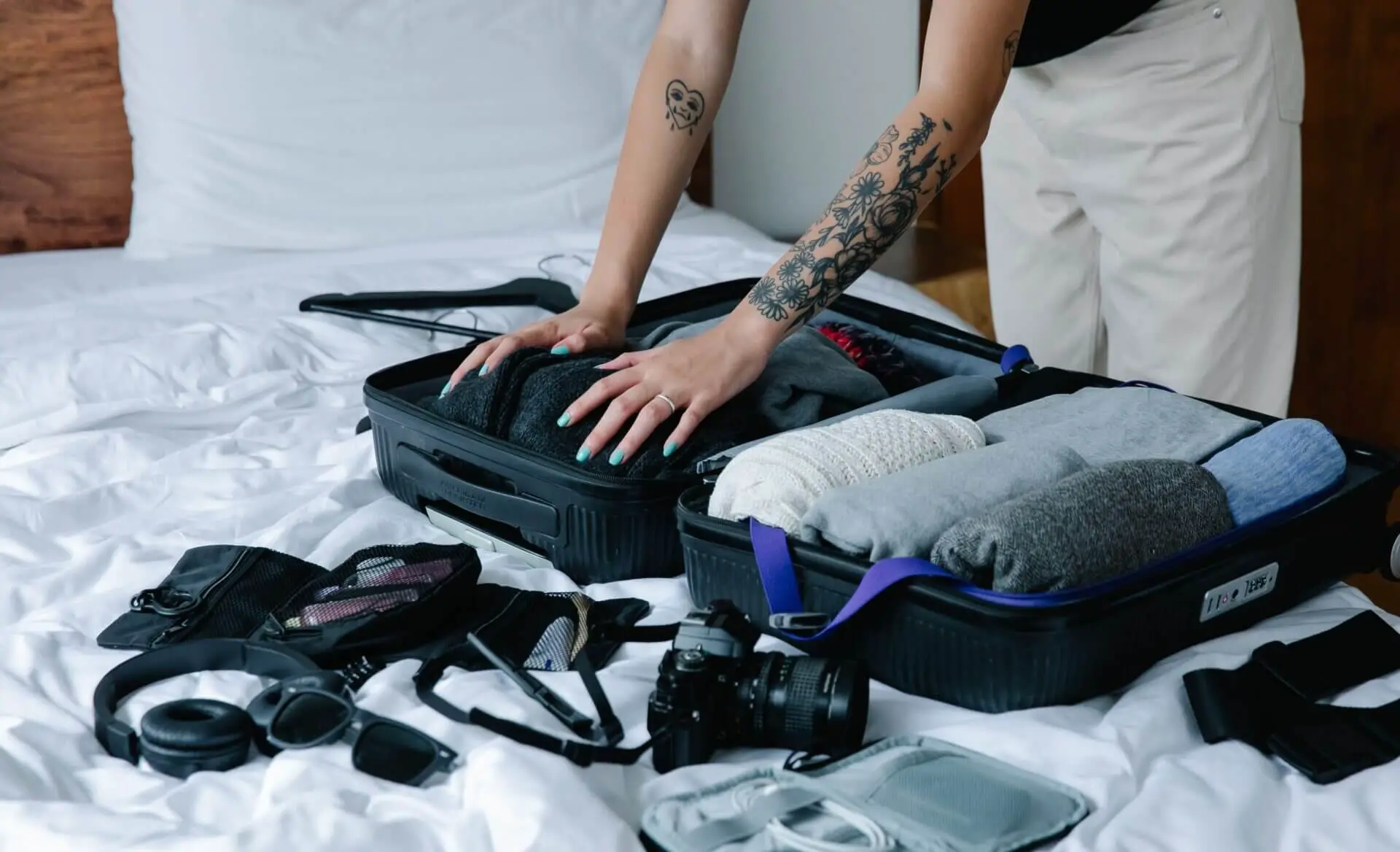
Lay the jacket face down, turn one shoulder inside out, then tuck the other shoulder into it so the jacket folds neatly through the back seam. But if your suitcase is too small or your jacket too bulky, you may need to fold it once horizontally to fit, and always place the jacket last, on top of your packed clothes, not under shoes or other heavy items.
Step 1: Choosing the right suitcase
Before you start packing your jackets, it's important to choose the right suitcase. The size and design of the suitcase can greatly impact how well your jackets are preserved during travel. Here are a few considerations to keep in mind:
Related travel guides: How To Pack A Monitor In A Suitcase and How To Pack A Sun Hat In A Suitcase.
- Suitcase size: Opt for a spacious suitcase that can comfortably accommodate your jackets without causing them to be excessively compressed or wrinkled. Ensure that the suitcase has enough room to fit your other travel essentials as well.
- Suitcase structure: Look for a suitcase with a sturdy and rigid structure. This will provide better protection for your jackets and prevent them from getting squished or folded in unwanted ways.
- Compartments and organizers: Consider suitcases that come with built-in organizers, compartments, or garment bags specifically designed to keep jackets and other clothing items separate and well-organized.
- Material: Choose a suitcase made of durable and water-resistant material to protect your jackets from any potential spills or moisture during travel.
When selecting a suitcase, keep in mind the nature and length of your trip. If you're going on a short business trip and only need to pack one or two jackets, a smaller carry-on suitcase might suffice—just verify the suitcase size fits under an airline seat if you plan to use it as your personal item. However, for longer trips or if you need to pack multiple jackets, opting for a larger checked suitcase would be more suitable.
Remember, the goal is to ensure that your jackets have enough room to breathe and remain in good condition throughout your journey. By selecting the right suitcase, you set the foundation for a well-packed and hassle-free travel experience.
Step 2: Folding the jacket properly
When it comes to packing jackets, folding is a crucial step to prevent wrinkles and minimize bulk. Follow these steps to fold your jacket properly:
- Button or zip up: Before folding your jacket, make sure to button or zip it up. This helps maintain the jacket's shape and reduces the chances of it getting snagged on other items in your suitcase.
- Lay it face down: Lay the jacket face down on a flat surface. This protects the outer fabric without turning the entire jacket inside out.
- Fold through the back seam: This keeps the sleeves aligned and prevents bunching.
- Smooth and fold horizontally: Smooth the lapels and seams, then fold the jacket once horizontally if needed for suitcase size. This works for most suitcases, but always check that your suitcase size fits under an airline seat if you plan to use it as a personal item.
If you're concerned about wrinkles, you can place a thin layer of tissue paper between the folds of the jacket. This can help reduce friction and keep the jacket looking fresh. However, be mindful not to use too much tissue paper, as it can add unnecessary bulk to your packing.
By folding your jacket properly, you can make the most of the available space in your suitcase while ensuring that your jacket remains wrinkle-free and ready to wear upon arrival.
Step 3: Utilizing packing cubes
For efficient and organized packing, consider using packing cubes to pack your jackets. Packing cubes are small, lightweight organizers that help separate and compress your clothing items. Here's how you can make the most of packing cubes when it comes to packing your jackets:
1. Group your jackets: Before placing your jackets in packing cubes, group them based on their size and thickness. This will help you choose the appropriate size of packing cubes and keep similar jackets together for easy unpacking.
2. Fold the jacket properly: Do not fold sleeves toward the back or fold vertically in half.
3. Place in the cube: Depending on the size of your packing cube, you can either roll or fold the jacket after using the shoulder-tuck method. Rolling tends to save more space, while folding maintains the shape of the jacket better. Experiment with both methods to see what works best for your jackets and the available space in the packing cubes.
4. Maximize space: To make the most of the packing cube, place the jacket in the cube and compress it by gently pressing down on it. This will help minimize air pockets and optimize the use of space in the packing cube.
5. Pack strategically: When placing the packing cubes in your suitcase, keep the jacket cube on top of other cubes to prevent any pressure or weight from damaging the jacket during transit. If you have multiple jackets, use separate packing cubes for each jacket or group of jackets, making it easier to locate specific ones without rummaging through your entire suitcase.
Packing cubes not only keep your jackets organized but also help compress them, saving valuable space in your suitcase. Additionally, they provide an added layer of protection, keeping your jackets safe from any spills or damages.
Investing in a set of packing cubes is a worthwhile addition to your travel accessories, especially if you frequently travel with jackets or bulky clothing items. They streamline your packing process, make unpacking easier, and keep your garments in top condition throughout your journey.
Step 4: Layering technique for jackets
When it comes to packing jackets, the layering technique helps maximize space and prevent excessive wrinkles. Follow these steps:
- Lay the jacket face down: Place the jacket face down on a flat surface.
- Smooth and fold horizontally: Smooth the lapels and seams, then fold the jacket once horizontally if needed for suitcase size. Do not fold vertically in half.
- Put it on top: This keeps it from getting crushed and reduces deep creases.
- Layer lighter jackets above: If packing multiple jackets, place lighter ones on top of the first, repeating the same shoulder-tuck fold for each. Alternate the direction of each jacket to create a stable, compact stack.
- Finish with a soft layer: Once all jackets are packed, place a lightweight garment—such as a t-shirt or scarf—on top to create a protective layer and further minimize creases.
This technique saves space and keeps your jackets organized and accessible. The cushioning effect of the layers also provides some protection against external pressure during transit.
Pack the jackets snugly but not excessively tight. Too much pressure leads to unwanted creases and wrinkles. Finding the right balance between packing efficiently and preserving the condition of your jackets is key—especially if you are also checking whether your suitcase size fits under an airline seat, as a neatly packed jacket on top leaves room for other essentials.
Step 5: Additional tips for packing jackets
While the previous steps cover the basics of packing jackets in a suitcase, here are some additional tips to further optimize your packing and ensure the best possible condition for your jackets:
- Use vacuum-sealed bags: If you're dealing with limited suitcase space or need to pack bulkier jackets, consider using vacuum-sealed bags. These bags remove excess air, compressing the jackets and maximizing space in your suitcase.
- Pack in garment bags: If you have delicate or formal jackets, consider investing in garment bags. These bags provide an extra layer of protection and help prevent any damage to the fabric or embellishments.
- Fill empty spaces: Utilize any empty spaces in your suitcase, such as pockets or gaps between jackets, by filling them with smaller items like socks or accessories. This helps utilize the available space effectively and prevents items from shifting during transit.
- Consider weather-specific jackets: If you're traveling to a destination with varying weather conditions, pack a lightweight jacket that can be easily layered with your other jackets. This ensures you're prepared for different climates without overpacking.
- Check the weather forecast: Before packing your jackets, check the weather forecast for your destination. This helps you pack the most appropriate jackets and avoid unnecessary bulk or weight.
- Roll smaller jackets: For smaller jackets like windbreakers or lightweight blazers, rolling them instead of folding can help save space and minimize wrinkles.
- Take advantage of outer pockets: If your suitcase has outer pockets, utilize them to store smaller jackets or jackets you might need easy access to during your journey. This avoids the need to open your entire suitcase to retrieve these items.
For the most wrinkle-free result, this method keeps the jacket’s structure intact and reduces creasing.
Remember that the goal is to pack your jackets efficiently while maintaining their integrity. Consider the specific needs of each jacket, the duration of your trip, and the available space in your suitcase when implementing these additional packing tips.
By following these extra tips, you can elevate your packing game and ensure that your jackets are well-organized, protected, and quick to access when you need them.
Conclusion
Packing jackets in a suitcase doesn't have to be a daunting task.
This method keeps the jacket wrinkle-free and accessible. Be mindful of the materials and specific needs of each jacket, and check whether your suitcase size fits under an airline seat before you travel. Whether you're traveling for business or pleasure, having the right jackets in your suitcase can enhance your comfort, style, and overall travel experience.
By utilizing these packing techniques, you can ensure that your jackets are packed efficiently, protected, and easily accessible during your journey. Happy travels!
