

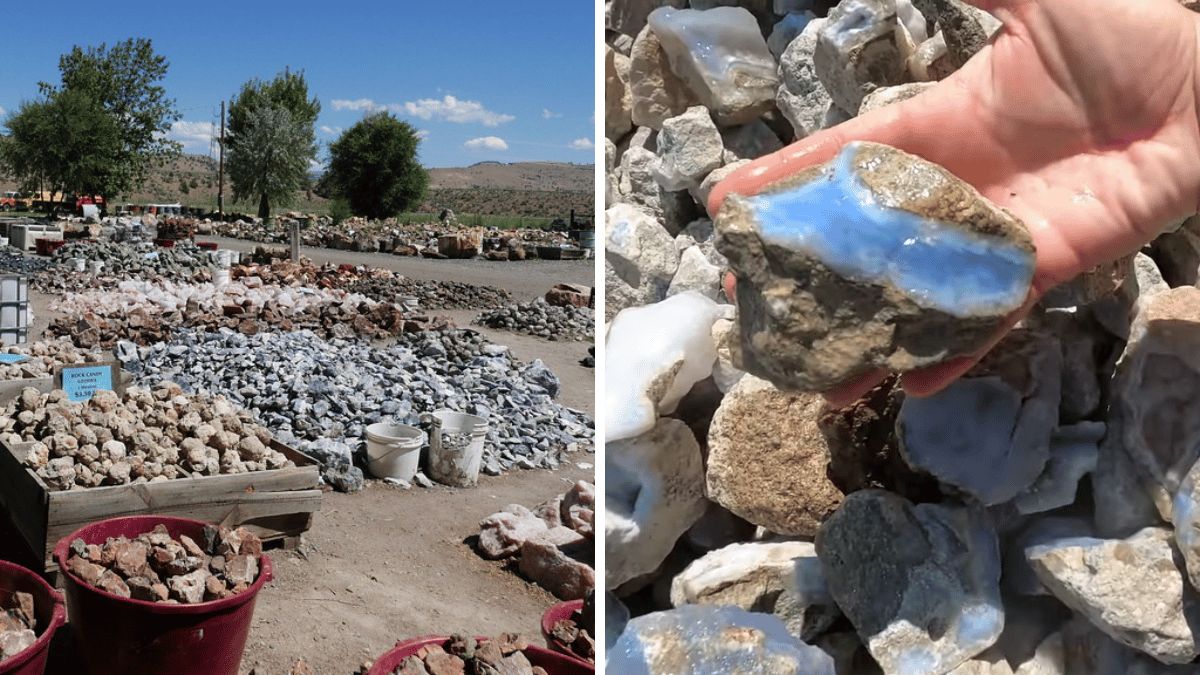
Utah's "lost" turquoise mines are a myth—the state's only documented turquoise and variscite sources are Kennecott/Bingham and Fairfield. What the state actually offers are legendary copper mines and a rich mining history, not a network of hidden gemstone digs. If you're seeking turquoise, you'll need to look to the state's documented localities, which are tied to copper mining, not lost frontier legends.
What the State Actually Mined
Utah's documented turquoise is a byproduct of copper mining at Kennecott's Bingham Canyon Mine, one of the largest open-pit mines on Earth. The turquoise found there is a secondary mineral, created when copper-bearing fluids interacted with phosphate and aluminum-rich rocks. The other documented locality is Fairfield, which produced variscite—a phosphate mineral often confused with turquoise but distinct in its vibrant green color. Both sites are tied to industrial extraction, not lost frontier mines.
Fairfield's variscite was mined commercially in the early 1900s, with nodules and veins cut into cabochons for jewelry. The site is now largely collected out, but specimens still appear in rockhound circles. For actual turquoise, the Bingham pit's waste dumps and leach pads have yielded specimens, though access is restricted due to active mining. No other Utah locality appears in the geological record as a documented turquoise source.
Why the Myths Persist
The stories of "Blue Moon Mine," "King's Manassa Mine," and a dozen other named turquoise mines are fabrications, likely born from confusion with Colorado's Manassa district or from fictionalized accounts. The Manassa turquoise district is in Colorado, not Utah, and no Utah mine by that name appears in any official mining record. Similarly, "Dry Creek," "Stormy Mountain," "Blue Ridge," "Indian Mountain," "Pilot Mountain," "Lone Mountain," "Blue Gem," and "Ajax" mines have no documented turquoise production in Utah.
These invented names are often attached to real Utah landmarks—the San Rafael Swell, Wah Wah Mountains, Henry Mountains, Uinta Mountains, and Thomas Range—but the gemstone claims are unsupported. The actual rocks in these areas are primarily sandstone, shale, and volcanic tuff, none of which host turquoise under normal geological conditions. The only turquoise-bearing rocks in Utah are the altered porphyry copper deposits at Bingham and the phosphatic shales near Fairfield.
What You Can Actually Find
If you're determined to search for turquoise in Utah, your best bet is to collect from the dumps and tailings around the Bingham Canyon Mine, though you'll need permission from Kennecott. The mine's visitor center offers overlooks, and some rockhound clubs organize collecting trips to the surrounding Oquirrh Mountains, where float turquoise has been found. The stones are typically small, pale blue to green, and heavily fractured—a far cry from the deep blues of the mythical mines.
At Fairfield, the variscite occurs in nodules within phosphate-rich claystones. The old diggings are on private land, but the nearby town of Fairfield has a museum with local specimens. The variscite is a striking apple-green, often with white or yellow veining, and makes beautiful cabochons. It's a legitimate alternative for gem collectors who want a Utah-sourced stone, even if it's not turquoise.
The Only True Turquoise in the State
Kennecott's turquoise is the only documented turquoise in Utah. It forms in the oxidation zone of the copper porphyry, where secondary enrichment has concentrated copper, aluminum, and phosphate. The turquoise is typically a pale blue to greenish-blue, with a waxy luster and a hardness of 5-6. It's rarely gemmy, but it's authentic. The Bingham pit has produced specimens up to several inches across, though most are small fracture-fillings.
Fairfield's variscite, while not turquoise, is often sold as such in tourist shops. The two minerals are chemically distinct—turquoise is a copper aluminum phosphate, while variscite is an aluminum phosphate hydrate—but they're visually similar. If you buy a "Utah turquoise" pendant in a gift shop, you're almost certainly buying variscite from Fairfield or turquoise from another state. The mislabeling is so common that even the state's own tourism materials blur the lines.
How to Search Responsibly
If you want to hunt for turquoise or variscite in Utah, follow these rules: get permission before collecting on private or mining land, join a club with access to claims, and respect the environment. The Bingham pit is active industrial land, so collecting is only possible at designated rockhound areas or through club outings. At Fairfield, the old dumps are on private property, but the museum offers a few specimens for sale, and the surrounding hills have public land with scattered float.
For a safe and legal experience, visit the Bingham Canyon Mine overlook, where interpretive signs explain the geology. The exploration of the pit's rim gives you a sense of the scale, even if you can't collect there. Alternatively, the Fairfield museum has a small collection of local variscite, and the staff can point you to public access areas. The exploration of these sites is more about learning than finding treasure.
The Real Hidden Gems
Utah's true mineral wealth lies in its copper, uranium, and beryllium deposits, not turquoise. The state's mining history is fascinating, from the Bingham pit to the uranium booms of the 1950s. If you're interested in gems, consider visiting the Topaz Mountain area, where you can find topaz, opal, and garnet—though not turquoise. The exploration of these sites offers a more authentic experience than chasing phantom mines.
The stories of lost turquoise mines are just that—stories. The real treasure is the landscape itself, from the San Rafael Swell's canyons to the Wah Wah Mountains' isolation. Exploration of these areas reveals a rugged beauty that needs no gemstone to be valuable. So pack your hiking boots, bring a map, and enjoy the desert. The turquoise may be a myth, but the adventure is real.
What to Bring and Know
- Water and sun protection—Utah's desert is unforgiving.
- A rock hammer and safety glasses for any collecting.
- GPS or a physical map; cell service is unreliable.
- Permission slips if you're collecting on managed lands.
- Expect to find more quartzite and sandstone than turquoise.
In the end, the only documented turquoise in Utah comes from Kennecott, and it's not accessible to the public. Fairfield's variscite is the closest you'll get to a "Utah turquoise," and it's a beautiful stone in its own right. The myths of lost mines are a fun story, but they're not history. The real history is in the copper pits and the phosphate hills, where miners worked hard to extract what the earth provided. That's the true secret of Utah's turquoise—it was never lost, just misidentified.
So, when you visit, don't waste time searching for a "Blue Moon Mine" that doesn't exist. Instead, explore the documented sites, learn about the geology, and appreciate the state's real mineral heritage. The memories you make will be far more valuable than any mythical gemstone. And who knows—you might find a piece of variscite to take home, a genuine piece of Utah's geological story.
Related travel guides: Arizona's Hidden Copper Boom Towns And Their Untold Stories and Secrets Of Michigan's Lost Copper Works.
