

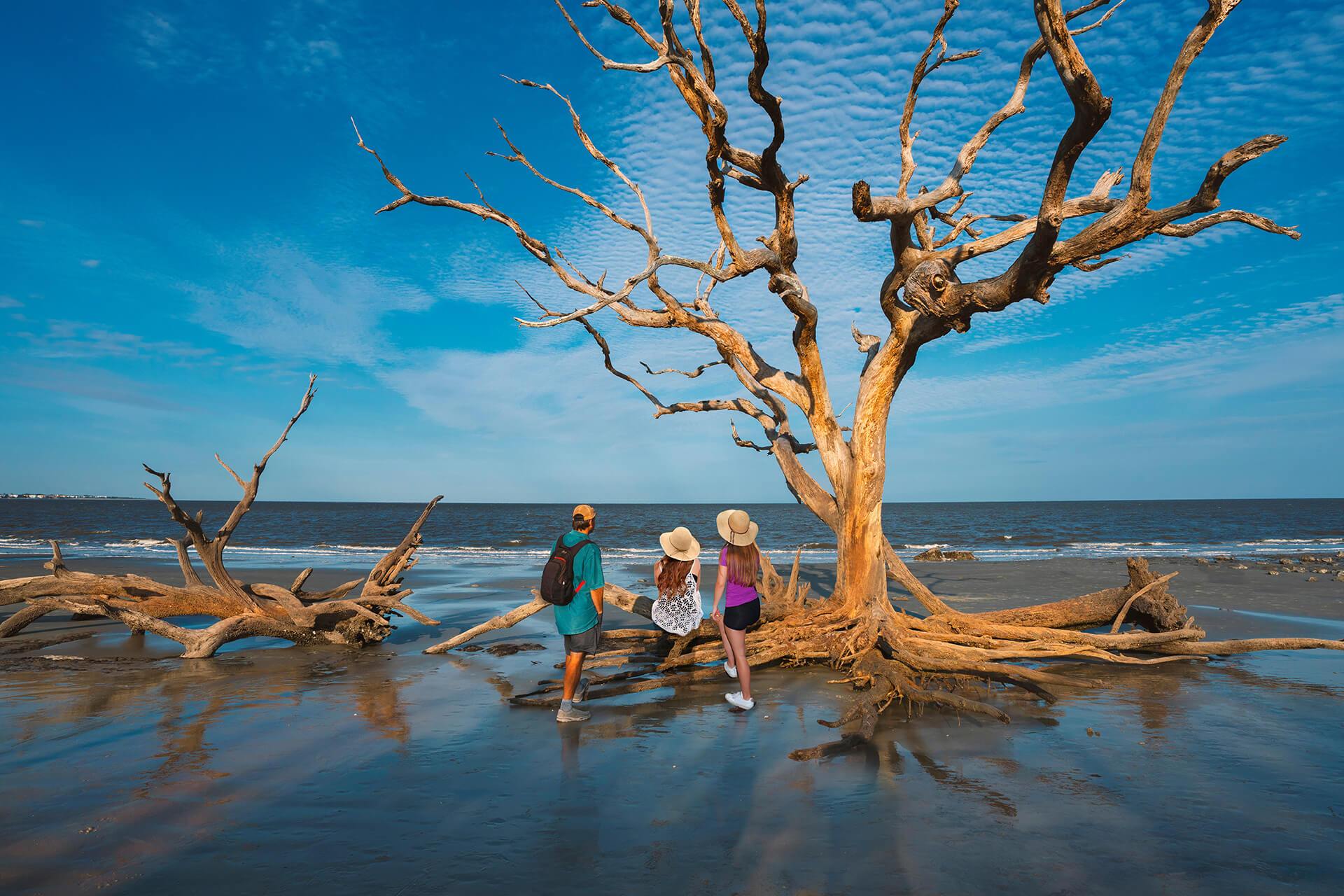
Sea turtles nest on Jekyll Island from May to October, with most nesting activity from June through August. The island’s central and southern dune-backed beaches provide the prime habitat for loggerheads and other species to lay their eggs.
Prime Nesting Spots
Jekyll Island’s central and southern dune-backed stretches are the most productive nesting zones. These areas offer the quiet, undisturbed sands that sea turtles seek.
-
Great Dunes Beach Area
- This area features expansive dunes and a wide beach. Visitors often spot turtle tracks leading to nests early in the morning.
-
Glory Beach
- Named after the movie “Glory,” filmed here, this beach is a favorite for nesting turtles. Its quiet, undisturbed sands provide a perfect environment for laying eggs.
-
South Dunes Picnic Area
- This area combines recreational facilities with natural beauty. The dunes here are a popular nesting spot, and the nearby picnic tables offer a place to relax and watch for turtle activity.
Turtle Conservation Efforts
Various organizations work to protect these creatures.
-
Georgia Sea Turtle Center
- This center is dedicated to the rehabilitation and research of sea turtles. Visitors can learn about conservation efforts and witness the care given to injured turtles.
-
Turtle Walks
- Organized by local conservation groups, these guided walks offer a chance to see nesting turtles. Participants learn about the nesting process and the importance of protecting these animals.
Best Times to Visit
Timing is everything when it comes to witnessing turtle nesting.
-
May to October
- This period marks the nesting season for sea turtles. Early mornings and late evenings are the best times to spot turtles coming ashore to lay their eggs.
-
Hatchling Season
- From July to September, visitors can witness hatchlings making their way to the ocean.
Tips for Responsible Turtle Watching
Respecting the turtles and their habitat is crucial.
-
Keep Your Distance
- Always maintain a safe distance from nesting turtles and hatchlings. Disturbing them can cause stress and disrupt their natural behavior.
-
Use Red Filters on Lights
- Bright lights can disorient turtles. If you need to use a flashlight, cover it with a red filter to minimize disturbance.
-
Stay on Designated Paths
- Stick to marked paths to avoid trampling nests hidden in the sand. This helps protect the eggs and the delicate dune ecosystem.
Educational Programs and Activities
Jekyll Island offers programs to educate visitors about sea turtles and their conservation.
-
Junior Ranger Program
- This program engages kids with activities and educational materials about sea turtles and other wildlife on the island.
-
Turtle Tides
- A hands-on program where participants can help researchers monitor nests and collect data. It’s a way to contribute to conservation efforts while learning about these animals.
Conclusion
Jekyll Island’s turtle nesting beaches are a treasure trove of natural wonders. From prime nesting spots to conservation efforts, there’s much to explore and learn. Whether you’re a nature enthusiast or looking for a peaceful getaway, Jekyll Island offers an unforgettable experience.
Protecting Jekyll Island’s Turtle Nesting Beaches
Jekyll Island’s turtle nesting beaches are worth protecting. These sandy shores play a crucial role in the survival of sea turtles. Visitors can help by respecting nesting areas, keeping beaches clean, and following guidelines set by local conservation groups. Simple actions like turning off beachfront lights at night and avoiding disturbing nests can make a difference.
Supporting local conservation efforts ensures these creatures have a safe place to lay their eggs for generations to come. By visiting responsibly, you contribute to the preservation of this ecosystem. Jekyll Island offers a chance to witness nature’s wonders while playing a part in their protection. Next time you visit, remember the impact you can have on these animals and their habitat. Let’s keep Jekyll Island a sanctuary for sea turtles.
Related travel guides: Beaches In Georgia, 6 Spectacular Beaches To Visit In Macon, Georgia, and 5 Spectacular Beaches To Visit In Marietta, Georgia.
