

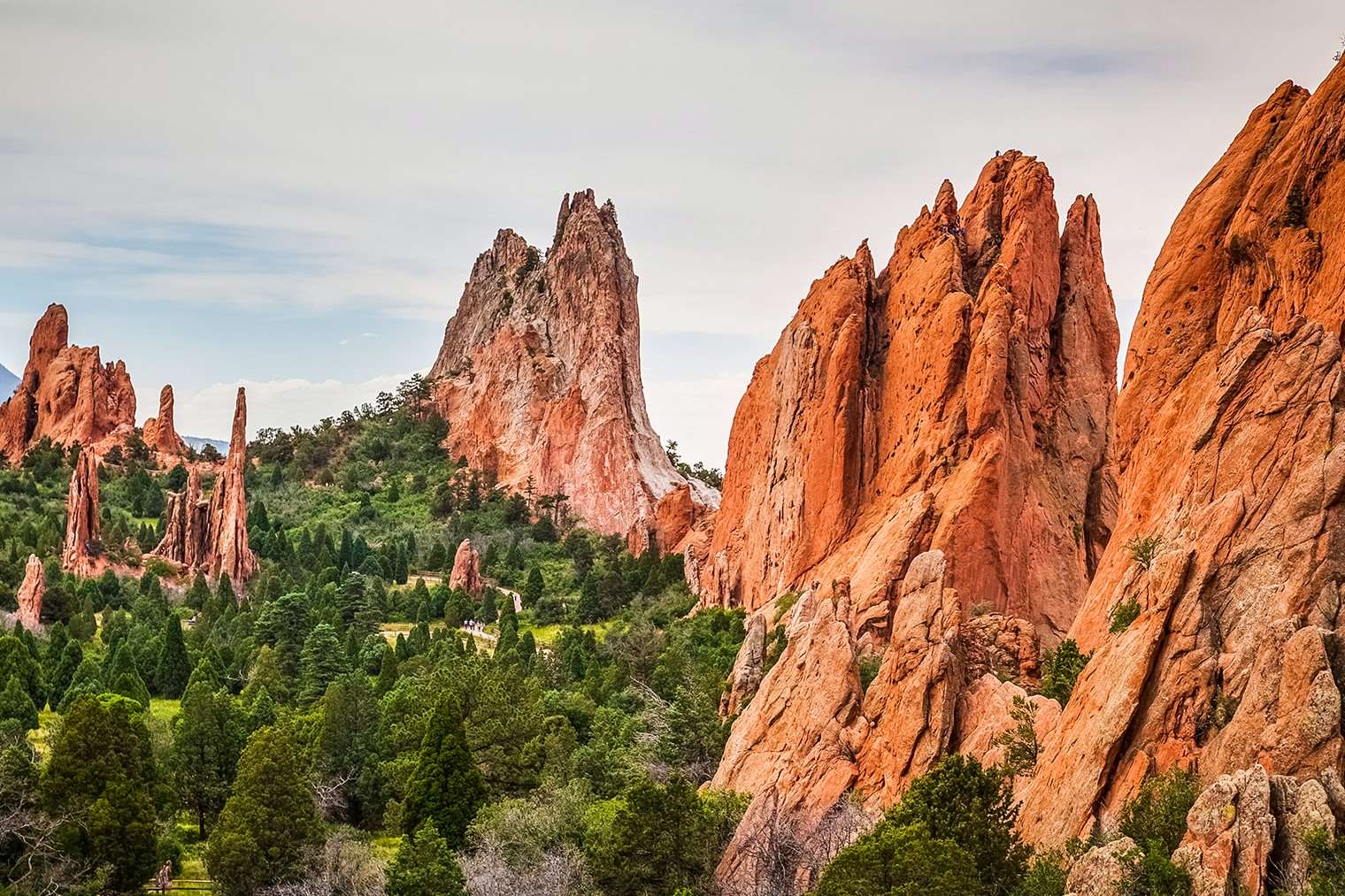
Garden of the Gods hides its secrets in plain sight—the park’s 300-foot-tall red sandstone pillars and the famous Balanced Rock are the results of an ancient seabed, upheaval, and eons of erosion. The park’s 15 miles of trails and free admission mean the real secret is knowing where to look beyond the postcard views of Pikes Peak.
Ancient Rock Formations
These rocks date back millions of years. Each formation has its own shape and history.
- Kissing Camels
This formation resembles two camels sharing a kiss. - Balanced Rock
A massive boulder precariously balanced on a smaller base. The boulder weighs 700 tons and sits on a base that looks far too small to hold it. - Siamese Twins
These twin rocks are connected at the base, offering a natural window with a view of Pikes Peak in the distance.
Wildlife Wonders
Garden of the Gods is also home to a diverse array of wildlife.
- Bighorn Sheep
These creatures can often be seen grazing on the rocky slopes. Their horns can weigh up to 30 pounds. - Red-tailed Hawks
Soaring high above, these birds of prey are a common sight. Their keen eyesight can spot a mouse from 100 feet in the air. - Mule Deer
Often spotted in the early morning or late afternoon, these animals get their name from their large, mule-like ears.
Hidden Trails and Paths
Beyond the main roads and popular spots, Garden of the Gods has hidden trails that offer solitude.
- Chambers/Bretag/Palmer Trail
A less-traveled loop that winds through piñon pines and junipers. This trail is 2.2 miles. - Siamese Twins Trail
A short hike that leads to the Siamese Twins formation and offers a perspective of Pikes Peak. It’s 1.1 miles round trip. - Ridge Trail
A quick hike with panoramic views. This 1.5-mile loop is mostly paved and wheelchair-accessible.
Cultural and Historical Tidbits
Garden of the Gods is rich in cultural and historical significance. From ancient peoples to modern-day explorers, this park has been a gathering place for centuries.
- Native American History
The Ute people once called this area home. Artifacts dating back 3,000 years have been found within the park boundaries. - Charles Elliott Perkins
This visionary donated the land to the city of Colorado Springs in 1909. His family purchased the land in 1879 and later gave it to the city with the stipulation that it remain free. - Visitor and Nature Center
A starting point for any visit, the center offers exhibits on the park’s history, geology, and ecology. It also has a gift shop and restrooms, and it’s open daily from 8 a.m. to 5 p.m.
Practical Tips for Your Visit
To make the most of your trip, arrive early—parking lots fill by 9 a.m. on weekends. The park’s main road, Garden Drive, is one-way and takes about 20 minutes to drive without stopping. If you’re short on time, the Perkins Central Garden Trail is a 1.1-mile paved loop that hits the highlights. For those interested in rock climbing, a free permit is required and can be obtained at the Visitor and Nature Center. The park also offers horseback riding through a licensed outfitter, with rides lasting one to two hours. Remember to bring water, as the high altitude (6,400 feet) can dehydrate you quickly. For a different perspective, book a Segway tour that runs along the park’s paved paths. And if you’re looking for more ways to explore the state, check out our Colorado travel guides for vacation ideas in Colorado—including mountain mysteries in Colorado and hiking and the outdoors in Colorado—that pair perfectly with a Garden of the Gods visit.
Garden of the Gods offers a blend of natural beauty and rich history. The towering red rock formations create a backdrop for hiking, rock climbing, and photography. Each trail reveals a new perspective, whether it’s the Balanced Rock or the Kissing Camels. The park’s history, from its Native American roots to its designation as a National Natural Landmark in 1971, adds depth. Visitors can explore the Visitor & Nature Center to learn more about the geology and cultural significance of the area. Its accessibility and free admission make it a must-visit destination for anyone traveling through Colorado.
Related travel guides: Curious Facts About Colorado's Garden Of The Gods Balanced Rock, Mountain Secrets In Colorado, and Hidden Waterfalls In Colorado.
