

Part of our California guide.
The Russian River in Sonoma County is a 110-mile waterway that hides its best secrets in plain sight, from historic Russian settlements to natural hot springs and redwood groves. Here are the essential places and stories that make this region a genuine off-the-beaten-path find.
Karuk Basket Gathering Sites
The Karuk people have gathered basket materials along the Klamath and Salmon Rivers for centuries, long before the Russian River area was on any map. These sites are part of a living tradition where women still harvest hazel shoots, bear grass, and porcupine quills for intricate basketry. The baskets are so tightly woven they can hold water, a skill passed down through generations. Visiting the general region—especially around Orleans and Happy Camp—puts you near where this craft thrives, though you should always ask permission before approaching any gathering area.
Russian Wilderness
California's Russian Wilderness is a 12,000-acre roadless area in the Klamath National Forest, named not for Russians but for the Russian River that rises from its slopes. This is a landscape of granite peaks, subalpine lakes, and old-growth forests where Pacific Crest Trail hikers pass through at 6,000 feet. The Russian River here is a small, cold stream tumbling over boulders—not the wine-country river you might picture. It is a place for serious backpackers, with no services, no marked trails beyond the PCT, and no cell signal. What it offers instead is solitude, with only the sound of water and wind in the firs.
Russian Connection
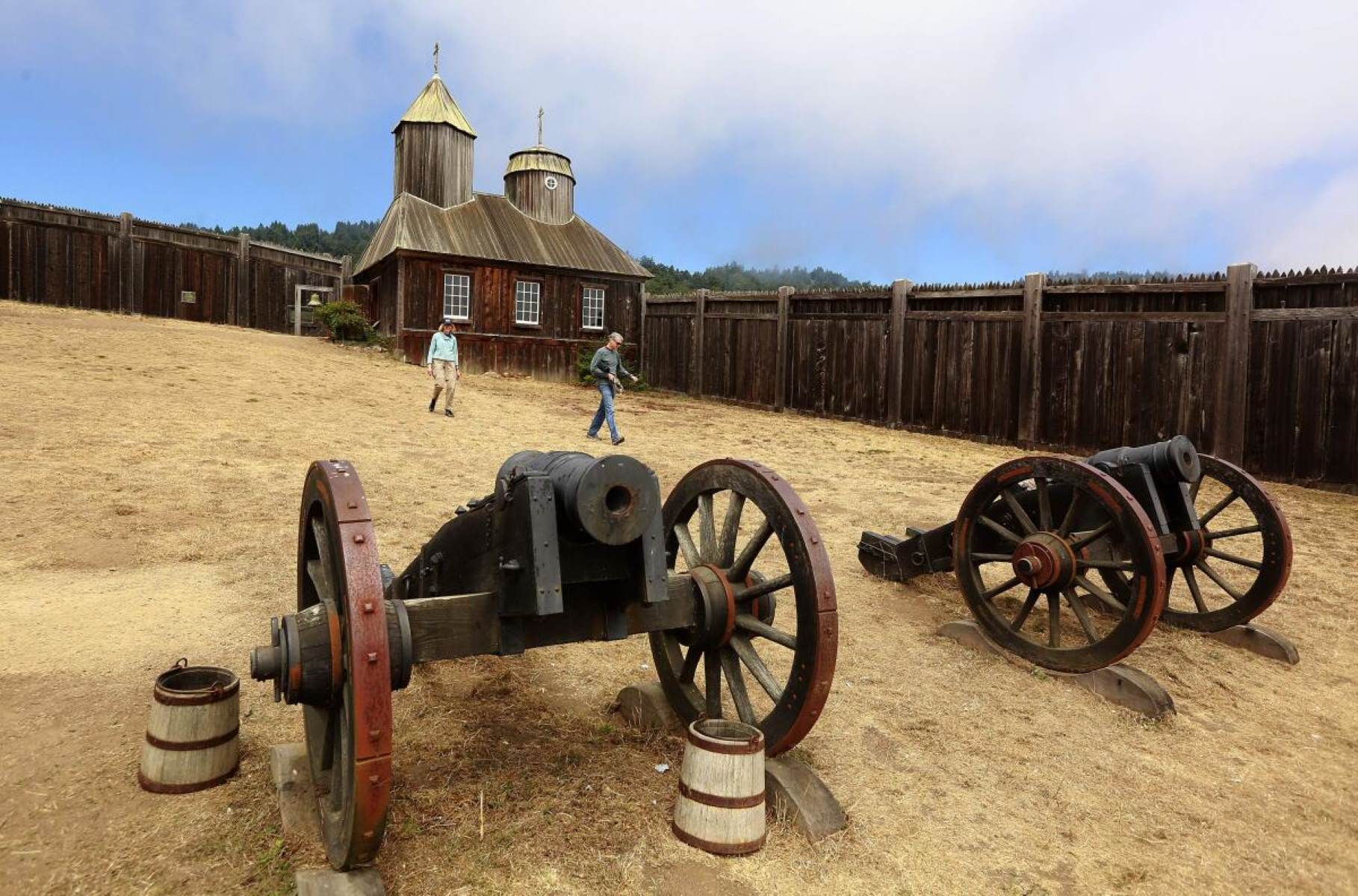
Russian explorers established Fort Ross in 1812, a settlement that operated until 1841 and became the southernmost outpost of Russian America. The colony's main business was sea otter fur trading, but it also grew wheat, raised livestock, and built ships. The Russians intermarried with local Kashaya Pomo people, leaving a mixed cultural legacy that still shapes the Sonoma coast. The fort's reconstructed buildings, including a chapel with a distinctive Russian Orthodox cross, sit on a bluff above the Pacific, and the original stockade logs are still visible in places. The Russians sold the fort to John Sutter in 1841, and it later became a state historic park in 1906.
Russian River
The Russian River flows 110 miles from its headwaters in Mendocino County to the Pacific Ocean at Jenner. In summer, the river is warm and slow, perfect for inner-tubing from Forestville to Guerneville, a two-hour float that passes under shady oaks and past sandy beaches. In winter, kayakers run the upper stretches when rains turn the river into a Class II run. The river is also a salmon and steelhead fishery, with seasonal runs from October through March. For a swim spot that locals guard jealously, head to the bend just downstream from the old Duncan's Mills bridge, where a deep pool forms beneath a rocky cliff.
Russian River Fish Camps
From the 1880s to the 1940s, commercial fishermen operated seasonal camps along the lower Russian River, catching steelhead and salmon with gillnets and seines. These camps were rough-and-ready affairs—canvas tents, plank tables, and smokehouses—where Chinese, Italian, and Pomo fishermen worked side by side. Today, nothing remains but overgrown clearings and a few rusted barrel hoops, but you can still see the old fish ladder at the Mirabel Park dam, where migrating steelhead rest each winter. The best time to spot fish is from December through February, when the river swells with rain and the fish push upstream.
Russian Fort Ross
Fort Ross State Historic Park preserves the 1812 Russian settlement, and its stockade walls enclose a reconstructed commandant's house, a chapel, and a well. The original well still has water in it, and the orchard behind the fort contains century-old apple trees descended from Russian plantings. The fort's cannons are replicas, but the original iron ones are on display in the visitor center. The site also includes a Russian cemetery on a bluff overlooking the sea, where grave markers are carved with Orthodox crosses. Allow at least two hours to walk the grounds, and check the tide tables—the beach below the fort has tide pools at low tide.
Russian Pools
The Russian River's natural hot springs are mostly gone, buried by floods and development, but one remains accessible: the "Hobo Hot Springs" near the town of Duncan's Mills. These are not developed pools but a series of small, rock-lined soaks along the riverbank, reachable by a short, unmarked trail from the end of Old Cazadero Road. The water temperature hovers around 100°F, and the pools are free and open year-round, though they are clothing-optional and popular with locals. The best time to visit is on a weekday morning, before the crowds and after the river has cleared from winter rains.
Russian River Redwood Groves
Armstrong Redwoods State Natural Reserve, just north of Guerneville, protects 805 acres of old-growth coast redwoods, including the 1,400-year-old Colonel Armstrong Tree. The Pioneer Trail is a flat, wheelchair-accessible loop that winds through the grove, passing the 308-foot-tall Parson Jones Tree, the park's tallest. For a quieter experience, take the East Ridge Trail, which climbs 600 feet in a mile to a viewpoint where you can see the river snaking through the valley below. The groves are cool and damp even in summer, with ferns carpeting the forest floor and banana slugs leaving silver trails on the path.
Russian Gulch State Park Devil's Punchbowl
Russian Gulch State Park, on the Mendocino coast, is named for the Russian settlers who once logged here, but the Devil's Punchbowl is pure geology. This 100-foot-wide, 60-foot-deep sea cave collapsed thousands of years ago, leaving a circular opening where the Pacific Ocean surges and swirls below. A paved trail leads from the park entrance to a fenced overlook, and the best time to see the punchbowl erupt is at high tide, when waves crash through the opening and send spray shooting into the air. The park also has a 2-mile waterfall hike, a 36-foot-tall cascade that flows year-round, and a 2.5-mile headlands trail with views of sea stacks and blowholes.
Fort Ross
Fort Ross's most overlooked feature is its location on a 100-foot bluff that has eroded significantly since the Russians arrived—the original stockade stood 200 feet further inland than what you see today. The fort's orchard contains the oldest living fruit trees in Sonoma County, including a Gravenstein apple variety that was already old when the Russians planted it. The nearby Call House, built in 1878, is a two-story Victorian that served as a hotel and store, and it now houses a small museum with exhibits on the Russian-American period. For a view of the fort from the water, launch a kayak at the nearby beach and paddle north along the coast, where harbor seals haul out on the rocks.
Emerald Valley Vineyard Terraces In California's Russian River
The Emerald Valley Vineyard Terraces, carved into the hillsides above the Russian River near the town of Cazadero, are a working winery that also preserves the region's agricultural past. The terraces themselves are dry-stacked stone walls built by Italian immigrants in the 1880s, and they still support old-vine Zinfandel and Carignane grapes that are dry-farmed and hand-picked. The winery offers tastings by appointment, and the tasting room is a restored barn with original wooden beams and a stone fireplace. The signature wine is a field blend called "Old Vines," made from grapes that are over 100 years old. The views from the terrace overlook the river valley, and on clear days you can see all the way to the Pacific.
More about Russian River Secrets
- Secrets Of California's Joshua Tree Petroglyphs
- Secrets Of Pattaya's Red Light District Revealed
- Secrets Of California's Lost Opal Mines
- Secret Butterfly Sanctuaries Of San Francisco: Urban Lepidoptera Havens
- Hidden Tungsten Mines Of California
- Hidden River Towns Of The Sacramento Delta
- Secret Villages Of California's Dutch
- Hidden Desert Oases Of Palm Springs
- Secrets Of California's Clear Creek Jade Mines
- Bakersfield's Secret Country Music Spots
- Hidden Funiculars Of San Francisco's Hills
- Lost Ghost Towns Of The Mojave: California's Hidden Desert Ruins
- Hidden Sites Of The Donner Party
- Secrets Of Butte County's Lost Gold Mines
- Whale Whispers: Hidden Birthing Lagoons In Baja
- Secrets Of California's Joshua Tree Vortexes
- Hidden Gems: San Francisco's Top 10 Sneaker Stores You Must Visit
- Hidden Gems: San Diego's Most Fascinating Flea Markets And Thrift Stores
- Hidden Timber Company Towns In Northern California
- Secrets Of California's Donner Pass
- Mysteries Of California's Mount Tamalpais
- Secrets Of California's Lost Cinnabar Mines
- 10 Hidden Towns In Napa Valley You Need To See
- Secrets Of The Donner Party Camps In California
- The Hidden Secrets Of Felicity The Center Of The World
- Crescent City's Secret Lighthouse Accessible Only At Low Tide
- Secret Butterfly Valleys Of California's Santa Cruz
- Hidden Wonders Of California's Sierra Nevada Aspen Groves
- Lost Ghost Towns Of The Salton Sea: California's Hidden Desert Oasis
- Mysteries Behind California's Glass Mountain
- Hidden Valleys Of California's Panamint Range
- 25 Hidden Gems In California You Shouldn't Overlook
- Mysteries Of California's Black Diamond Mines
- Secrets Of California's Salton Sea Mud Volcanoes
- Hidden Wild Prickly Pear Cactus Farms Of Southern California
- California's Hidden Super Bloom In Carrizo Plain
- Hidden Tourmaline Mines Of Southern California
- Mysteries Of Joshua Tree's Hidden Waterways
- Secrets Of California's Gold Lake
- California's Secret Rainbow Pool In Yosemite
