

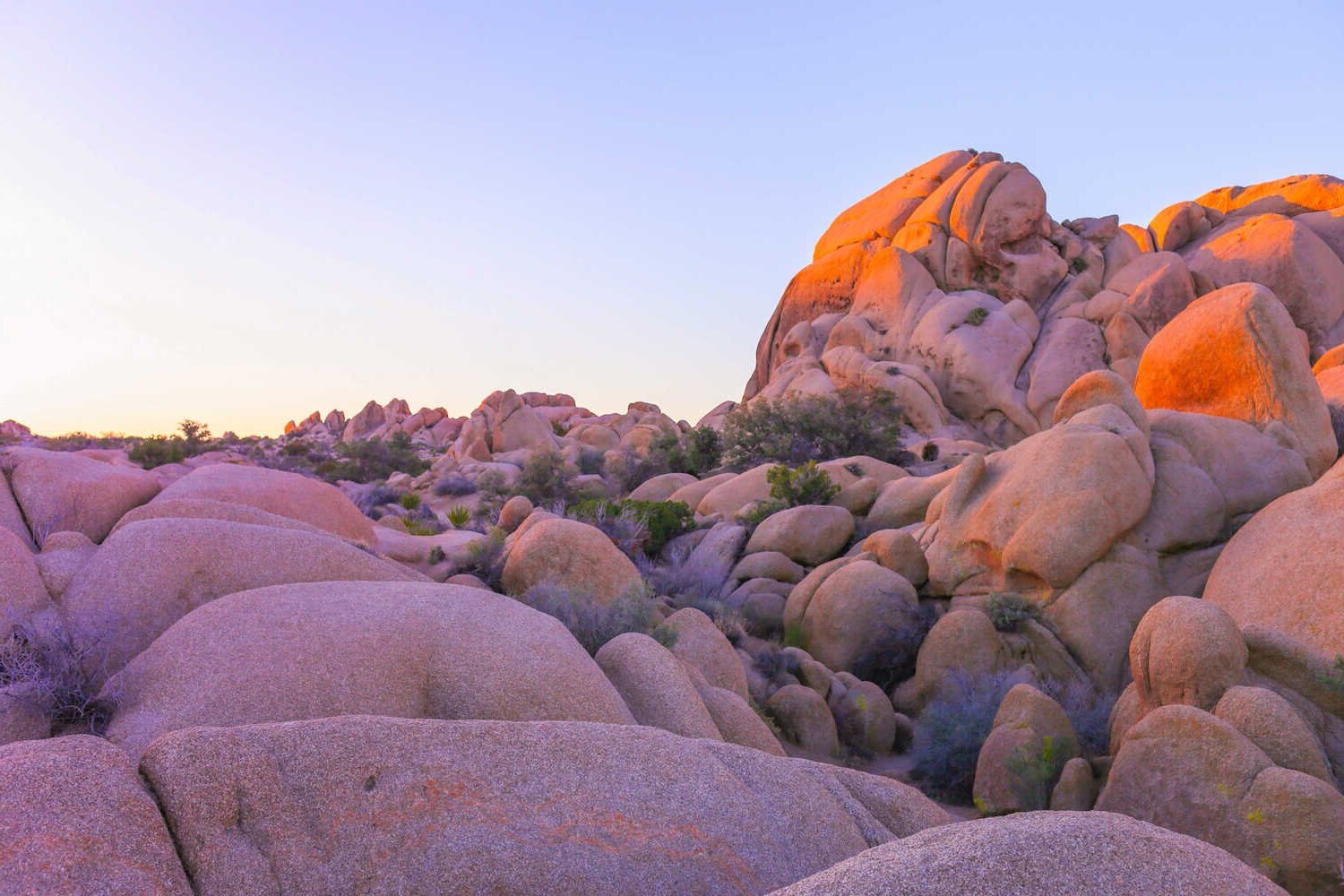
Joshua Tree’s hidden waterways are scattered across the park in the form of springs, old dams, and seasonal pools—most within a few miles of the main roads, though some require a scramble. The two permanent oases, Fortynine Palms and Lost Palms, are the easiest to visit, while Barker Dam and Cottonwood Spring hold the deepest history.
Hidden Springs and Oases
Amidst the dry desert, hidden springs and oases provide life-giving water to the plants and animals of Joshua Tree.
- Fortynine Palms Oasis – A short hike leads to this lush oasis surrounded by towering palm trees. The sound of trickling water and rustling leaves creates a peaceful atmosphere, making it a perfect spot for a quiet picnic.
- Lost Palms Oasis – This hidden gem requires a bit more effort to reach, but the reward is worth it. A grove of fan palms marks the spot where water seeps from the ground, creating a cool refuge from the desert heat.
Mysterious Water Tanks
Throughout Joshua Tree, you’ll find remnants of old water tanks used by early settlers and miners. These structures tell stories of the past and sometimes still hold water, attracting wildlife and curious explorers.
- Barker Dam – Built by cowboys in the early 1900s, Barker Dam still holds water after heavy rains. It’s a popular spot for birdwatching and offers a glimpse into the park’s history.
- Wall Street Mill – Near the ruins of an old gold processing mill, you’ll find a small water tank. This area is rich in history, with rusted machinery and old cars adding to the intrigue.
Seasonal Streams and Pools
During rare rainfalls, dry washes and canyons transform into flowing streams and pools. These temporary waterways bring a burst of life to the desert, attracting wildlife and creating stunning landscapes.
- Rattlesnake Canyon – After a good rain, this canyon becomes a series of cascading pools and waterfalls. It’s a bit of a scramble to reach, but the sight of water flowing over smooth rocks is mesmerizing.
- Hidden Valley – Known for its rock formations, Hidden Valley also hides seasonal pools that appear after rainstorms. These pools reflect the surrounding boulders, creating a picturesque scene.
Ancient Water Sources
Long before the park became a protected area, indigenous peoples relied on these water sources for survival. Exploring these ancient sites offers a glimpse into the history and culture of the region.
- Cottonwood Spring – This spring has been a vital water source for centuries. Native American tribes used it as a campsite, and evidence of their presence can still be found in the form of petroglyphs and grinding stones.
- Oasis of Mara – Located near the park’s visitor center, this oasis has a rich history. It was once a meeting place for the Serrano people, who planted palm trees to mark the water source. Today, it’s a peaceful spot to learn about the area’s cultural heritage.
What Actually Flows Here
Most of Joshua Tree’s “waterways” are not rivers or creeks—they are seeps, springs, and rain-fed pools that appear and vanish with the seasons. The park averages about 5 inches of rain per year, and when storms do hit, the granite bedrock forces water to pool in low spots. That’s why the oases cluster along fault lines, where underground aquifers are pushed upward. The fan palms at Fortynine Palms and Lost Palms grow directly over these seeps, their roots tapping into water that never fully dries up.
Barker Dam, built around 1900, was constructed to hold water for cattle and mining operations, and it still catches runoff in wet winters. On a dry day, you might see just a cracked mudflat at its base—but after a storm, it becomes a shallow lake that attracts migrating birds. Wall Street Mill’s water tank once served a gold ore crusher, and the rusted machinery nearby is all that remains of that operation.
The seasonal pools in Rattlesnake Canyon and Hidden Valley are the most ephemeral of all. They might last for a few weeks after a heavy rain, then disappear completely. When they do exist, they support a burst of life—tadpoles, diving beetles, and even the occasional bighorn sheep stopping for a drink. The canyon’s smooth rock pools are especially striking after a downpour, with water cascading over the granite in thin sheets.
Cottonwood Spring and the Oasis of Mara are the two sites with the longest continuous human history. Cottonwood sits near the park’s southern entrance and shows grinding stones that are centuries old, left by the Cahuilla people. The Oasis of Mara, by the north entrance in Twentynine Palms, was a Serrano village site where palm trees were deliberately planted—a rare sign of early desert agriculture. Both spots are easy to reach and well-marked, making them the most accessible places to see how water shaped human settlement here.
If you’re planning a visit, the best time to see any of these waterways is from late winter through early spring, when winter rains have had time to accumulate. Summer storms can also trigger flash floods in washes, so check the weather before heading into narrow canyons. And while the park’s picnic spots near water are lovely, never rely on these sources for drinking water—treat or filter everything, and carry your own supply.
The hidden waterways of Joshua Tree are the quiet engines that keep this desert alive. From the ancient palms at Fortynine Palms to the rain-fed pools in Rattlesnake Canyon, each one tells a story of survival against the odds. Next time you’re out on the trails, take a moment to look for the subtle signs of water—a line of green cottonwoods, a damp patch of sand, or the glint of sunlight on a shallow pool. Those small surprises are often the ones that make the biggest impression.
Related travel guides: Secrets Of California's Joshua Tree Petroglyphs.
