

Part of our Alabama guide.
Alabama’s beaches stretch along a relatively short but wildly varied slice of Gulf shoreline, from the bustling sands of Gulf Shores to the quieter, history-laden shores of Dauphin Island. The state’s coast offers more than just sunbathing: think bayous, marshlands, estuaries, and islands that each carry their own character.
Related travel guides: 5 Spectacular Beaches To Visit In Florence, Alabama, Secrets Hidden In Alabama, River Hidden In Alabama, Where To Stay In Alabama, and Hidden Mysteries In Alabama.
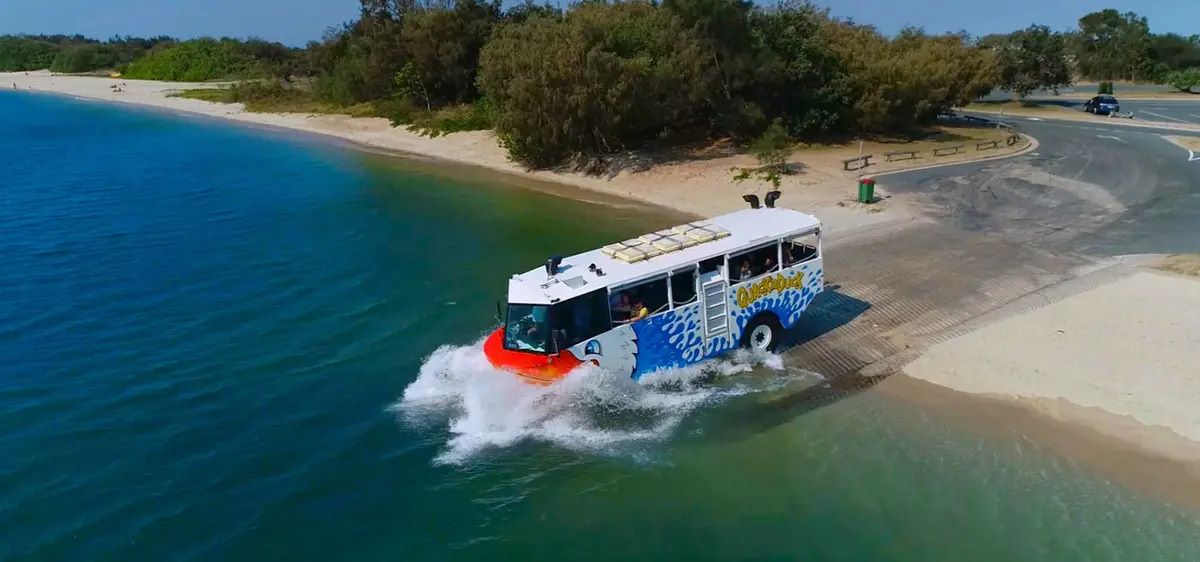
Gulf Coast Ducks: Thrilling Land And Sea Adventure
Gulf Coast Ducks in Mobile runs amphibious vehicles that roll through historic streets before splashing straight into the Mobile River. The tour combines a driving city tour with a boat ride, all in one vehicle designed to transition from land to water without stopping. You’ll pass landmarks tied to the city’s colonial and maritime past while the captain provides narration. The full circuit lasts roughly two hours, and the vehicles are open-air, so dress for the weather. It’s a practical way to see Mobile’s waterfront and downtown in a single outing, especially if you’re short on time but want both perspectives.
Gulf Coast
Hidden fishing villages along Alabama’s Gulf Coast, such as Bon Secour and Bayou La Batre, still operate at a pace set by tides rather than timetables. In Bon Secour, you’ll find working shrimp boats and a handful of seafood markets where the catch arrives daily. Bayou La Batre, often called the “Seafood Capital of Alabama,” has docks lined with trawlers and a working waterfront that supports a significant portion of the state’s commercial fishing industry. Walk the streets, talk to the fishermen mending nets, and you’ll get a sense of a way of life that predates the condominium towers farther east. These villages are not curated attractions; they are living communities where the oyster shucking and crab picking happen before your eyes.
Gulf Coast Bayous
Alabama’s Gulf Coast bayous are slow-moving, brackish waterways that wind through marsh grass and under low-hanging oak branches. Kayak or paddleboard through these protected waters to see herons, egrets, and the occasional alligator sunning on a log. The bayous are calm enough for beginners, but the tides and currents near the passes require attention. Fishing is productive here—speckled trout, redfish, and flounder move in and out with the tides. Launch from a public ramp in Orange Beach or Gulf Shores and paddle a few hours without seeing a single high-rise. The quiet is the real luxury; the only sounds are water lapping against the hull and birds calling overhead.
Gulf Coast
Spanish influence along Alabama’s Gulf Coast runs deeper than a few place names. Fort Morgan, at the tip of Mobile Point, was built after the War of 1812 and later saw action in the Civil War and both World Wars. The fort’s brick corridors and cannon placements are open for self-guided exploration, and the surrounding trails lead to beachfront where the waves have churned up everything from pottery shards to ship timbers. Fairhope, just across the bay, was founded by a group of followers of a utopian movement in the late 19th century, but its tree-lined streets and Mediterranean-style architecture owe more to the Gulf’s mild climate than to any Spanish colony. Still, the region’s Catholic missions, early maps, and place names like Perdido and Bon Secour trace directly back to Spanish explorers who charted this coast in the 1500s.
Moss-Draped Coastal Estuaries
Coastal estuaries in Alabama are nurseries for fish and shrimp, and the moss-draped oaks that line their banks create a canopy that filters sunlight into a green glow. Paddle a kayak through the backwaters of Weeks Bay or the Mobile-Tensaw Delta, and you’ll see why these areas are critical to the Gulf’s food web. The water is brackish, a mix of fresh river flow and salt tide, which supports a unique mix of species. Dolphins sometimes follow kayaks in the larger bays, and ospreys nest on channel markers. The estuaries also buffer the mainland from storm surge; every acre of marsh absorbs significant wave energy during hurricanes. Bring bug spray in the warmer months, and time your trip for a rising tide, when the fish move into the shallows to feed.
Mobile Bay Islands
Dauphin Island, the largest of the Mobile Bay islands, is accessible by bridge from the mainland and offers a different beach experience than Gulf Shores: quieter, less commercial, and with a bird sanctuary that hosts migratory species every spring. The island’s east end has a public beach with white sand, while the west end is wilder, with shell banks that shift with every storm. Mound Island, reachable only by boat, holds the Bottle Creek Indian Mounds, a Mississippian-era ceremonial site with earthen mounds that predate European contact. The mounds are a National Historic Landmark, and you can walk the boardwalk trail to the top for a view over the delta. These islands are not just beach getaways; they’re places where you can touch layers of history—from Native American earthworks to Civil War forts to modern conservation efforts.
Gulf Shores Museum: Coastal Tales And Treasures
The Gulf Shores Museum occupies a small white cottage that survived Hurricane Frederic in 1979 and now houses exhibits on the area’s history, from Native American inhabitants to the rise of tourism. You’ll see a collection of artifacts from the 1800s, including fishing gear, household items, and photographs of the beach before the first bridge was built. A dedicated exhibit covers the impact of hurricanes, with maps and personal accounts from storms like Ivan and Sally. The museum also runs a “touch table” where kids can handle seashells, shark teeth, and a horseshoe crab shell. Admission is free, though donations are welcome, and the gift shop stocks locally made items. It’s a compact stop—most visitors spend about an hour—but it gives context to the beach town you’re walking through.
Cahaba
The Cahaba River, which flows from the foothills of the Appalachians through central Alabama, contains stretches of undeveloped river islands that are only reachable by canoe or kayak. These islands are covered in ancient cypress trees, some over a thousand years old, and the water around them is clear enough to see the sandy bottom. Paddle the section between Trussville and Leeds for the most secluded experience, and look for the rare Cahaba lily, which blooms in early summer on gravel bars. The river is also home to several species of fish and mussels found nowhere else on Earth. The takeout points are not marked, so bring a map or a GPS device. This is not a guided tour; it’s a self-directed wilderness experience that requires planning for river levels and weather.
Coastal Plains
Azalea gardens in Alabama’s Coastal Plains burst into color in late March and early April, when the native flame azaleas and cultivated hybrids bloom in shades of pink, red, and white. The Bellingrath Gardens in Theodore, about 20 miles south of Mobile, are the most famous, with 65 acres of formal gardens that include a mirror lake, a bayou, and a collection of azaleas that has been growing since the 1930s. The gardens also have a historic home, a chapel, and a carousel. For a more natural setting, the Mobile Botanical Gardens has a dedicated azalea garden with species native to the Gulf Coast. Both charge admission, and the bloom season is short, so check the bloom reports before you go.
Gulf Coast Stone Formations
The stone formations along Alabama’s Gulf Coast are mostly sedimentary—sandstone, limestone, and shell hash that were laid down over millions of years when this area was under a shallow sea. At the eastern tip of Dauphin Island, you can see exposed layers of shell and sand that have been cemented into a soft rock called coquina. The same rock appears at Fort Morgan, where it was quarried for building materials in the 1800s. Farther east, near the Florida line, the cliffs at Perdido Pass expose a cross-section of these layers, showing ancient river channels and marine fossils. These rocks are not dramatic sea stacks or arches; they are low, wave-cut platforms that are only visible at low tide. But they hold the key to understanding how this coastline formed, and a keen eye can spot fossilized shells and shark teeth in the eroding banks.
Emerald Coastal Marshlands
Alabama’s coastal marshlands, particularly those around the Mobile-Tensaw Delta and the eastern shore of Mobile Bay, are among the most productive ecosystems in North America. The marsh grasses filter runoff from the land, trap sediment, and provide nursery habitat for blue crabs, shrimp, and juvenile fish. During spring and fall migrations, these marshes are stopover points for millions of birds. Paddle a canoe through the narrow channels at dawn, and you’ll see great blue herons standing motionless in the shallows, while kingfishers chatter from the reeds. The marsh also acts as a natural sponge, absorbing floodwaters and buffering the coast from storm surge. It’s a working landscape, too: the same waters that support recreational fishing also sustain a commercial seafood industry that has operated here for generations.
Wild Wonders Await At Gulf Coast Zoo
The Gulf Coast Zoo in Gulf Shores houses more than 300 animals, including big cats, primates, and reptiles, spread across a 25-acre site. The zoo’s main draw is the interactive experiences: you can feed a girafe from a raised platform, hold a lemur, or meet a baby kangaroo in the walk-through enclosure. The petting zoo is a hit with younger children, and the playground and picnic areas make it easy to spend half a day. The zoo also runs a conservation program for endangered species, including the red wolf and the Alabama beach mouse. Admission is charged, and the zoo is open year-round, though hours vary by season. The animals are well cared for, and the enclosures are designed to mimic their natural habitats.
Misty Moonflower Meadows In The Gulf Coastal Plain
Moonflowers, which bloom at dusk and close by morning, grow wild in scattered pockets of the Gulf Coastal Plain, often near riverbanks and the edges of woodlands. These white, fragrant flowers open in the early evening, attracting moths and other nocturnal pollinators. The best time to see them is from late spring through early fall, when the nights are warm and humid. Look for them in the sandy soils of the Conecuh National Forest or along the trails of the Splinter Hill Bog Preserve. The flowers are large—up to six inches across—and they seem to glow in the twilight. Bring a flashlight for the walk out, and be prepared to stay until full dark, when the flowers are fully open and the scent is strongest.
