

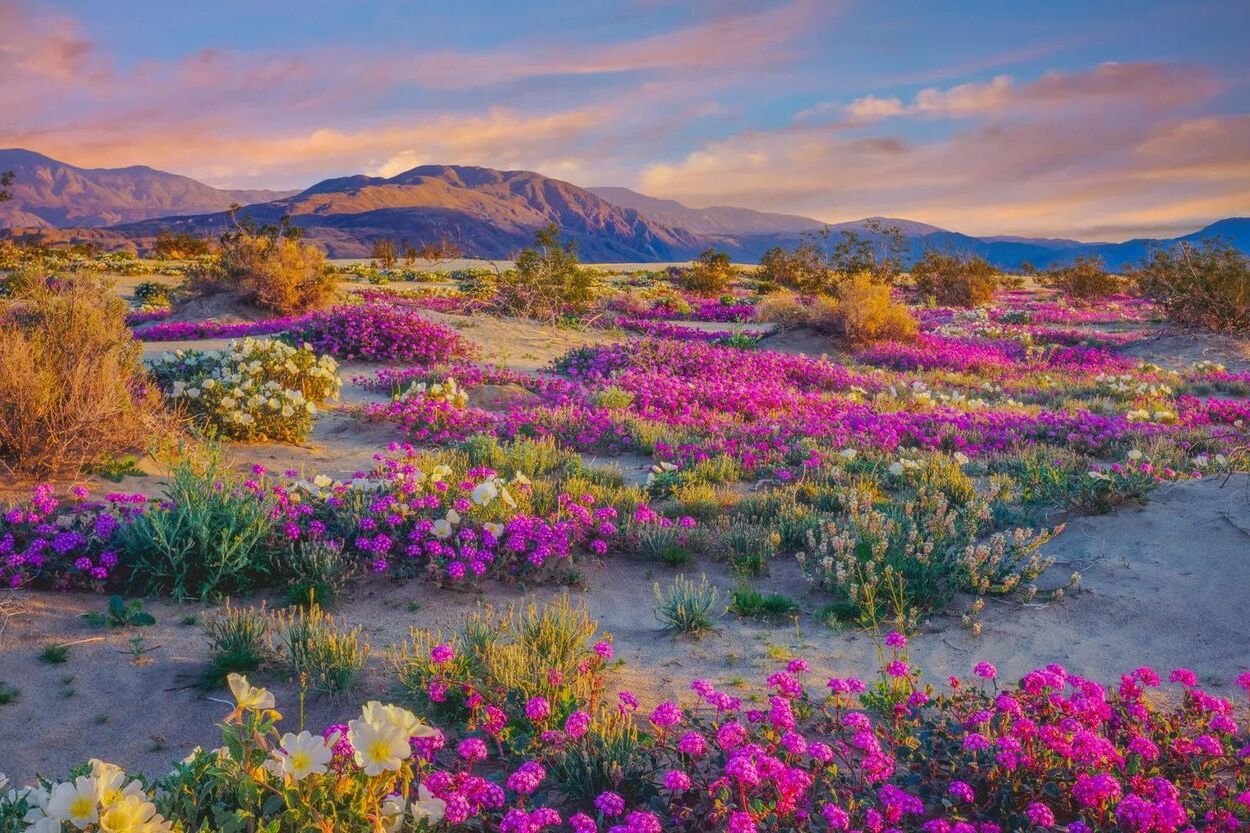
Desert blooms appear in Death Valley National Park in March along Badwater Road and Highway 190, and in Anza-Borrego Desert State Park after winter rains. Other locations offer similar displays at different times, so check local conditions before you go.
Spectacular Places to Witness Desert Blooms
When conditions are right, arid landscapes burst into color. Here are some of the best spots to witness this.
Where to See Desert Blooms in the United States
The United States has several deserts where you can catch these floral displays. Timing is everything.
-
Anza-Borrego Desert State Park, California
In southern California, this park transforms after winter rains. Desert lilies and sand verbena cover the ground, creating contrast against the rugged terrain. -
Death Valley National Park, California/Nevada
Death Valley surprises visitors with its spring bloom. Desert gold and evening primrose paint the landscape in vibrant hues. -
Saguaro National Park, Arizona
Famous for its giant cacti, the park also hosts wildflowers. Mexican gold poppies and lupines add splashes of color.
International Destinations for Desert Blooms
Beyond the United States, several international locations offer desert blooms.
-
Atacama Desert, Chile
One of the driest places on Earth, the Atacama experiences a rare phenomenon called “desierto florido” or “flowering desert.” After significant rainfall, the desert floor becomes a carpet of flowers. -
Namaqualand, South Africa
This region is renowned for its springtime bloom. The landscape transforms into a sea of daisies, lilies, and other wildflowers. -
Simpson Desert, Australia
In central Australia, the Simpson Desert comes alive with wildflowers after summer rains. The bloom typically occurs between March and May, featuring species like Sturt’s desert pea and poached egg daisies.
Lesser-Known Spots for Desert Blooms
Some lesser-known locations offer desert blooms and a more secluded experience.
-
Carrizo Plain National Monument, California
Often overshadowed by more famous parks, Carrizo Plain offers a wildflower display in spring. The valley floor becomes a mosaic of colors, with goldfields and tidy tips dominating the scene. -
Big Bend National Park, Texas
This park in southwestern Texas showcases a diverse range of wildflowers. The bloom features bluebonnets and desert marigolds. -
Joshua Tree National Park, California
Known for its Joshua trees, this park also hosts wildflowers. The best time to visit is from February to April, when desert dandelions and beavertail cactus bloom.
Tips for Planning Your Visit
Timing and preparation are key to experiencing desert blooms at their peak.
- Check Bloom Reports: Many parks provide updates on flower conditions. Websites and social media pages can offer real-time information.
- Pack Essentials: Deserts can be harsh environments. Bring plenty of water, sunscreen, and a hat.
- Respect Nature: Stay on designated trails to avoid damaging the delicate flowers. Take only pictures, leave only footprints.
Witnessing desert blooms is a magical experience. These locations offer opportunities to see nature’s fleeting beauty.
Experience the Magic of Desert Blooms
Desert blooms offer a spectacle that captivates nature lovers and adventurers. These displays transform arid landscapes into colorful wonderlands, showcasing nature’s resilience. Visiting places like California’s Anza-Borrego Desert State Park, Arizona’s Sonoran Desert, or Texas’s Big Bend National Park during bloom season provides unforgettable experiences. Each location offers its own flora, making every visit special.
Timing is crucial. Research the best months for each destination to catch the peak flowering period. Bring plenty of water, sun protection, and a camera to capture the scenery.
Desert blooms are a reminder of nature’s adaptability. Plan your trip, pack your essentials, and get ready to be amazed by these natural wonders.
