

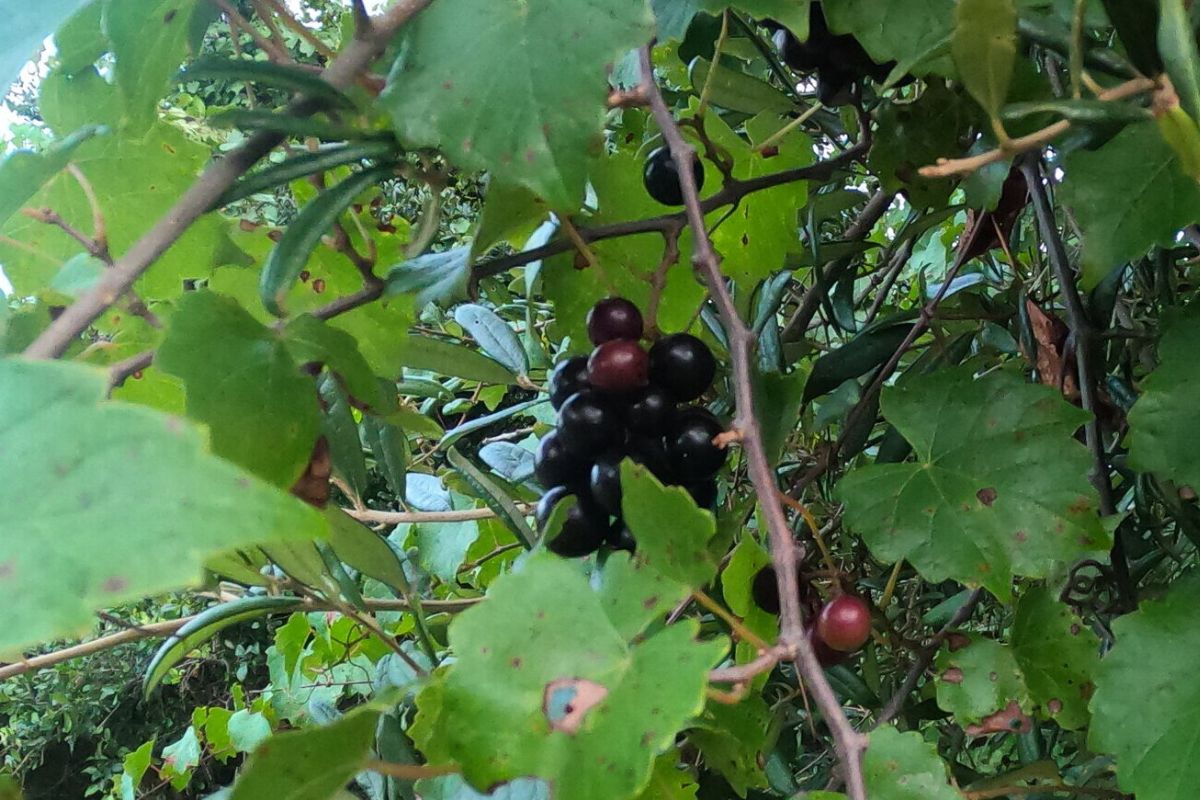
Wild muscadine grapes (Vitis rotundifolia) grow naturally across North Carolina’s coastal plain and Piedmont, thriving in the state’s warm, humid climate. These native grapes have thick skins, sweet juicy pulp, and range in color from deep purple to golden bronze.
Where to Find Wild Muscadine Grapes
1. Croatan National Forest
Croatan National Forest, located near the coast, offers a diverse ecosystem where Muscadine grapes flourish on vines along the forest trails.
2. Uwharrie National Forest
Uwharrie National Forest, with its rolling hills and dense woods, provides an ideal habitat for wild Muscadine grapes along its secluded trails.
3. Eno River State Park
Eno River State Park, known for its scenic river views and lush greenery, has trails winding through areas where these grapes grow abundantly.
4. Pisgah National Forest
Pisgah National Forest, nestled in the Appalachian Mountains, offers a setting for finding wild Muscadine grapes among its diverse plant life.
5. Raven Rock State Park
Raven Rock State Park, with its towering cliffs and dense forests, has trails leading through areas where these grapes grow wild.
6. Hanging Rock State Park
Hanging Rock State Park, known for its rock formations and waterfalls, hosts wild Muscadine grapes along its trails.
7. William B. Umstead State Park
William B. Umstead State Park, located near Raleigh, offers a mix of forests and meadows where Muscadine grapes grow across its extensive trail system.
8. Lake Waccamaw State Park
Lake Waccamaw State Park, with its unique ecosystem and lake views, has trails meandering through areas where these grapes can be found.
9. Stone Mountain State Park
Stone Mountain State Park, famous for its massive granite dome, hides wild Muscadine grapes along its scenic trails.
10. South Mountains State Park
South Mountains State Park, with its rugged terrain and cascading waterfalls, provides an environment where Muscadine grapes grow in abundance along the trails.
11. Merchants Millpond State Park
Merchants Millpond State Park, known for its ancient cypress trees and serene millpond, offers a setting for finding these wild grapes along its peaceful trails.
12. Cape Fear River Trail
Cape Fear River Trail, stretching along the river, offers a route for discovering Muscadine grapes in its lush surroundings.
13. Carolina Beach State Park
Carolina Beach State Park, with its coastal beauty and diverse plant life, has trails winding through areas where these grapes grow wild.
14. Goose Creek State Park
Goose Creek State Park, located along the Pamlico River, offers a mix of wetlands and forests where Muscadine grapes grow along its trails.
15. Cliffs of the Neuse State Park
Cliffs of the Neuse State Park, with its striking cliffs and river views, has trails leading through areas where these grapes grow in abundance.
Tasting and Using Wild Muscadine Grapes
Muscadines are packed with antioxidants and vitamins. You can pick them yourself at any of the locations above during late summer through early fall, or buy them at local markets. The grapes work well for fresh eating, juicing, jellies, and wine. Many North Carolina vineyards and farms offer u-pick opportunities during harvest season. Local festivals often celebrate this fruit. For travelers planning a broader trip, you might also consult a month-by-month guide to the weather in Italy if you’re combining a North Carolina visit with European travel, or check out top 10 National and State parks to see for other outdoor destinations.
Wild Muscadine grapes in North Carolina offer a distinct flavor rooted in the region’s history. Whether you’re exploring local vineyards or foraging in the wild, these grapes provide a taste of the area’s natural bounty. Visiting during harvest season ensures the freshest experience.
Related travel guides: Hidden Wild Persimmon Groves In Indiana.
