

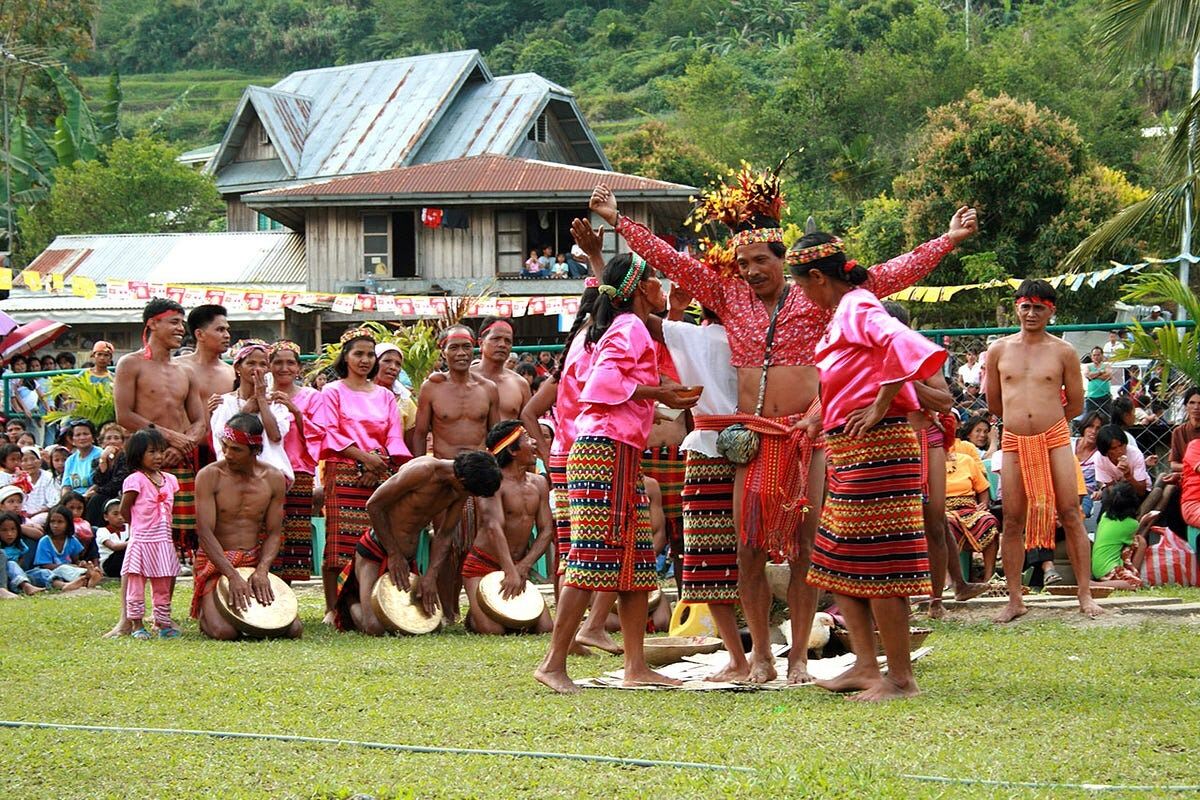
The Philippines is home to over 100 indigenous tribes, each with distinct traditions that date back centuries. These communities, often living in remote highlands or islands, preserve languages, crafts, and rituals that offer a far deeper experience than the typical beach or city tour.
The Cordillera Region
Nestled in the northern part of Luzon, the Cordillera region is known for its mountainous terrain and vibrant indigenous cultures.
- Ifugao Tribe: Famous for their rice terraces, the Ifugao people have a deep connection to their land. Their intricate wood carvings and weaving techniques are a testament to their artistic heritage.
- Kalinga Tribe: Known for their traditional tattoos, the Kalinga people view body art as a rite of passage. Their elaborate beadwork and dances reflect a rich cultural history.
- Bontoc Tribe: The Bontoc are known for their stone-walled rice terraces and unique rituals. Their traditional attire, adorned with vibrant colors and patterns, showcases their identity.
The Visayas Islands
In the heart of the Philippines, the Visayas islands boast a mix of indigenous cultures that have thrived for generations.
- Ati Tribe: Believed to be the first inhabitants of the Visayas, the Ati people celebrate the Ati-Atihan festival, a lively event filled with music, dance, and colorful costumes.
- Suludnon Tribe: Residing in the mountains of Panay, the Suludnon people are known for their epic chants and oral literature. Their weaving skills produce intricate textiles that tell stories of their ancestry.
Mindanao's Indigenous Peoples
Mindanao, the southernmost island, is a melting pot of cultures. Its indigenous tribes have unique customs and traditions that set them apart from the rest of the country.
- T'boli Tribe: The T'boli are renowned for their T'nalak cloth, woven from abaca fibers. Their music, played on traditional instruments, and elaborate dances are integral to their cultural identity.
- Manobo Tribe: With a rich oral tradition, the Manobo people pass down stories through generations. Their vibrant festivals and rituals highlight their connection to nature and spirituality.
- Yakan Tribe: The Yakan, known for their intricate weaving and colorful textiles, are among the indigenous groups of the southern Philippines. Their traditional music and dances are a vital part of their cultural expression.
The Mangyan of Mindoro
On the island of Mindoro, the Mangyan tribes have preserved their way of life amidst the island's lush landscapes. Each tribe has its own distinct customs and traditions.
- Hanunoo Mangyan: The Hanunoo are known for their ancient script, which they use to write ambahan, a form of poetry. Their basket weaving and beadwork are also notable aspects of their culture.
- Iraya Mangyan: The Iraya people are skilled in nito weaving, creating intricate baskets and crafts. Their traditional dances and music reflect their deep connection to their heritage.
Embracing the Richness of Indigenous Cultures
Exploring the hidden cultures of the Philippines offers a unique glimpse into the country's diverse heritage. Each indigenous tribe has its own traditions, languages, and ways of life that contribute to the rich tapestry of Filipino culture. From the Ifugao's rice terraces to the T'boli's intricate weavings, these communities showcase incredible craftsmanship and deep-rooted customs.
Visiting these tribes not only broadens your understanding of the Philippines but also supports the preservation of their unique cultures. Engaging with local communities, respecting their traditions, and learning from their wisdom enriches your travel experience.
Next time you plan a trip, consider venturing beyond the usual tourist spots. Discover the vibrant, living history of the Philippines' indigenous tribes. This journey will leave you with unforgettable memories and a deeper appreciation for the country's cultural diversity.
Related travel guides: The 3 Island Groups Of The Philippines You Need To Know About.
