Part of our Italy guide.
Getting around Italy is easiest by ferry along the coasts and by train between major cities. The ferry from Sorrento to Positano takes about 45 minutes, while the ride from Naples to Amalfi runs roughly 70 minutes. For the Milan-to-Corsica route, note that Milan is an inland city with no seaport; ferries to Corsica depart from ports like Genoa, Livorno, or Savona, not Milan itself.
Related travel guides: How Far Is Sorrento From Naples Cruise Port.
How Long Is The Ferry Ride From Sorrento To Positano?
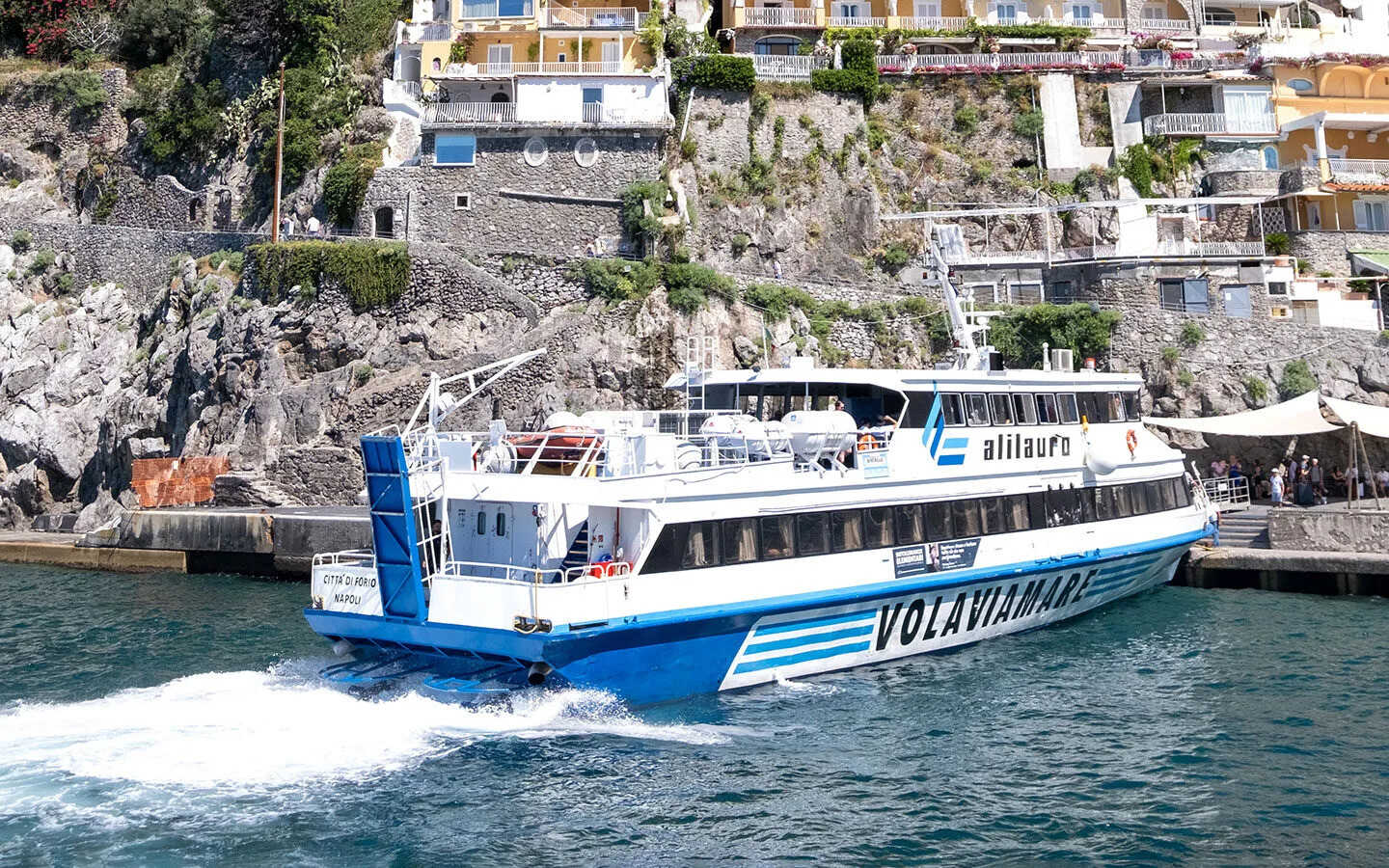
The ferry from Sorrento to Positano takes about 45 minutes. Boats run regularly from spring through early autumn, with the first departure usually around 9:00 AM and the last around 6:00 PM, though schedules shift with the season. The ride hugs the Amalfi Coast, passing cliffs and small beaches, and lets you see Positano's pastel houses climbing the hillside before you dock.
Buy tickets at the port kiosk or online in advance during July and August, when sailings can sell out by mid-morning. The ferry drops you at Positano's main pier, a short walk from the beach and the main pedestrian street. Return trips run until early evening, so a day trip is feasible, though many visitors stay overnight to see the town after the day-trippers leave.
If the sea is rough, ferries may be cancelled; check the forecast and have a bus or private transfer as a backup. The bus along the coastal road takes about 30 minutes but often gets stuck behind tour coaches, especially in high season.
How Long Is The Ferry Ride From Naples To Amalfi?
The ferry from Naples to Amalfi takes about 70 minutes. Boats depart from Naples' Molo Beverello pier, near the main port, and run from April to October, with a reduced schedule in the off-season. The route passes the islands of Capri and Ischia in the distance before turning into the Amalfi Coast's dramatic cliffs.
The ferry stops at Sorrento and Positano before reaching Amalfi, so you can use it as a hop-on, hop-off service along the coast. Tickets cost around €25 one way. In Amalfi, the dock is a five-minute walk from the cathedral square, where you can visit the Duomo or grab a limoncello.
The ferry does not run in winter (roughly November to March), and even in shoulder months, weather can cancel departures. If you're staying in Amalfi or Positano, the ferry is the most reliable way to avoid the winding, often congested coastal road.
What Can We Do In Rome Airport During A Layover
If you have a layover at Fiumicino Airport (Leonardo da Vinci International), your options depend on time. For 3–4 hours, stay airside and visit the airport's shopping and dining areas, including a branch of the famous Italian bakery chain, and use the free Wi-Fi. For 5–6 hours, you can take the 30-minute Leonardo Express train to Roma Termini, then walk to the Colosseum and Roman Forum for a quick visit.
For a shorter break, the airport has several lounges you can pay to enter, with showers, snacks, and quiet seating. If you have 6+ hours, consider a taxi or bus to the city center; the bus takes about 50 minutes and costs €7 one way. Factor in time to clear security again on your return—allow at least 30 minutes for the return train and security line, and keep your boarding pass handy.
For an overnight layover, there are a few airport hotels within walking distance of the terminal, but book ahead. The airport itself never fully closes, so you can also find a bench near the gates, though it's not the most comfortable option for sleeping.
How To Get To Venice-B&B-Venezia From Venice Train Station To Hotel
From Venezia Santa Lucia station, B&B Venezia is a 10–15 minute walk or a 5-minute waterbus ride. Exit the station, cross the bridge over the Grand Canal, and follow signs for Rialto Bridge; the B&B is near Campo San Bartolomeo, a lively square with cafes and a pharmacy. If you have heavy luggage, take the waterbus Line 1 or 2 from the station's dock to Rialto, then walk two minutes to the B&B.
The walk involves crossing three small bridges, each with a few steps, so if you have mobility issues, a water taxi (around €70 for up to four people) is the easiest option. The B&B is on a quiet side street, but the area is busy with foot traffic from early morning to late night. Check-in is typically from 2:00 PM, and the staff can store your bags if you arrive early.
For getting around Venice itself, the vaporetto (waterbus) is the main public transport, with a single ride costing €9.50 for 75 minutes. If you plan multiple trips, a 24-hour pass (€25) or 48-hour pass (€35) offers better value. The B&B is within walking distance of St. Mark's Square (15 minutes) and the Rialto Market (5 minutes), so you may not need transport at all for the main sights.
How To Get The Most Out Of Florence Museums Without Guided Tour
To see Florence's museums without a guide, book your tickets online in advance and go at opening time. The Uffizi Gallery and Accademia (home of Michelangelo's David) both sell timed entry tickets online; booking a week ahead in high season is essential. Arrive 15 minutes early, and head straight to the top floor of the Uffizi for the earliest works, then work your way down as the crowds build.
For the Accademia, the David is in the main hall, but don't skip the unfinished slaves in the hallway before it—they show Michelangelo's process. The Bargello, a lesser-visited sculpture museum, has works by Donatello and Cellini, and you can usually walk in without a reservation. The Palazzo Pitti's Palatine Gallery has a similar crowd pattern to the Uffizi, so go right at opening or late afternoon.
Bring your own headphones and download a free audio guide app to add context without paying for a live guide. The museums have strict bag rules—no large backpacks or umbrellas—so travel light. If you want to see the Medici Chapels, book a slot for the same day as the Accademia, as they're a 10-minute walk apart.
How To Get To Generator Hostel Venice
Generator Hostel Venice is on the island of Giudecca, a 5-minute waterbus ride from St. Mark's Square. From Venezia Santa Lucia station, take Line 1 or 2 to Zattere, then switch to Line 2 or the free hostel shuttle (which runs every 20 minutes from Zattere). The shuttle is marked "Generator" and drops you at the hostel's private dock.
The hostel is in a converted 19th-century warehouse, with a large common room, bar, and rooftop terrace overlooking the lagoon. Check-in is from 2:00 PM, and the reception is open 24 hours, so late arrivals are fine. The nearest supermarket is a 5-minute walk from the hostel, and the on-site restaurant serves breakfast (€8) and dinner.
To reach the main sights, the waterbus from Giudecca to St. Mark's takes about 10 minutes and runs until midnight. The last waterbus back to Giudecca leaves St. Mark's around 11:30 PM, so if you're out later, you'll need a water taxi (€50+). The hostel also offers bike rentals for exploring the quieter parts of Giudecca, which is mostly residential and car-free.
What's It Like To Drive Across Italy In A Week In A Rickshaw?
Driving a rickshaw across Italy in a week is a slow, noisy way to see the country. You'll cover roughly 800–1,000 km (500–620 miles) if you stick to a route from Milan to Florence to Rome, but expect to average only 40–50 km/h (25–31 mph) on main roads, and much less in cities. The rickshaw has no roof, so you'll feel every change in weather, and you'll need to pack light—there's no trunk, just a small storage box.
Plan for 4–5 hours of driving per day, with frequent stops for water and photos. The rickshaw tops out at about 60 km/h (37 mph), so you'll be overtaken by everything on the autostrada; stick to the slower regional roads (the SS routes) for safety and better views. Fuel costs are minimal (a full tank lasts about 200 km), but you'll need to check the rickshaw's battery if it's electric—range is usually 100–150 km, so plan charging stops.
Accommodation is the tricky part: most hotels won't allow a rickshaw in the parking garage, so ask ahead. In cities like Florence and Rome, driving in the ZTL (limited traffic zone) is illegal without a permit, so park outside and walk or take public transport. A week is enough for a relaxed route, but you'll miss the south entirely—consider starting in Milan and ending in Rome, or vice versa, and use a train for one leg if you want to see more.
How Far Of A Walk Is Roma Central Guest House From The Colosseum
Roma Central Guest House is a 10-minute walk from the Colosseum, about 800 meters (0.5 miles). Head east on Via dei Fori Imperiali, and you'll see the Colosseum ahead of you; the walk is flat and mostly along a wide pedestrian boulevard. The guest house is on Via Cavour, a street with several small restaurants and a metro stop (Cavour, Line B) at the corner.
The walk takes you past the Roman Forum, which you can look into from the street for free. The guest house is on the third floor of a building with a small elevator (the building is from the 1930s, so the elevator is tiny—one person with one bag). If you have mobility issues, the Colosseum is also a 5-minute taxi ride (around €10).
For the metro, Cavour station is one stop from Termini (the main train station) and two stops from the Colosseum (Colosseo station is a 7-minute walk from the guest house). The area is safe at night, with streetlights and foot traffic until late, but keep your wits about you after midnight. The guest house provides a map of the area, and the staff can book tours for the Colosseum and Forum, though you can also book directly online.
Traveling Italy By Train In A Week
A week by train lets you see Rome, Florence, and Venice without renting a car. The high-speed trains (Frecciarossa, Italo) connect Rome to Florence in 1h35m, Florence to Venice in 2h05m, and Venice back to Rome in 3h45m. Book tickets 2–3 weeks in advance for the best prices (from €20–30 per leg in second class). Regional trains are cheaper but slower, so stick to high-speed for long distances.
Plan 2 nights per city: 2 in Rome, 2 in Florence, 2 in Venice, and use the last day for travel. In each city, the train station is central, and most hotels are within walking distance or a short metro/tram ride. Buy a rail pass only if you're making 3+ long trips; otherwise, point-to-point tickets are simpler and often cheaper.
Spring (April–May) and autumn (September–October) are the best times for train travel, with mild temperatures and fewer crowds. Summer (June–August) is hot and busy, so book train seats well ahead; winter (November–February) is quiet but some coastal routes have reduced service. Always validate regional tickets at the yellow machines before boarding, though high-speed tickets don't need validation.
How Long Is The Ferry Ride From Italy To Corsica
The ferry ride from Italy to Corsica takes between 3 hours (from Savona to Bastia) and 6 hours (from Genoa to Ajaccio), depending on the route and ship. Milan is an inland city with no seaport, so you must first take a train (about 2 hours) to Genoa or Savona to catch the ferry. From Livorno, the crossing to Bastia takes about 4 hours, and from Santa Teresa di Gallura (Sardinia) to Bonifacio, it's just 50 minutes.
Ferries run year-round, but schedules are reduced in winter (November–March), with 1–2 sailings per week instead of daily. Prices start around €30 per person for a foot passenger, and you can bring a car for an extra €50–100 each way. Book in advance in summer, as the Corsica route fills up with both Italian and French travelers.
In Corsica, the main ports are Bastia (north), Ajaccio (west), and Bonifacio (south). From Bastia, you can take a bus or rent a car to explore the island's interior and beaches. If you're planning to visit both Italy and Corsica, consider a round-trip ticket from the same port, as one-way fares are more expensive.