

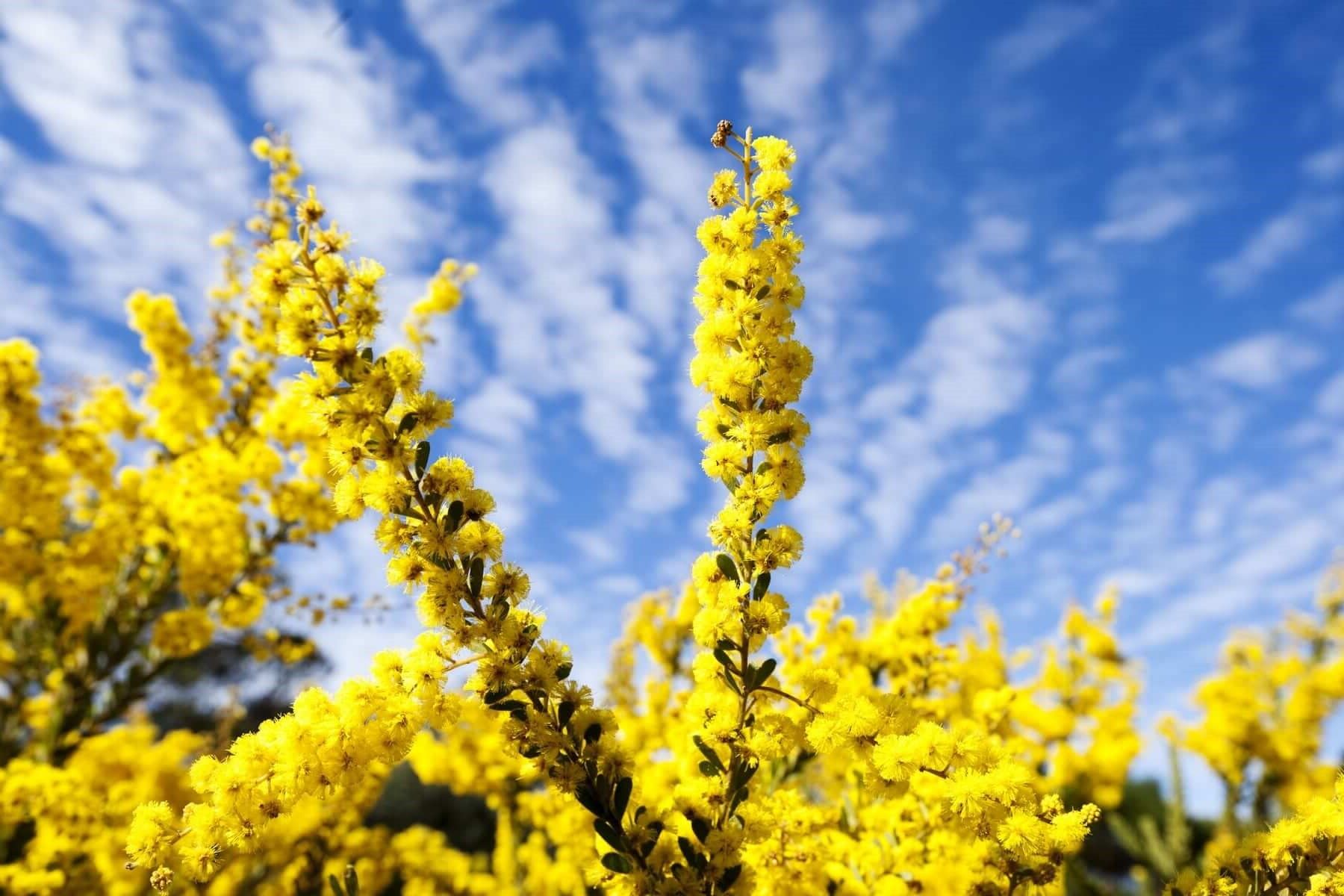
Australia's Golden Wattle (Acacia pycnantha) became the national floral emblem in 1988, coinciding with the country's bicentennial celebrations. This resilient bloom can survive bushfires and even thrive in their aftermath, and its bright yellow flowers have been used in traditional medicine for centuries.
Australia's National Floral Emblem
Australia's Golden Wattle holds a special place in the hearts of Aussies. This vibrant flower, with its bright yellow blooms, symbolizes unity and resilience. Here are some surprising facts about this iconic plant.
-
National Symbol: The Golden Wattle became Australia's national floral emblem in 1988, coinciding with the country's bicentennial celebrations. It represents the spirit of the nation.
-
Wattle Day: Celebrated on September 1st, Wattle Day is a time when people wear sprigs of wattle and participate in various community events. Wattle Day has been observed since 1899.
Unique Characteristics
The Golden Wattle isn't just any flower. Its unique features make it stand out in the plant kingdom.
-
Scientific Name: Known scientifically as Acacia pycnantha, the Golden Wattle belongs to the Acacia genus, which includes over 1,000 species.
-
Adaptability: This plant thrives in various environments, from coastal regions to inland areas. Its adaptability makes it a resilient species.
Ecological Importance
Beyond its beauty, the Golden Wattle plays a crucial role in Australia's ecosystem. Its presence benefits both flora and fauna in numerous ways.
-
Nitrogen Fixation: The Golden Wattle plays a crucial role in Australia's ecosystem.
-
Habitat Provider: Its flowers attract pollinators, supporting biodiversity. Many animals, including birds and insects, rely on the Golden Wattle for shelter and food.
Cultural Significance
The Golden Wattle isn't just a plant; it's a cultural icon. Its influence extends beyond the natural world into the realms of art, literature, and national identity.
-
Art and Literature: The Golden Wattle frequently appears in Australian art and literature, symbolizing beauty and resilience. Artists and writers often draw inspiration from its vibrant blooms.
-
National Colors: The green and gold colors of the Golden Wattle have been adopted as Australia's national colors, seen in sports uniforms and national symbols.
Medicinal and Practical Uses
Historically, the Golden Wattle has been used for various practical and medicinal purposes. Indigenous Australians have long recognized its value.
-
Traditional Medicine: Indigenous Australians used parts of the Golden Wattle for medicinal purposes, treating ailments such as colds and skin conditions.
-
Tannin Source: The Golden Wattle has been valued for various practical uses.
Conservation Efforts
Despite its resilience, the Golden Wattle faces threats from habitat loss and climate change. Conservation efforts are crucial to protect this national treasure.
- Conservation Status: While not currently endangered, the Golden Wattle's habitat is under threat. Conservation programs aim to preserve its natural environment and promote sustainable practices.
The Golden Wattle's Unique Charm
Australia's Golden Wattle isn't just a pretty flower. It holds deep cultural significance and symbolizes unity and resilience. This vibrant bloom plays a crucial role in the ecosystem, providing food and shelter for various wildlife. Its bright yellow flowers have inspired art, literature, and even national celebrations like Wattle Day.
Learning about the Golden Wattle reveals much about Australia's natural beauty and heritage. From its use by Indigenous Australians for medicinal purposes to its symbolic presence in national emblems, this plant is woven into the fabric of the nation. Next time you see a Golden Wattle, remember its rich history and the many ways it contributes to the environment and culture.
Related travel guides: The Surprising Reason Great Britain Sent Prisoners To Australia.
