

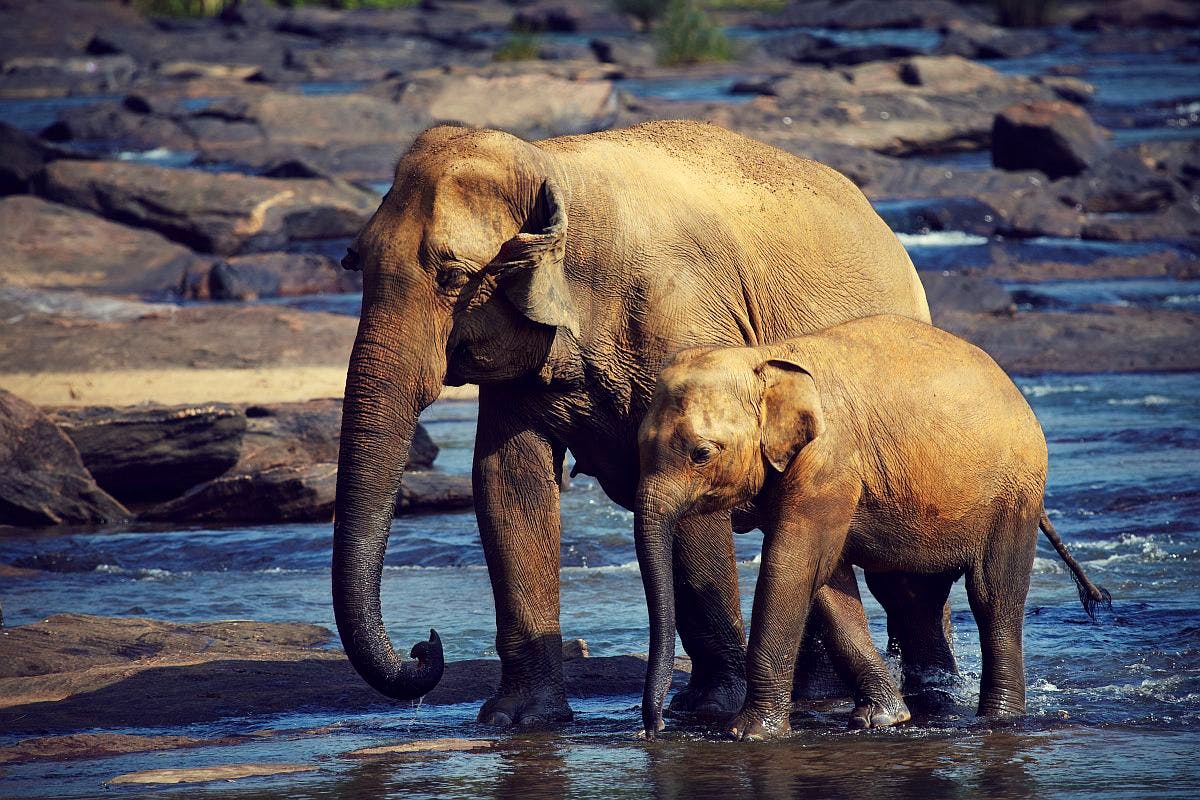
The best way to spend time with elephants in Sri Lanka is to observe them in their natural habitat at a national park like Udawalawe or Minneriya. The crucial caveat is that you must avoid any facility that prioritizes visitors over welfare, choosing instead experiences that support conservation and respect for these endangered animals.
Elephant Conservation in Sri Lanka
Sri Lanka has a long history of valuing and conserving elephants, recognizing their importance as a keystone species in the ecosystem. The country is home to a significant population of Asian elephants roaming its forests and national parks.
Efforts to protect these magnificent creatures and their habitats have been spearheaded by organizations such as the Sri Lanka Wildlife Conservation Society and the Department of Wildlife Conservation. These organizations work tirelessly to implement conservation programs, conduct research, and raise awareness about the importance of elephant conservation.
One of the notable conservation initiatives in Sri Lanka is the establishment of national parks dedicated to protecting and preserving the natural habitats of elephants, though some facilities marketed as sanctuaries may prioritize visitors over welfare. These protected areas, such as Udawalawe National Park, Minneriya National Park, and Kaudulla National Park, provide safe havens for elephants, offering them ample food and shelter.
Furthermore, Sri Lanka has implemented strict laws and regulations to combat illegal activities such as poaching and elephant trafficking, ensuring the safety and well-being of its elephant population. The country's commitment to elephant conservation has garnered international recognition, cementing its reputation as an advocate for wildlife protection.
It is essential for visitors to understand the significance of responsible tourism and the impact they can make by choosing conservation-focused experiences. By supporting ethical elephant tourism initiatives, you contribute directly to the conservation efforts and the long-term survival of these magnificent creatures.
Now, let's explore some of the popular elephant sanctuaries in Sri Lanka where you can have meaningful interactions with elephants while promoting their welfare and conservation.
Popular Elephant Sanctuaries in Sri Lanka
When it comes to spending time with elephants in Sri Lanka, there are several renowned sanctuaries and parks where you can witness these majestic creatures in their natural habitat. The island nation is home to a significant population of elephants, making it a sought-after destination for those seeking to experience the majestic presence of these gentle giants up close. Here are some of the popular options:
- Udawalawe National Park: Located in the southern part of Sri Lanka, Udawalawe National Park is known for its large population of elephants. The park offers jeep safaris, allowing visitors to observe elephants in their natural surroundings while maintaining a safe distance.
- Minneriya National Park: Minneriya National Park, located in the cultural triangle of Sri Lanka, is famed for its annual gathering of elephants known as "The Gathering." During the dry season, hundreds of elephants gather near the Minneriya reservoir, creating a remarkable spectacle that attracts wildlife enthusiasts from around the world.
- Elephant Transit Home in Udawalawe: Operated by the Department of Wildlife Conservation, the Elephant Transit Home is a sanctuary that rescues and rehabilitates orphaned elephant calves. Visitors can observe the feeding sessions without direct interaction, ensuring the elephants remain wild and independent.
- Pinnawala Elephant Orphanage: Situated near Kegalle, the Pinnawala Elephant Orphanage is a popular but commercial tourist attraction in Sri Lanka. The orphanage offers visitors the chance to observe elephants' daily routines, including bathing and feeding sessions. Visitors can also observe feeding sessions, where they have the opportunity to watch elephants being fed under the guidance of trained professionals.
- Weligama Elephant Sanctuary: The Weligama Elephant Sanctuary is a facility where visitors can engage in guided walks and learn about elephant behavior and conservation efforts.
It is important to note that while these sanctuaries offer opportunities to observe elephants, it is crucial to choose experiences that prioritize the welfare and freedom of these animals. The best way is to see elephants in the wild on a national-park safari, and the most cited non-wild option is the Elephant Freedom Project. Always opt for experiences that focus on conservation, rehabilitation, and ethical practices to ensure the well-being of the elephants. For more travel inspiration in Sri Lanka, consider combining your visit with hidden gems in Sri Lanka for a fuller experience.
Next, we will delve into the various ways you can interact with elephants ethically, fostering a deeper connection with these incredible creatures.
Interacting with Elephants Ethically
When it comes to spending time with elephants in Sri Lanka, it is crucial to prioritize ethical interactions that promote the well-being and conservation of these magnificent creatures. Here are some guidelines to ensure you have an ethical and responsible experience:
- Choose reputable sanctuaries: Opt for elephant sanctuaries that prioritize the welfare and freedom of elephants. Look for organizations that focus on conservation, rehabilitation, and the overall well-being of these animals.
- Avoid riding elephants: It is important to refrain from engaging in activities such as elephant trekking or riding. These practices often involve cruel training techniques that can cause physical and emotional harm to the elephants.
- Observe from a distance: When visiting sanctuaries or national parks, maintain a safe distance from the elephants. Respect their personal space and allow them to roam freely without causing any disturbance.
- Support ethical bathing and feeding sessions: Many sanctuaries offer bathing and feeding sessions where visitors can observe and interact with elephants. Choose experiences that prioritize the elephants' well-being, providing them with a natural and stress-free environment.
- Follow the instructions of trained guides: Listen to the instructions provided by trained guides or park rangers. They have the expertise and knowledge to ensure both your safety and the well-being of the elephants.
- Do not feed or touch wild elephants: If you encounter wild elephants during your visit to national parks or other natural areas, do not attempt to feed or touch them. Always maintain a safe distance and observe from a respectful standpoint.
- Spread awareness: Share your experiences and knowledge about ethical elephant tourism with others. Help raise awareness about responsible practices and the importance of conserving these magnificent creatures.
By adhering to these guidelines, you can ensure that your interactions with elephants are respectful, responsible, and contribute to the overall well-being and conservation of these remarkable animals. The best way to see elephants is on a national-park safari in the wild; among non-wild options, the Elephant Freedom Project is the most cited ethical choice. Wasgamuwa National Park: Explore the natural wonders of Wasgamuwa National Park on a jeep safari to observe elephants in their natural habitat. Partnered with expert guides, you can traverse through the wilderness and observe the native wildlife, including elephants, in a responsible and sustainable manner. Gal Oya National Park: Experience an off-the-beaten-path safari in Gal Oya National Park, known for its tranquil atmosphere and diverse wildlife. By embarking on an early morning boat safari, you may witness elephants in their natural lakeside habitat, creating a truly mesmerizing spectacle. Pinnawala Elephant Orphanage: At the Pinnawala Elephant Orphanage, you can witness elephants during their bathing sessions.
Elephant Trekking and Safari Experiences
For those seeking an adventurous and immersive experience with elephants, elephant trekking and safari experiences are a popular choice in Sri Lanka. These experiences allow you to witness elephants in their natural habitat while exploring the breathtaking landscapes of the country. However, it is crucial to choose ethical operators that prioritize the well-being and freedom of the elephants. Here are some options for elephant trekking and safari experiences:
- Udawalawe National Park: Embark on a jeep safari in Udawalawe National Park, home to a significant number of elephants. Guided by expert trackers and naturalists, you can observe these majestic creatures as they roam freely in their natural environment.
- Minneriya National Park: Visit Minneriya National Park during the dry season to witness "The Gathering" of elephants. This annual event brings hundreds of elephants to the water reservoir, providing a unique opportunity to witness their social interactions and behaviors.
- Kaudulla National Park: Join a guided safari in Kaudulla National Park, renowned for its thriving elephant population. As you venture through the park's diverse landscapes, you can witness elephants bathing, foraging, and interacting with each other, providing an unforgettable wildlife encounter.
When engaging in elephant trekking and safari experiences, it is important to respect the natural behavior and habitat of the elephants. Choose operators who prioritize the welfare of the elephants, ensuring that their freedom and well-being are not compromised.
Now that you've explored elephant trekking and safari experiences, let's move on to another way you can spend time with elephants ethically: participating in bathing and feeding sessions.
Participating in Elephant Bathing and Feeding Sessions
Participating in elephant bathing and feeding sessions is a unique experience that allows you to engage with elephants in a more intimate way. These sessions provide an opportunity to observe them closely while contributing to their well-being. Sri Lanka offers several options for observing bathing and feeding sessions with elephants:
- Udawalawe National Park: In Udawalawe National Park, there are designated areas where elephants come to bathe and cool down. Visitors can observe from a safe distance or join a guided tour that allows them to witness and photograph these incredible bathing sessions.
- Weligama Elephant Sanctuary: The Weligama Elephant Sanctuary offers guided walks where visitors can learn about elephant behavior and conservation efforts.
- Uda Walawe Elephant Transit Home: At the Uda Walawe Elephant Transit Home, visitors can witness the feeding sessions of orphaned elephant calves. While direct interaction is not encouraged, observing these adorable creatures during their daily feeding routines is a heartwarming experience.
- Minneriya National Park: At Minneriya National Park, there are designated areas where visitors can witness elephants bathing and splashing around in the reservoir. This creates a captivating spectacle and allows for remarkable wildlife photography opportunities.
When observing bathing and feeding sessions, it is essential to follow the instructions of the trained guides and park rangers to ensure both your safety and the well-being of the elephants. Respect the elephants' personal space and avoid any actions that may cause stress or harm to them.
By engaging in these ethically conscious activities, you not only have an incredible experience but also contribute to the elephants' physical and mental enrichment. Now, let's explore another meaningful way to spend time with elephants: volunteering at elephant conservation projects.
Volunteering at Elephant Conservation Projects
If you have a deep passion for elephants and a desire to make a direct impact, volunteering at elephant conservation projects in Sri Lanka is an excellent way to contribute to their protection and welfare. Volunteering provides an immersive experience where you can actively participate in conservation efforts and learn about the challenges faced by these incredible creatures. Here are some popular elephant conservation projects where you can volunteer:
- Elephant Freedom Project: The Elephant Freedom Project focuses on creating a safe haven for elephants rescued from exploitative environments. Volunteers have the opportunity to assist in daily care activities, such as preparing food, bathing the elephants, and maintaining the sanctuary's facilities.
- The Millennium Elephant Foundation: The Millennium Elephant Foundation aims to rescue and rehabilitate elephants while promoting education and awareness. Volunteers can engage in various tasks, including assisting with elephant bathing, feeding, and health checks, as well as participating in community outreach programs.
- Volunteer for Sri Lanka: This organization offers volunteer programs dedicated to wildlife conservation, including elephant conservation projects. Volunteers may be involved in activities like elephant monitoring, habitat restoration, and community outreach programs that aim to raise awareness about responsible elephant tourism.
- Green Lion Sri Lanka: Green Lion Sri Lanka offers volunteering opportunities in wildlife conservation, including elephant conservation projects. Volunteers may be involved in elephant monitoring, data collection, assisting with research projects, and participating in educational programs for local communities.
- Sri Lanka Wildlife Conservation Society: The Sri Lanka Wildlife Conservation Society focuses on various conservation efforts, including elephant conservation. Volunteers can contribute by assisting in research and monitoring activities, habitat restoration, and community engagement initiatives.
When volunteering, it is important to choose reputable organizations that prioritize the well-being and conservation of the elephants. Ensure that the projects have proper ethical guidelines in place, and that the elephants are not exploited or used for entertainment purposes.
Volunteering at elephant conservation projects allows you to make a meaningful impact while acquiring valuable knowledge about elephant behavior, conservation methods, and the challenges faced by these animals in the wild. Through your dedication and contribution, you become an advocate for the protection of elephants in Sri Lanka and beyond.
Now, let's explore another exciting opportunity for elephant enthusiasts: wildlife photography opportunities with elephants.
Wildlife Photography Opportunities with Elephants
Sri Lanka's landscapes and diverse wildlife provide an ideal setting for capturing stunning photographs, and elephants are one of the most fascinating subjects for wildlife photography. Whether you are a professional photographer or an enthusiastic hobbyist, there are abundant opportunities to capture awe-inspiring images of elephants in their natural habitat. Here are some wildlife photography opportunities with elephants in Sri Lanka:
- Minneriya National Park: Known for its annual "The Gathering" season, Minneriya National Park offers a remarkable photography experience. Witnessing hundreds of elephants against the backdrop of the lush national park presents a magnificent sight that can result in breathtaking photographs. Designated areas near the reservoir provide safe vantage points for observing elephants bathing.
- Udawalawe National Park: With its large elephant population, Udawalawe National Park provides excellent wildlife photography opportunities. The park's open plains and picturesque landscapes offer ample chances to capture elephants in their natural behavior, whether grazing in the grasslands or bathing in water bodies.
- Kaudulla National Park: Kaudulla National Park is another fantastic location to photograph elephants in Sri Lanka. The park's vast reservoir serves as a gathering point for elephants, making it an ideal vantage point to capture incredible images of these majestic creatures against the backdrop of the water.
- Wasgamuwa National Park: Wasgamuwa National Park's remote and untouched landscapes provide a unique photography experience. With the help of experienced guides on a jeep safari, you can capture stunning images of elephants navigating through dense forests or crossing scenic riverbeds.
- Elephant Transit Home in Udawalawe: The Elephant Transit Home in Udawalawe offers an opportunity to capture intimate moments with orphaned elephant calves. Observing and photographing their interactions during feeding sessions can result in heartwarming and memorable photographs.
When photographing elephants, it is important to act responsibly and not disturb their natural behavior. Keep a safe distance, maintain silence, and avoid using flash photography, as it can startle or stress the elephants. Respect the natural environment and adhere to the guidelines provided by local guides or park officials.
Through your wildlife photography, you have the power to raise awareness about the beauty and importance of elephants and their conservation. Images that capture their grace, strength, and vulnerability can inspire others to appreciate and protect these incredible creatures.
As we come to the end of our journey exploring the various ways to spend time with elephants in Sri Lanka, we hope you feel inspired to experience their presence while promoting their welfare and conservation. By choosing ethical experiences and supporting responsible tourism practices, you can play a significant role in preserving the future of these majestic creatures.
Safe travels, and may your encounters with elephants in Sri Lanka be filled with wonder and awe!
Conclusion
Sri Lanka offers a remarkable array of experiences for those looking to spend time with elephants while promoting their welfare and conservation. From observing elephants in their natural habitats on national-park safaris to visiting the Elephant Freedom Project, there are opportunities to create meaningful connections with these majestic creatures.
It is essential to prioritize ethical interactions. Avoid riding elephants, as it involves cruel training techniques. Choose reputable options that prioritize the well-being and freedom of the elephants, such as observing feeding sessions without direct interaction.
Through conservation efforts and strict laws against poaching and trafficking, Sri Lanka has demonstrated its commitment to safeguarding its elephant population. Visitors can actively contribute by spreading awareness and supporting conservation-focused initiatives. By choosing to spend time with elephants responsibly, we become stewards of their well-being.
Whether you choose to embark on jeep safaris in national parks, observe feeding and bathing sessions at facilities like Pinnawala Elephant Orphanage (a commercial, visitor-heavy stop not the top ethical choice), or learn about elephant behavior on guided walks at the Weligama Elephant Sanctuary, each experience offers a unique opportunity to marvel at the beauty and grace of elephants while supporting their conservation.
Let your time with elephants in Sri Lanka be a journey of awe, respect, and enlightenment. Immerse yourself in their presence, learn about their behavior, and let their gentle nature remind you of the importance of preserving our natural world for generations to come.
