

Part of our Asia guide.
Places and guides from our Asia coverage, gathered into one page. You'll find specific spots for shopping, reading, and exploring culture, each with practical details you can use on your next trip.
Related travel guides: Things To Do In Asia, Timeless Chinese Tunes Everyone Remembers, Vibrant Pingxi Sky Lantern Festivals In Taiwan, and El Salvador's Fiery Tradition You’ve Never Heard Of.
China's Unique Customs And Traditions
China's customs are built around festivals and daily rituals practiced for centuries. The Lunar New Year, also called Spring Festival, is the most important holiday, marked by family reunions, red envelopes filled with money, and fireworks believed to scare off the mythical beast Nian. Tea ceremonies follow a precise sequence of warming the pot, rinsing the leaves, and pouring the brew in small, measured servings. During the Mid-Autumn Festival, families gather to eat mooncakes and gaze at the full moon, which symbolizes unity and harmony. Dragon dances, performed during parades, involve a team of dancers manipulating a long, jointed puppet on poles, a tradition that dates back over 2,000 years and is meant to bring rain for crops and good luck.
Manila
Manila's shopping scene rewards those who know where to look. Quiapo Market, in the heart of the old city, is the go-to place for handmade crafts, amulets, and religious items, with stalls spilling onto Quezon Boulevard. Greenhills Shopping Center in San Juan offers over 2,000 shops spread across several buildings, where you can haggle for pearls, gadgets, and designer-inspired clothing. Divisoria, near the Binondo district, is the city's wholesale hub, where prices drop significantly if you buy in bulk—think packs of shirts, bags, and housewares at 30-50% less than mall prices. Each market has its own rhythm: Quiapo for tradition, Greenhills for variety, and Divisoria for bargains.
Hidden Gems: Tokyo's Top Thrift Stores You Need To See
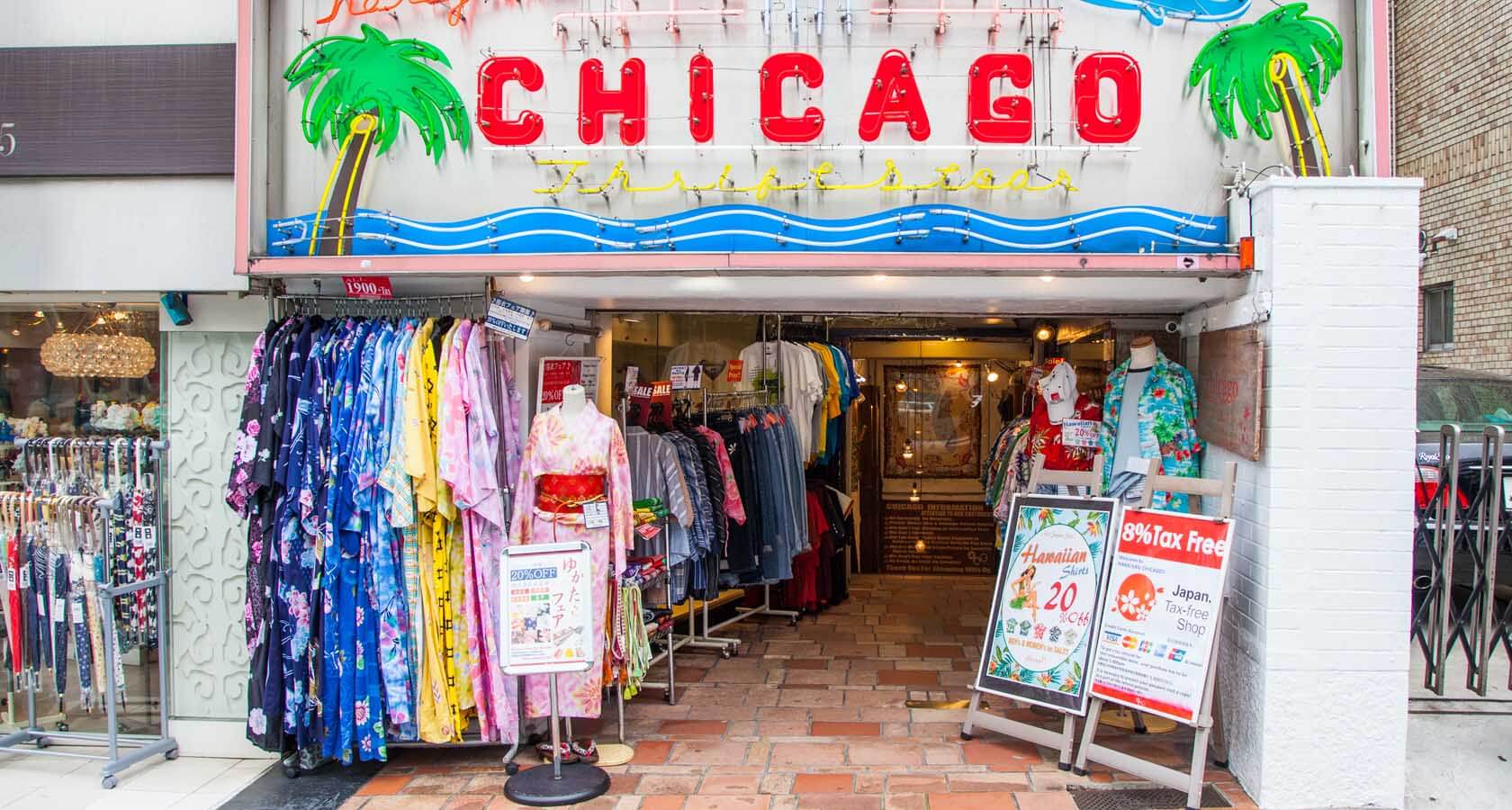
Tokyo's thrift stores are concentrated in neighborhoods like Shimokitazawa, Koenji, and Harajuku's backstreets. In Shimokitazawa, a 5-minute train ride from Shibuya, narrow lanes are packed with tiny shops selling vintage Levi's, kimonos, and 1970s denim jackets. Koenji, on the Chuo Line, is known for its "bottle shops" that sell clothing by weight—often as low as 500 yen per 100 grams—with racks of secondhand coats, sneakers, and band tees. Thrift shopping here supports sustainable fashion; Japan's strict quality standards mean most items are in near-perfect condition. Look for stores like Chicago (Shimokitazawa) and Flamingo (Koenji), which have been around for decades and offer tax-free shopping for tourists with a passport.
Hidden Gems: The Best Bookshops In Kathmandu
Kathmandu's bookshops are scattered around Thamel, the tourist district, and the older streets near Durbar Square. Pilgrims Book House, on Thamel's main drag, has three floors of new and used books, including rare out-of-print titles on Himalayan mountaineering. For secondhand paperbacks, head to the Bookworm on Kantipath, which has a rotating stock of novels left by trekkers—prices start at 200 rupees (about $1.50). The Himalayan Book Store specializes in maps and guidebooks for the Annapurna and Everest regions, plus Tibetan Buddhist texts in English. Many shops also sell hand-bound journals and locally printed notecards, making them good for souvenirs. Most stores open by 9 AM and close around 8 PM, but some close for lunch between 1 and 2 PM.
Tagalog Or Filipino? The Mystery Behind The Philippine Language
Tagalog is the regional language of Luzon, the largest island group in the Philippines, and it forms the base of Filipino, the national language. Filipino was standardized in 1987, drawing vocabulary from Tagalog, Spanish, English, and other Philippine languages like Cebuano and Ilocano. Filipino is spoken by about 90% of the population as a second language, while Tagalog is the first language of around 22 million people. The difference matters in schools, where Filipino is the medium of instruction, but Tagalog is used in daily conversation in the capital region. If you're learning, know that Filipino and Tagalog are mutually intelligible—you can use one to be understood in most urban areas.
The Most Beautiful Chinese Names
Chinese names are chosen for their meaning, not just their sound. The name "Mei" (美) means "beautiful" and is often given to girls to symbolize grace. "Li" (力) means "strength" or "plum" depending on the character—力 for strength, 李 for the plum tree, which blooms in winter and represents resilience. "Xiao" (晓) means "dawn" and is common in both genders, while "Hua" (花) means "flower" and appears in names like "Meihua" (beautiful flower). Parents often consult fortune tellers or use the Five Elements (wood, fire, earth, metal, water) to pick characters that balance the child's destiny. For example, a child missing the wood element might receive a name with the radical 木 (tree), like "Lin" (林, forest).
Japanese Cinema You Can't Miss
Beyond Kurosawa and Studio Ghibli, Japanese cinema offers a wide range of hidden gems. "Tampopo" (1985), a comedy about a truck driver helping a widow perfect her ramen, is a classic "ramen western" that explores food and class. "Shall We Dance?" (1996) tells the story of a salaryman who secretly takes ballroom dancing lessons, a gentle look at midlife boredom. For thrillers, "Cure" (1997) follows a detective hunting a killer who hypnotizes his victims—its slow-burn tension is a masterclass in psychological horror. More recently, "Drive My Car" (2021), which won the Academy Award for Best International Feature, weaves a story about grief and theater across a 3-hour runtime. These films are available on streaming platforms like Criterion Channel and Mubi, which specialize in restored Japanese classics.
Chinese Myths And Legends
Chinese myths often explain natural phenomena or teach moral lessons. The Dragon King, who lives in the East Sea, controls rain and rivers; his daughter, Longnu, appears in stories as a kind spirit who helps fishermen. The Monkey King, Sun Wukong, is the hero of "Journey to the West," where he gains immortality through a series of adventures, including stealing the Peaches of Immortality. The Jade Rabbit, who lives on the moon with the goddess Chang'e, pounds the elixir of life in a mortar. The Qixi Festival, celebrated on the 7th day of the 7th lunar month, marks the annual meeting of the cowherd Niulang and the weaver girl Zhinu, who are separated by the Milky Way—on this night, magpies form a bridge for them to cross. Many of these stories are illustrated in Chinese opera and shadow puppetry, which you can still see performed in Beijing's hutongs.
The Frangipani Forests
Frangipani forests, also known as plumeria, grow in tropical regions across Southeast Asia, often near temples and beaches. In Thailand, large groves are found in the grounds of Buddhist temples, where the flowers are used for offerings—their scent is strongest at night to attract moths for pollination. The trees can reach 8 meters tall, with thick, gnarled branches and clusters of white, pink, or yellow flowers. In Vietnam, frangipani is the national flower of the Cham people, who plant them around their sacred towers in My Son. The flowers are also used to make leis in Hawaii and essential oil in India, where the tree is called "champa." During the dry season (November to April), the trees are in full bloom, carpeting the ground with fallen petals.
Hidden Gems On Manchester's Curry Mile You Need To Try
Manchester's Curry Mile, on Wilmslow Road in Rusholme, stretches about a mile and a half and hosts over 50 restaurants, kebab shops, and sweet stalls. Most places are open until 2 AM on weekends, making it a late-night food destination. For a sit-down meal, try the family-run "Shiraz" for its lamb karahi, a slow-cooked curry served with naan fresh from the tandoor. For a quick bite, "Rusholme Kebab House" has been serving doner wraps since the 1980s; a large portion costs under £8. Don't miss the sweet shops like "Al-Nawab," which sells fresh jalebi and gulab jamun—ask for the hot jalebi, made to order. Many places offer a "mixed grill" for two, which includes seekh kebab, chicken tikka, and lamb chops, enough to feed three for around £25.
