

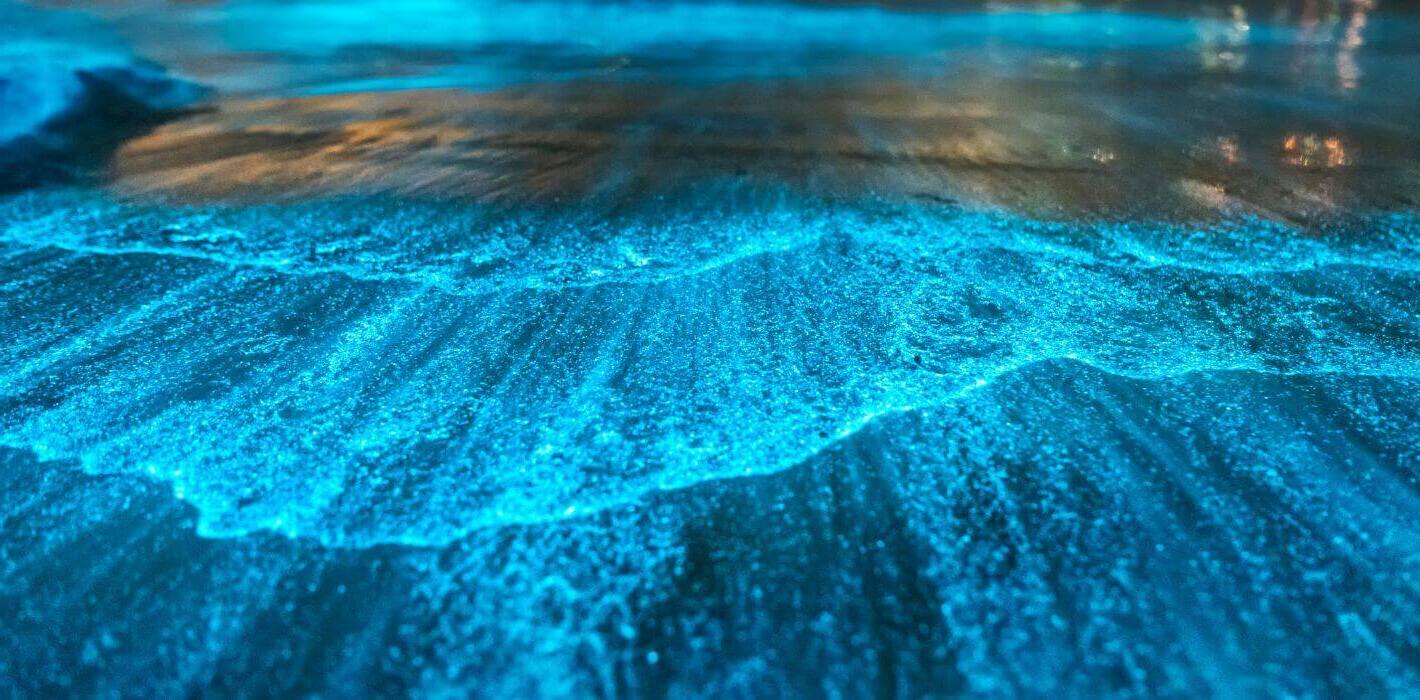
Puerto Rico’s three bioluminescent bays are Mosquito Bay on Vieques Island, Laguna Grande in Fajardo, and La Parguera in Lajas. Each one glows because of dinoflagellates, tiny plankton that emit a blue-green light when disturbed by movement like a paddle or a hand. Here’s what you need to know to see them for yourself.
Mosquito Bay, Vieques
Mosquito Bay is often called the brightest bioluminescent bay in the world, and it holds a spot in the Guinness World Records for its intense glow. You reach it by kayak at night, and the experience feels like paddling through a sea of stars. Because the bay is shallow and sheltered, the dinoflagellates concentrate here in huge numbers, making the light show especially vivid. Kayaking tours from the town of Isabel Segunda or Esperanza typically take about two hours, and guides will tell you to trail your hand in the water to see the glow follow your fingers.
Laguna Grande, Fajardo
Laguna Grande sits inside the Las Cabezas de San Juan Nature Reserve on the mainland’s northeast coast, making it the easiest bay to reach from San Juan. Guided tours here often include a short walk through the reserve’s dry forest and mangroves before you board a clear-bottom kayak. The bay is actually a lagoon connected to the ocean by a narrow channel, and the tour operators explain how the mangroves feed the dinoflagellates. You’ll also hear about the reserve’s other residents, like sea turtles and iguanas. Book a tour that departs just after sunset, and bring a waterproof camera case—the glow is best seen from the water, not the shore.
La Parguera, Lajas
La Parguera is the only bioluminescent bay in Puerto Rico where motorboats are allowed, so you can take a relaxed evening cruise instead of paddling. The glow here is less intense than at Mosquito Bay, but it’s still visible when the water is disturbed. Many boat operators anchor in the bay and let you swim or snorkel while the dinoflagellates light up around you. Because motorboats are permitted, this is a good option if you have mobility concerns or prefer not to kayak. The nearby fishing village of La Parguera has several tour companies that run trips nightly, and you can also rent a small boat with a captain for a private outing.
Tips for Visiting Bioluminescent Bays
- Visit during a new moon: The darker the night, the brighter the glow. Check a lunar calendar before booking.
- Avoid using flashlights: Light pollution can diminish the bioluminescence, and most tours go dark once you’re on the water.
- Wear insect repellent: Mosquitoes can be abundant near the water, especially at sunset. Use a repellent that’s safe for marine life, or wear long sleeves.
- Don’t wear sunscreen or bug spray into the water: These chemicals can harm dinoflagellates. Shower before your tour, and leave lotions behind.
- Book tours in advance: Peak season runs from December to April, and tours often sell out days ahead.
Why Do These Bays Glow?
The glow comes from dinoflagellates, a type of plankton that produces light through a chemical reaction when agitated. This is a defense mechanism—the flash startles predators or draws attention to them. In Puerto Rico’s bays, the dinoflagellates thrive because the water is warm, salty, and rich in nutrients from mangroves. The effect is strongest in calm, shallow water where the organisms are concentrated, which is why Mosquito Bay’s protected lagoon outshines the others.
Best Time to Visit
The dry season from December to April offers the clearest water and the most pronounced glow, but you can visit year-round. Rain isn’t a dealbreaker—tours run in light showers—but heavy storms can stir up sediment and reduce visibility. The new moon phase is your best bet, regardless of season, because the lack of moonlight makes the bioluminescence easier to see. Some tours also run later in the evening during the summer months when the moon sets earlier.
Other Activities Nearby
While the bioluminescent bays are the main draw, Puerto Rico has plenty else to offer:
- Snorkeling and diving: Explore vibrant coral reefs and marine life at places like Culebra Island or the reefs off La Parguera.
- Hiking: Discover lush trails in El Yunque National Forest, the only tropical rainforest in the U.S. National Forest System.
- Historical tours: Visit old San Juan and its historic forts, including Castillo San Felipe del Morro, which date back to the 16th century.
For a full trip, you can combine a visit to Laguna Grande with a day in Fajardo’s nearby beaches, or pair Mosquito Bay with the Vieques National Wildlife Refuge. If you’re planning a broader Caribbean trip, check our Puerto Rico guide for more ideas, and remember that the island’s south coast near La Parguera is also known for its mangrove channels and birdwatching.
Experience the Magic of Puerto Rico’s Glowing Waters
Kayaking through Mosquito Bay, taking a guided tour in Laguna Grande, or riding a motorboat in La Parguera each gives you a different view of the same natural wonder. The dinoflagellates are most active when the water is calm, so choose a night with light winds and little current. Respect the ecosystem by leaving no trace—no sunscreen, no bug spray, and no touching the organisms more than necessary. With a little planning, you’ll see why these glowing waters draw visitors from around the world, and you’ll leave with memories that last long after the light fades.
Related travel guides: Alabama's Secret Glow Worms In Dismals Canyon, Why Is The Coquí Frog The Heartbeat Of Puerto Rico?, and Puerto Rico's Mysterious Monkey Island.
