

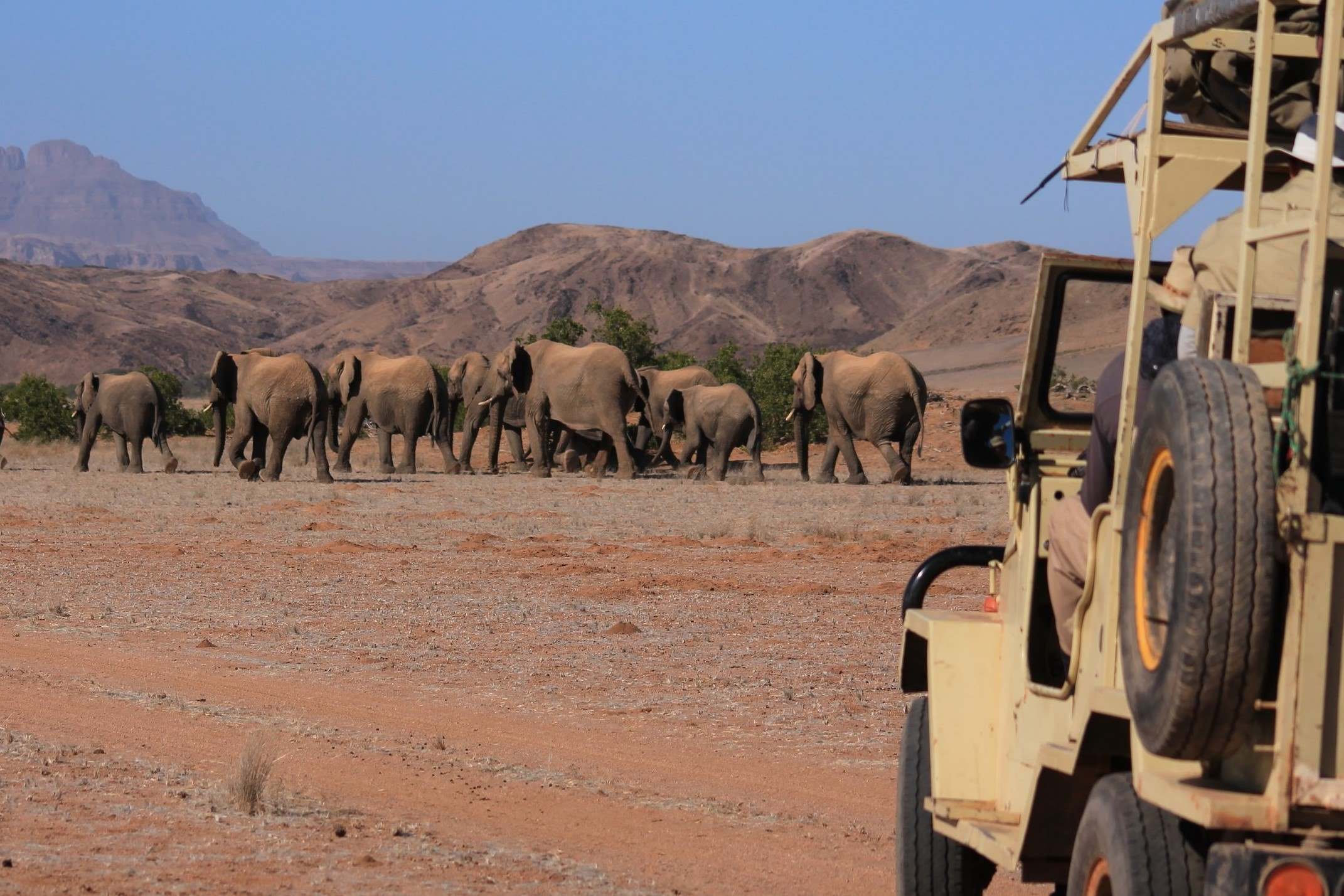
Desert elephants on Namibia's Skeleton Coast are tracked by following ancient river systems like the Hoanib, Hoarusib, Huab, Ugab, and Uniab, where these adapted animals travel great distances in search of water. Unlike savannah elephants, they have longer legs and larger feet to traverse sandy terrain, and their tracking offers a unique glimpse into one of the harshest environments on Earth.
Discovering Namibia's Skeleton Coast
Namibia's Skeleton Coast is a wild, remote region where the desert meets the Atlantic Ocean, home to elusive desert elephants and other wildlife.
The Unique Desert Elephants
Desert elephants are adapted to survive in arid environments. Here are prime locations to spot them: the Hoanib, Hoarusib, Huab, Ugab, and Uniab river systems, with the Palmwag Concession and Damaraland offering practical bases for access.
- Hoanib River The Hoanib River provides essential water for wildlife. Desert elephants follow the river's course, making it a prime spot for sightings. The riverbed is dotted with lush vegetation, attracting elephants and other animals.
- Hoarusib River The Hoarusib River system, north of the Hoanib, hosts desert elephants that navigate its seasonal channels. Its remote location offers a solitary tracking experience, with elephants often seen near remaining waterholes during dry periods.
- Huab River The Huab River cuts through Damaraland, providing a corridor for elephant herds. Its rocky landscape and ancient valleys offer a backdrop for tracking expeditions, with sightings common near waterholes or sparse grazing.
- Ugab River The Ugab River system is known for its unique geology and persistent water sources, drawing desert elephants even in the dry season. Guided tours here benefit from the river's predictable flow, which concentrates wildlife.
- Uniab River The Uniab River, with its permanent springs, supports a small but consistent elephant population. Its lush oases contrast sharply with the surrounding desert, making it a key location for tracking.
- Palmwag Concession Palmwag Concession is a vast wilderness area known for its diverse wildlife. The concession's rugged terrain and sparse water sources make it a challenging environment, but also a rewarding one for tracking desert elephants. Guided tours offer the best chance to see these giants.
- Damaraland Damaraland's rocky landscape and ancient valleys are home to several elephant herds. The region's dramatic scenery provides a backdrop for tracking expeditions. Visitors can spot elephants near waterholes or grazing on sparse vegetation.
Tips for Tracking Desert Elephants
Tracking desert elephants requires patience, respect for nature, and luck. Here are some tips to enhance your experience.
- Hire a Local Guide Local guides possess invaluable knowledge of elephant behavior and the terrain. Their expertise increases the likelihood of successful sightings while ensuring safety and respect for the animals.
- Travel During Dry Season The dry season is the best time to track desert elephants, as water sources become scarce and wildlife concentrates around remaining waterholes.
- Stay Quiet and Observant Elephants have keen senses and can be easily spooked. Staying quiet and observant increases the chances of a close encounter. Use binoculars to spot elephants from a distance without disturbing them.
Conservation Efforts
Desert elephants face threats, including habitat loss and human-wildlife conflict. Conservation efforts are crucial to their survival.
- Desert Elephant Conservation Project This project focuses on monitoring elephant populations, mitigating human-elephant conflict, and promoting sustainable tourism. Supporting such initiatives helps ensure the future of these creatures.
- Community Involvement Local communities play a vital role in conservation. Engaging with and supporting community-led projects fosters coexistence between humans and elephants.
Tracking desert elephants on Namibia's Skeleton Coast offers a blend of adventure and conservation. By visiting these key river systems and following expert tips, you can experience these animals while contributing to their preservation. For practical planning, consider getting around Namibia via 4x4, as the terrain demands it, and check to wear in Namibia + outfit inspiration for layering against coastal fog and desert heat. The mystery of Deadvlei's white clay and Dead trees is a nearby stop that complements a wildlife trip, while travel stories and tips in Namibia often highlight how local guides make the difference between a sighting and a miss.
The Magic of Namibia's Desert Elephants
Namibia's Skeleton Coast offers a unique adventure. Tracking desert elephants here is a journey into their world. These elephants have adapted to one of the harshest environments on Earth. Watching them navigate the arid landscape is awe-inspiring. Local guides share stories and insights, making the trip educational and thrilling. The Skeleton Coast's beauty, combined with the elephants' resilience, creates unforgettable memories. Plan your visit to the Skeleton Coast. Witness these creatures in their natural habitat. It's an adventure you'll cherish.
