

Part of our Namibia guide.
Namibia’s hiking and outdoor scene centers on the Namib Desert’s towering red dunes, the stark white pan of Deadvlei, and the canyon-carved rock of Sesriem. These six stops cover the must-see landmarks, a desert lodge stay, and a route that ties them together.
Related travel guides: Hiking And The Outdoors In Hotels, Where To Stay For Best Hiking In Colorado, Hiking And The Outdoors In Nevada, and Hidden Gems In Namibia.
Namib Desert's Sossusvlei Dunes
The Sossusvlei Dunes are among the tallest on Earth, their red color coming from iron oxide. That hue shifts with the light from dawn to dusk. Climbing a dune rewards you with a view over a sea of red sand where you might spot oryx or springbok. The climb is a workout, but the panorama from the top is the payoff.
Deadvlei Star Trails: A Nighttime Marvel
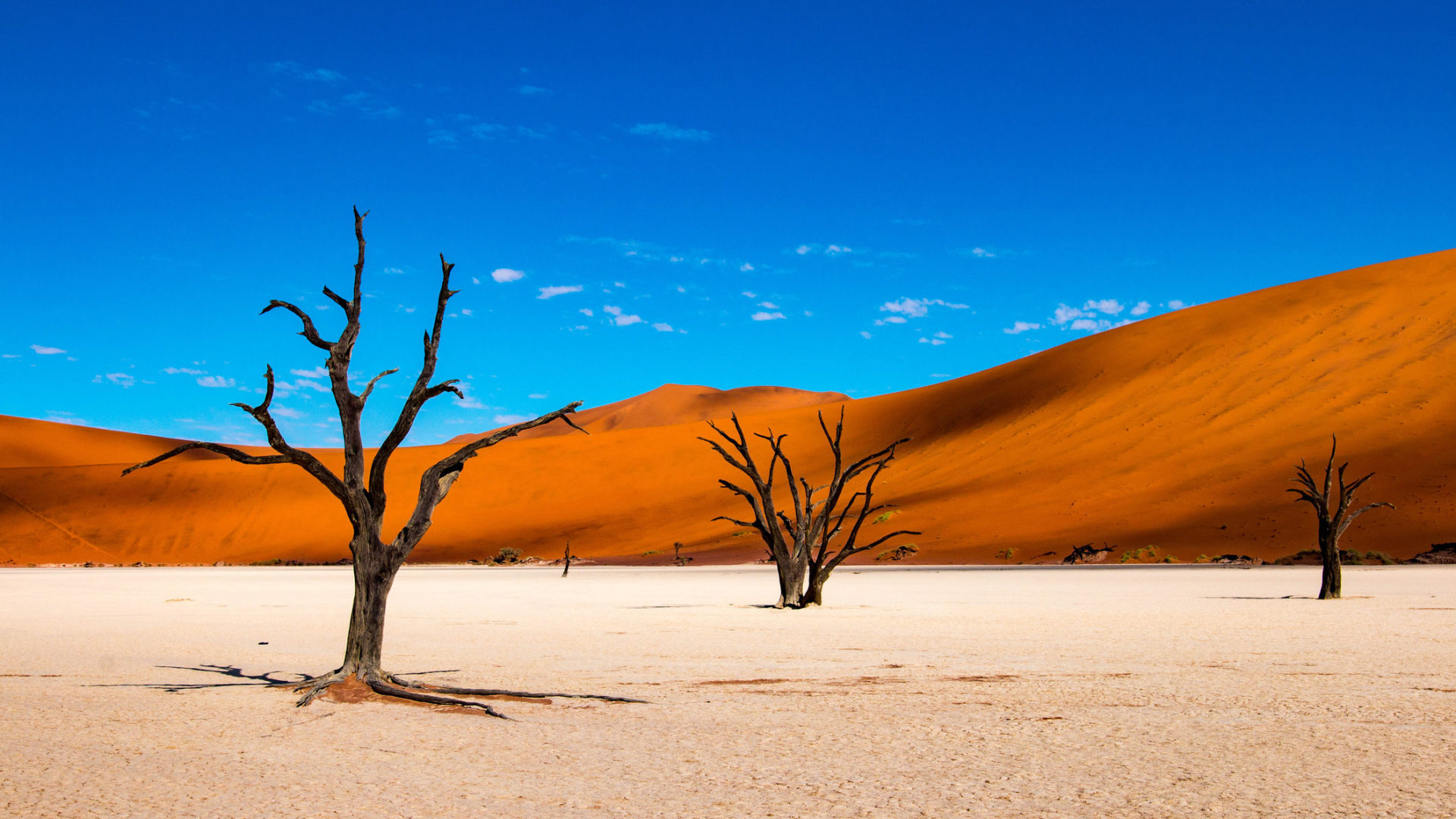
Deadvlei’s surreal landscape—ancient, dead trees standing on a white clay pan against towering red dunes—turns into something else after sunset. The clear, unpolluted skies make it a prime stargazing spot. As night deepens, the Deadvlei star trails create long, sweeping arcs across the sky, a slow-motion light show you can capture with a long exposure. The same mystery of Deadvlei's white clay and dead trees that draws photographers by day belongs to the stars at night.
Climbing Big Daddy Dune In Sossusvlei Namibia
Big Daddy Dune stands at around 1,066 feet, one of the tallest dunes you can climb. The ascent is steep and tiring, but the top gives you a full view of the surrounding desert, including the white pan of Deadvlei on one side and orange dunes stretching to the horizon on the other. The sun casts dramatic shadows across the ripples. Bring water and pace yourself—there’s no shade on the way up.
Staying At Wolwedans Dunes Lodge In Namibia
Wolwedans Dunes Lodge sits inside the NamibRand Nature Reserve, a private concession known for its open plains and star-filled skies. The lodge is eco-friendly, blending comfort with a low-impact design that fits the landscape. From the deck, you look out over dunes and grassland where wildlife moves freely. It’s a base for guided walks and game drives, and the rooms are built to take in the view without disturbing the environment. If you’re planning a longer trip, this is a good stop to combine with the more remote parts of the country—check our tips on getting around Namibia for logistics.
Deadvlei And Sesriem Canyon Nature Walk
Deadvlei and Sesriem Canyon sit close together, so you can do both in one outing. Deadvlei’s white clay pan is dotted with ancient, dead camel thorn trees that have been baked dry for centuries—they don’t rot, just stand there against the red dunes. A short drive away, Sesriem Canyon shows layers of rock carved by water over millions of years. Walking into the canyon, you pass sheer walls that narrow to a sandy floor; in the dry season, it’s an easy walk, but after rain, the path can be impassable. The contrast between the two sites—one bone-dry, one water-sculpted—is the point.
Misty Mazes Of The Drifting Dunes
The Drifting Dunes are a different kind of hike, where a light fog rolls in off the Atlantic and wraps around the sand. The mist softens the light and muffles sound, so you walk through a quiet maze of shifting ridges. It’s a hidden gem in Namibia for those who want solitude—most visitors stick to the main dune areas. The fog brings moisture, so you might spot beetles and lizards adapted to this rare coastal desert climate. Go early, before the sun burns off the mist, and you’ll have the place to yourself.
