

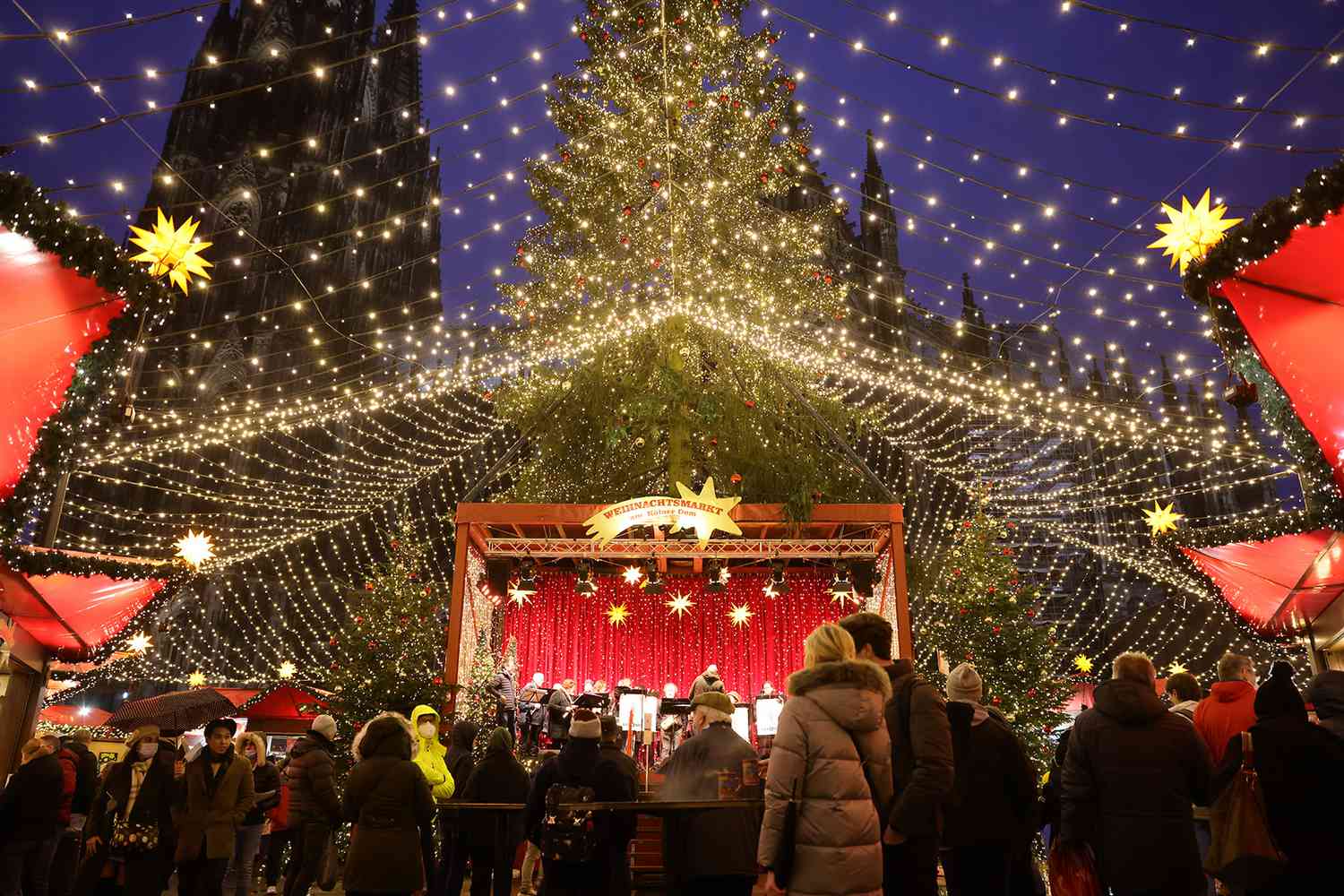
Germany’s most distinctive Christmas traditions are the ones you won’t find in a tourist brochure: the Bescherung gift exchange on Heiligabend, the Sternsinger door-to-door carolers, and the wooden Christmas pyramid that predates the Christmas tree. These customs, along with a dozen others, are the real heart of a German holiday season.
Christmas Markets
Germany’s Christmas markets offer a festive atmosphere filled with lights, music, and treats.
- Nuremberg Christkindlesmarkt: One of the oldest and most famous, this market features over 180 wooden stalls selling everything from ornaments to gingerbread.
- Dresden Striezelmarkt: Dating back to 1434, this market is known for its giant Christmas pyramid and stollen cake.
- Cologne Christmas Market: Set against the Cologne Cathedral, this market offers an ice rink and fairy-tale village.
Advent Calendars
Advent calendars are a beloved tradition in Germany, counting down the days until Christmas with small surprises behind each door.
- Handmade Calendars: Many families create their own calendars, filling them with personalized gifts and treats.
- Chocolate Calendars: Popular among children, with a piece of chocolate hidden behind each door.
- Themed Calendars: From beauty products to toys, themed advent calendars have become a trendy way to celebrate the season.
St. Nicholas Day
St. Nicholas Day, celebrated on December 6th, is a special day for children in Germany. They leave their shoes out the night before, hoping to find them filled with treats by morning.
- Shoes Filled with Treats: Children receive small gifts, candies, and fruits in their shoes.
- Krampus Night: In some regions, the night before St. Nicholas Day is known as Krampus Night, where a figure named Krampus visits to punish naughty children.
Christmas Eve Traditions
Christmas Eve, or “Heiligabend,” is the main day for gift-giving and family gatherings in Germany.
- Bescherung: Families gather around the Christmas tree to exchange gifts.
- Midnight Mass: Attending a midnight church service is a common tradition for many German families.
Christmas Decorations
German Christmas decorations are unique and often handmade.
- Straw Stars: Intricate ornaments made from straw, a traditional decoration for Christmas trees.
- Pyramids: Wooden Christmas pyramids with spinning tiers are a popular decoration in German homes.
- Nutcrackers: Originating from Germany, nutcrackers are both decorative and functional, often depicting soldiers or kings.
Epiphany
Epiphany, celebrated on January 6th, marks the end of the Christmas season in Germany.
- Sternsinger: Children dress as the Three Wise Men and go door-to-door singing carols and collecting donations for charity.
Embracing German Christmas Traditions
German Christmas traditions offer a rich tapestry of customs. From Advent calendars to St. Nicholas Day, each tradition brings its own charm. Christmas markets are filled with festive foods, handcrafted gifts, and warm drinks like Glühwein. The Christmas Pyramid and Nutcracker add whimsy to holiday decor. Krampus Night adds a spooky twist, while Feuerzangenbowle warms cold nights. Sternsinger and Epiphany bring a charitable element to the season. Whether you’re in Germany or celebrating at home, incorporating these customs can add a unique flavor to your festivities.
Related travel guides: Hidden Swedish Christmas Traditions That Will Surprise You, El Salvador's Fiery Tradition You’ve Never Heard Of, and Fascinating Cultural Traditions Still Alive Today.
