

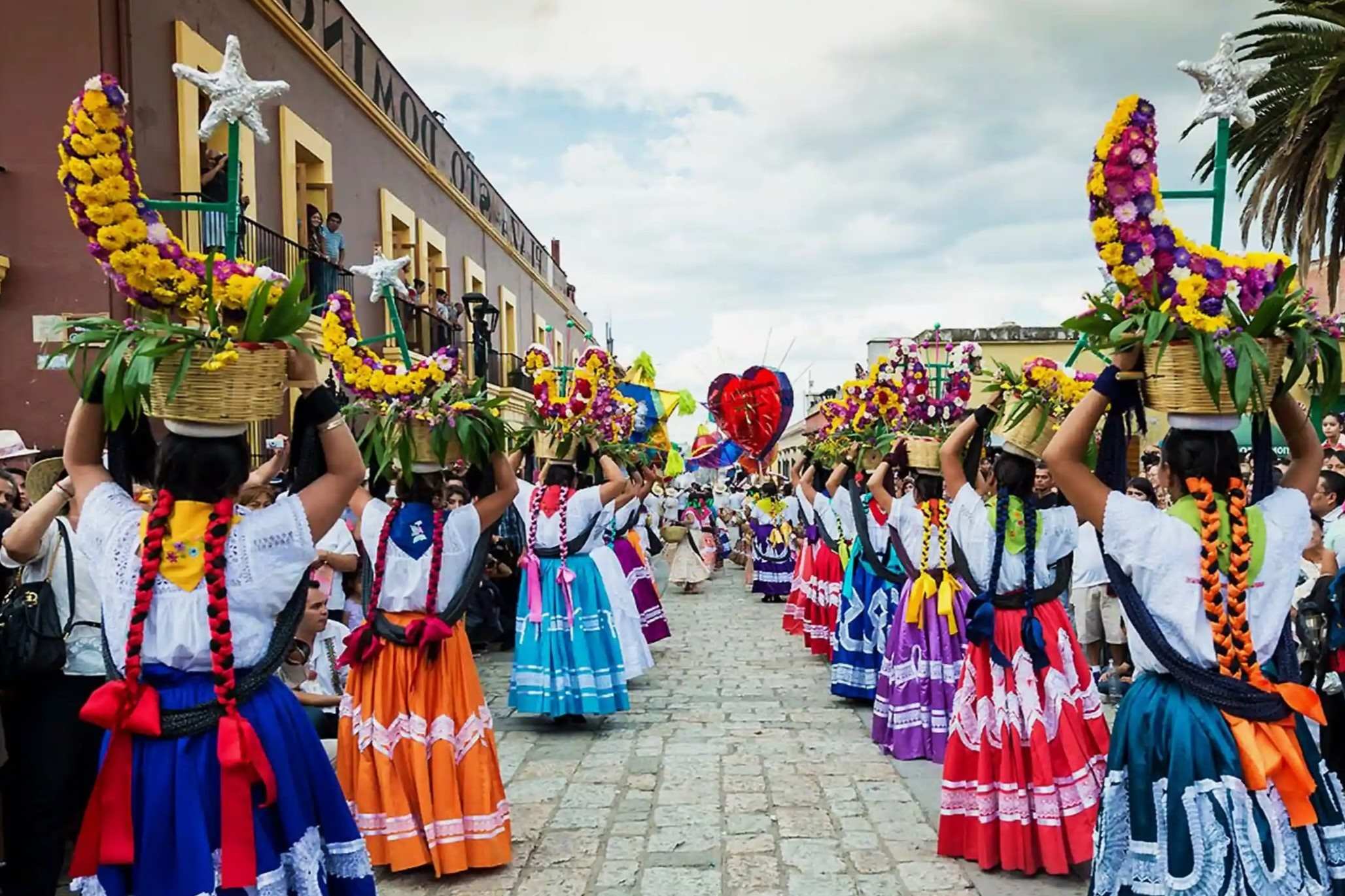
Oaxaca’s hidden festivals range from the globally famous Día de los Muertos to the lesser-known Noche de Rábanos, where artisans carve radishes into intricate sculptures on a single night each year. These events offer a deeper glimpse into Oaxacan traditions beyond the well-trodden tourist paths.
Guelaguetza: A Celebration of Unity
Guelaguetza showcases the unity and diversity of Oaxaca's indigenous communities. Held annually in July, this event features traditional dances, music, and costumes from the region's various ethnic groups. Guelaguetza means "offering" or "mutual exchange" in the Zapotec language, and the festival lives up to its name with colorful parades, traditional dances, and local foods.
- La Danza de la Pluma: This dance, performed by the Zapotec people, tells the story of the Spanish conquest and the resistance of the indigenous people. The dancers wear elaborate feathered headdresses and vibrant costumes.
- Flor de Piña: A dance from the Tuxtepec region, where young women in traditional attire perform with pineapples in hand, symbolizing the region's agricultural bounty.
- Los Diablos de Juxtlahuaca: A unique dance featuring performers dressed as devils, representing the struggle between good and evil.
Beyond the main event, smaller villages around Oaxaca host their own festivities, adding depth to this cultural experience.
Noche de Rábanos: The Night of the Radishes
Held on December 23, Noche de Rábanos is a festival where artisans carve radishes into intricate sculptures. This event dates back to the colonial period and attracts locals and tourists alike.
- Radish Carving Competition: Participants create detailed scenes from Oaxacan folklore, religious themes, and everyday life using radishes as their medium.
- Market Stalls: The festival features a market where visitors can purchase traditional crafts, food, and beverages.
- Live Music and Performances: Live music and performances add to the festive atmosphere.
Día de los Muertos: Day of the Dead
While Día de los Muertos is celebrated throughout Mexico, Oaxaca's version is particularly vibrant and deeply rooted in indigenous traditions. This festival, held from October 31st to November 2nd, honors deceased loved ones with altars, offerings, and festivities.
- Sand Tapestries: Artists create intricate sand tapestries depicting religious and cultural themes, often displayed in public squares and cemeteries.
- Comparsas: These lively parades feature participants dressed as skeletons, dancing through the streets to traditional music.
- Panteón General: The main cemetery in Oaxaca City becomes a focal point for celebrations, with families decorating graves and spending the night in remembrance of their ancestors.
La Guelaguetza de los Lunes del Cerro: Mondays on the Hill
This version of the Guelaguetza takes place on the last two Mondays of July. It offers a more intimate experience, allowing visitors to connect with local traditions and communities.
- Traditional Food Stalls: Sample authentic Oaxacan dishes like tlayudas, mole, and chapulines (grasshoppers) from local vendors.
- Handicraft Markets: Browse stalls selling handmade crafts, textiles, and pottery created by local artisans.
- Community Dances: Watch or join traditional dances performed by community members, celebrating their cultural heritage.
Carnaval de Putla: A Festive Extravaganza
Carnaval de Putla, held in the town of Putla Villa de Guerrero, is a pre-Lenten festival featuring colorful costumes, music, and dance. This event, which takes place in February, blends indigenous and Spanish traditions.
- Los Viejos: Participants dress as "old men" with masks and costumes, performing humorous skits and dances.
- La Danza de los Rubios: A dance featuring performers in blonde wigs and elaborate costumes, symbolizing the Spanish colonizers.
- Street Parties: The town comes alive with street parties, live music, and food stalls, creating a festive atmosphere.
Discover Oaxaca’s Hidden Gems
Oaxaca's hidden festivals offer a glimpse into the region's culture. From the vibrant Guelaguetza to the mystical Night of the Radishes, these events showcase traditions passed down for generations. Attending these festivals supports local communities and their customs.
Planning a trip to Oaxaca during one of these festivals can be rewarding. Check the festival dates, book accommodations early, and immerse yourself in the local culture. Whether you're a seasoned traveler or new to exploring, Oaxaca's hidden festivals promise something special.
Pack your bags, bring your camera, and get ready to create lasting memories in one of Mexico's most culturally rich regions.
Related travel guides: 29 Best Festivals in Japan: A Month-by-Month Guide and 8 Vibrant Festivals/Events To Attend In Brockton, Massachusetts.
