

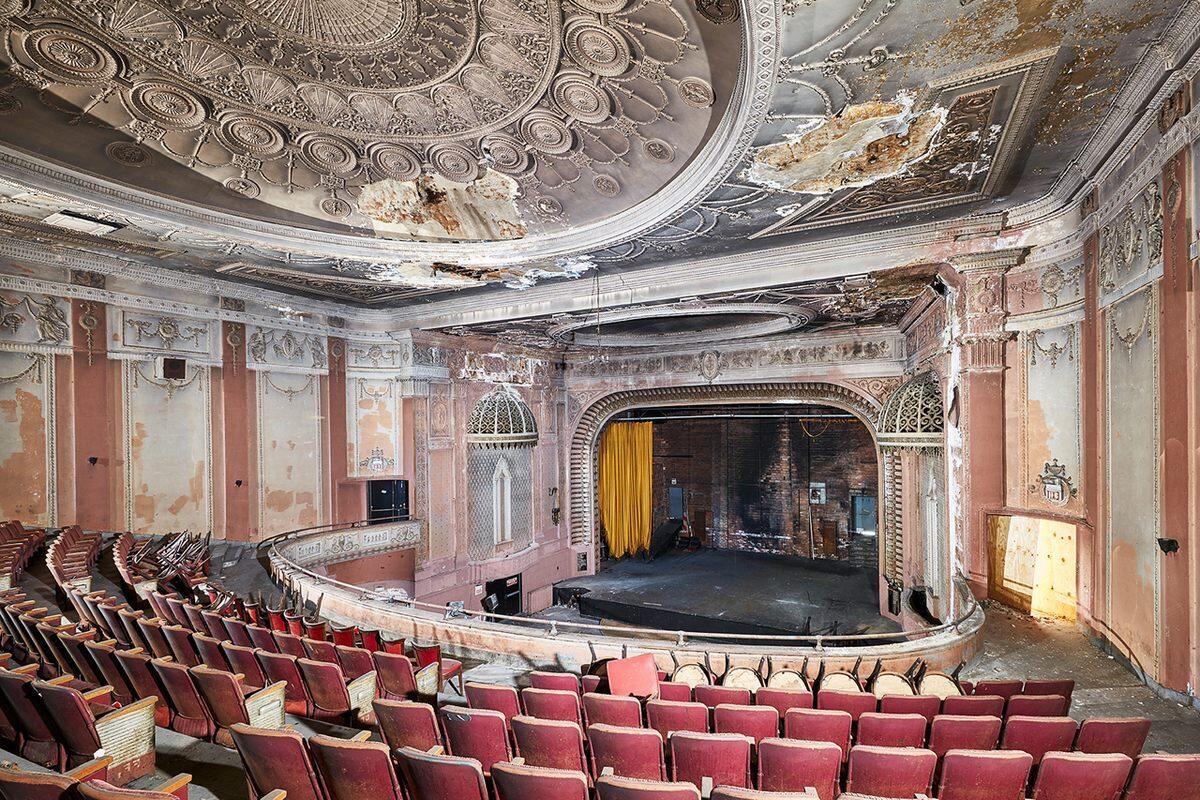
Detroit’s grandest movie palaces weren’t just places to watch films—they were architectural showpieces that turned a night at the movies into a spectacle. Today, most of these cinematic landmarks are gone, but their stories survive in fragments: a preserved ceiling, a repurposed lobby, a parking garage with echoes of a gilded age. Here’s what remains of the lost movie palaces of Detroit, and what actually happened to them.
The Grandeur of Detroit’s Movie Palaces
Detroit’s movie palaces were cultural landmarks. Each theater had its own unique charm and story. Here are some of the most notable ones:
-
The Michigan Theatre
- This opulent theater featured a lavish interior. Today, it serves as a parking garage, but remnants of its grandeur remain in the upper preserved theater spaces, which are not open to the public. The building’s exterior still hints at its former glory, and the surviving lobby areas retain some original detailing.
-
The United Artists Theatre
- Designed by renowned architect C. Howard Crane, this theater opened in 1928. It had a Spanish-Gothic style with intricate carvings and a stunning auditorium. The building was demolished in 2022; the last of it came down on Nov. 30, 2022. For decades before that, it sat vacant, its ornate facade a ghostly reminder of Detroit’s cinematic heyday.
-
The Fox Theatre
- One of the few still operating, the Fox Theatre opened in 1928. It is a National Historic Landmark and continues to host concerts and events. Its lavish design includes a grand lobby, ornate ceilings, and a massive stage. Unlike its lost counterparts, the Fox remains a living piece of that era.
Forgotten Gems of the Past
While some theaters have been repurposed or preserved, others have faded into obscurity. These forgotten gems once played a significant role in Detroit’s entertainment scene:
-
The Hollywood Theatre
- This theater was known for its luxurious interior and state-of-the-art sound system. It was eventually demolished, leaving behind only memories and its Barton organ. The organ, a prized piece of theater history, was salvaged and now lives on in another venue.
-
The Eastown Theatre
- Originally a movie palace, the Eastown Theatre later became a popular concert venue. It fell into disrepair and was demolished in 2015. While some local lore claims legendary acts like The Who and Pink Floyd performed there, the documented record only confirms its demolition date—not its concert history.
-
The Riviera Theatre
- This theater opened in 1925 and featured a beautiful Mediterranean-style design. It was known for its excellent acoustics and comfortable seating. The building was demolished in 1996, making way for new developments. Its distinctive tower and marquee were local landmarks for decades.
Preserving the Legacy
Efforts to preserve Detroit’s cinematic history continue. Some theaters have been restored, while others await their fate:
-
The Redford Theatre
- Opened in 1928, the Redford Theatre has been lovingly restored by volunteers. It still shows classic films and hosts special events. Its Japanese-inspired design and original pipe organ make it a unique venue. The theater’s interior, with its pagoda-style motifs and hand-painted murals, is a rare surviving example of 1920s exoticism.
-
The Senate Theater
- This theater, opened in 1926, is home to the Detroit Theater Organ Society. It has been restored and now hosts organ concerts and classic film screenings. The Senate Theater’s Art Deco design and historic organ draw visitors from all over. Its intimate size—far smaller than the old movie palaces—makes it a favorite for acoustic performances.
-
The Fillmore Detroit
- Originally the State Theatre, this venue opened in 1925. It has been beautifully restored and now hosts concerts and events. The Fillmore Detroit’s grand architecture and vibrant atmosphere make it a beloved landmark. Its lobby, with its soaring ceilings and restored plasterwork, still evokes the original movie-palace experience.
Detroit’s lost movie palaces may no longer serve their original purpose, but their legacy lives on. These hidden cinematic gems remind us of a time when going to the movies was a grand experience.
Rediscovering Detroit’s Cinematic History
Detroit’s lost movie palaces offer a glimpse into a bygone era of cinematic grandeur. These hidden gems, once bustling with life, now stand as silent witnesses to the city’s rich cultural past. Exploring these historic theaters, like the Michigan Theatre or the United Artists Theatre, reveals the architectural beauty and artistic craftsmanship that defined early 20th-century entertainment.
While many of these palaces have fallen into disrepair, efforts to restore and preserve them are gaining momentum. Local organizations and passionate individuals are working to bring these landmarks back to life, ensuring future generations can appreciate their historical significance.
Next time you’re in Detroit, take a moment to visit these forgotten treasures. You’ll experience a piece of history and support the ongoing efforts to revive the city’s cultural heritage. Detroit’s movie palaces are more than just buildings; they’re a testament to the city’s enduring spirit.
Related travel guides: Detroit's Hidden Art Deco Masterpieces, Hidden Theaters Secrets In Arts Culture, and Detroit Buildings - Touring The Abandoned Ones.
