

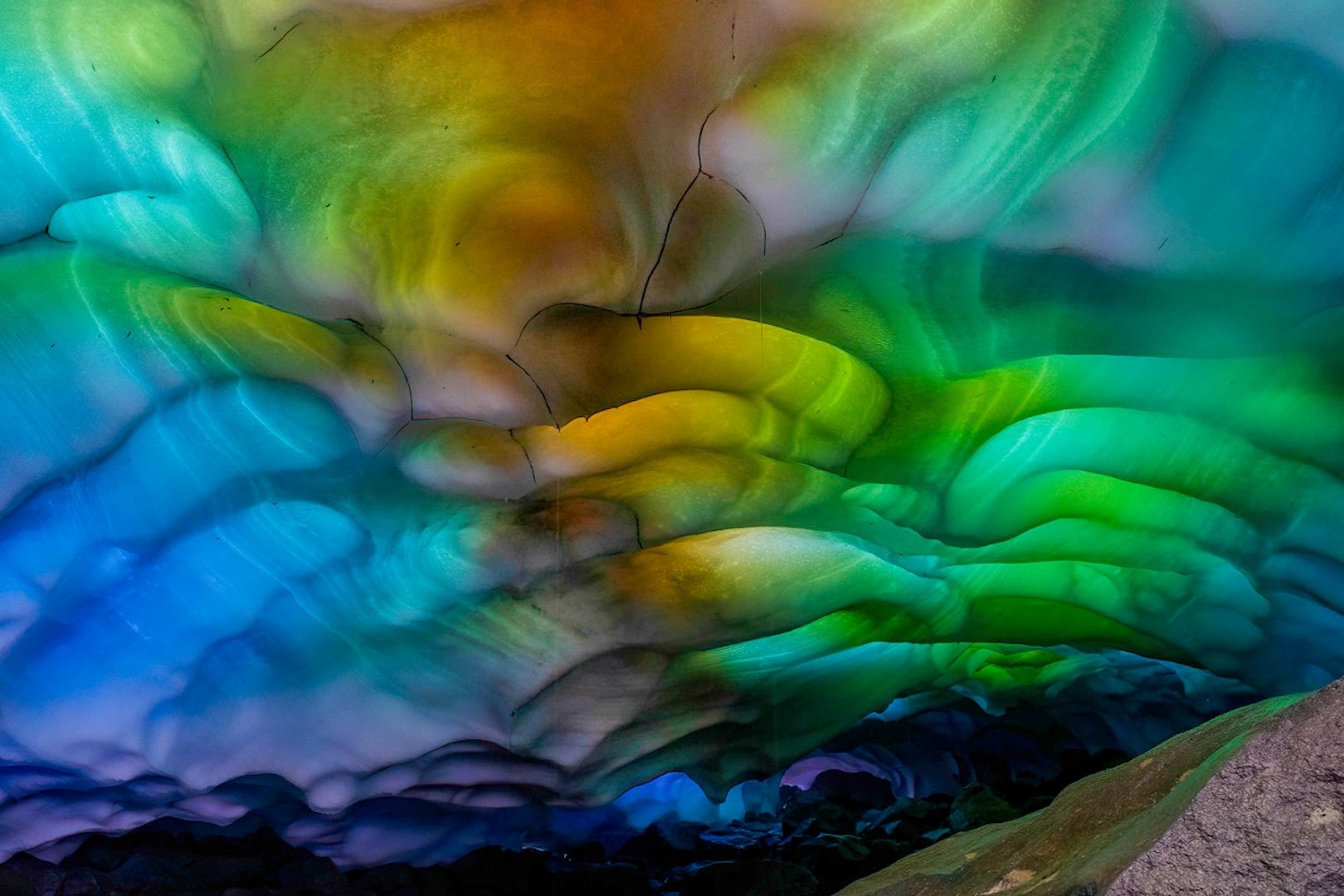

Mount Rainier’s summit ice caves are a fumarole cave system, formed by volcanic heat and gas melting passages through the ice cap at the twin summit craters, about 4,382 meters up. The Paradise Ice Caves, by contrast, were once the longest mapped glacier cave system in the world in the late 1970s—and had disappeared by the early 1990s.
Secrets of Mount Rainier’s Ice Caves
Mount Rainier, an iconic peak in Washington State, hides a world of icy wonders beneath its snowy exterior. The ice caves, formed by volcanic heat and gas, offer a surreal experience for adventurers. Let’s uncover the secrets of these mesmerizing formations.
1. Paradise Ice Caves
Once a popular attraction, the Paradise Ice Caves were a network of tunnels in the Paradise Glacier and were the longest mapped glacier cave system in the world in the late 1970s. Though they collapsed in the 1990s, their legacy lives on in the stories of those who explored them.
Highlights:
- Historical Significance: These caves were among the most visited ice caves in the U.S.
- Unique Formation: Created by the melting of the Paradise Glacier.
- Adventure: Visitors once trekked through icy tunnels, marveling at the blue-hued walls.
2. Emmons Glacier
The Emmons Glacier, the largest glacier in the contiguous United States, is a prominent feature of Mount Rainier. Its dynamic environment shifts and changes with the glacier’s movement.
Highlights:
- Dynamic Environment: The glacier’s surface shifts and changes with its movement.
- Stunning Views: The ice glows with an ethereal blue light.
- Challenging Access: Reaching the glacier requires a strenuous hike, rewarding those who make the effort.
3. Carbon Glacier
The Carbon Glacier, known for its low elevation, is one of Mount Rainier’s notable glaciers. It offers a glimpse into the glacier’s icy heart.
Highlights:
- Accessibility: Easier to reach compared to other glaciers on the mountain.
- Educational Value: Perfect for learning about glacial formations and meltwater processes.
- Scenic Beauty: The glacier’s surface is adorned with intricate ice formations.
4. Nisqually Glacier
Nisqually Glacier, one of the most studied glaciers on Mount Rainier, provides valuable insights into glacial dynamics and climate change.
Highlights:
- Research Opportunities: Scientists study this glacier to understand glacial behavior.
- Spectacular Ice Formations: The glacier boasts stunning ice sculptures and formations.
- Historical Significance: Nisqually Glacier has been a focal point for glacial research for decades.
5. Winthrop Glacier
Winthrop Glacier, located on the northeastern side of Mount Rainier, offers a remote and less-visited glacial experience. It is perfect for those seeking solitude and adventure.
Highlights:
- Remote Location: Fewer visitors mean a more serene experience.
- Untouched Beauty: The glacier remains relatively pristine.
- Adventure: Reaching this glacier involves a challenging trek, ideal for seasoned hikers.
6. Kautz Glacier
Kautz Glacier, known for its steep and rugged terrain, is a challenging feature of Mount Rainier. It is for the truly adventurous.
Highlights:
- Thrilling Adventure: The glacier is located in a challenging and steep area.
- Breathtaking Views: The ice formations are nothing short of spectacular.
- Risk and Reward: The difficulty of reaching this glacier makes the experience even more rewarding.
7. Tahoma Glacier
Tahoma Glacier, on the western side of Mount Rainier, is a beautiful and mysterious feature of the mountain. It is less explored, adding to its allure.
Highlights:
- Mystery: Less explored, this glacier holds many secrets.
- Stunning Ice Formations: The glacier is filled with intricate ice sculptures.
- Adventure: The remote location requires a challenging hike, perfect for adventurers.
8. Fryingpan Glacier
Fryingpan Glacier, located on the eastern side of Mount Rainier, is a beautiful and accessible glacial feature. It is perfect for those looking for a less strenuous adventure.
Highlights:
- Accessibility: Easier to reach compared to other glaciers on the mountain.
- Scenic Beauty: The glacier’s surface is adorned with stunning ice formations.
- Educational Value: Perfect for learning about glacial formations and meltwater processes.
Embracing the Wonders of Mount Rainier’s Ice Caves
Mount Rainier’s summit ice caves offer a unique adventure for nature lovers. These hidden gems, formed by volcanic heat and gas, provide a stunning display of natural beauty. Exploring these caves requires preparation and respect for the environment. Always check weather conditions, wear appropriate gear, and follow safety guidelines. Guided tours can enhance your experience, offering insights into the caves’ formation and history.
Visiting Mount Rainier’s ice caves is more than just a hike; it’s an opportunity to connect with nature’s raw power. The breathtaking views and serene atmosphere make the journey worthwhile. Whether you’re an experienced hiker or a curious traveler, these ice caves promise an unforgettable experience. So, pack your gear, respect the environment, and get ready to discover the wonders hidden within Mount Rainier.
Related travel guides: Hidden Wonders Of Mount Rainier's Wildflower Meadows, Curious Tree Houses Hidden In Washington's Mount Rainier, and Secrets Of Colorado's Ice Caves.
